
After-Care Options: Cremation, Burial, Memorials

In the human funeral industry, cremation overtook burial in the United States in 2015 and is projected to reach about 63.4% of deaths by 2025, with estimates as high as 82.3% by 2045.[CANA; NFDA]Pet after‑care isn’t tracked as precisely, but veterinarians report a similar quiet shift: more families choosing cremation, fewer choosing formal burials, and almost everyone trying to find some way to mark a life that mattered.
If you’re reading this, you may be somewhere in that space where medical decisions are winding down, and the question of “What happens after?” is suddenly very real. It’s a strange, disorienting pivot: one day you’re tracking meds and appetite; the next, you’re comparing urns and cemetery plots.
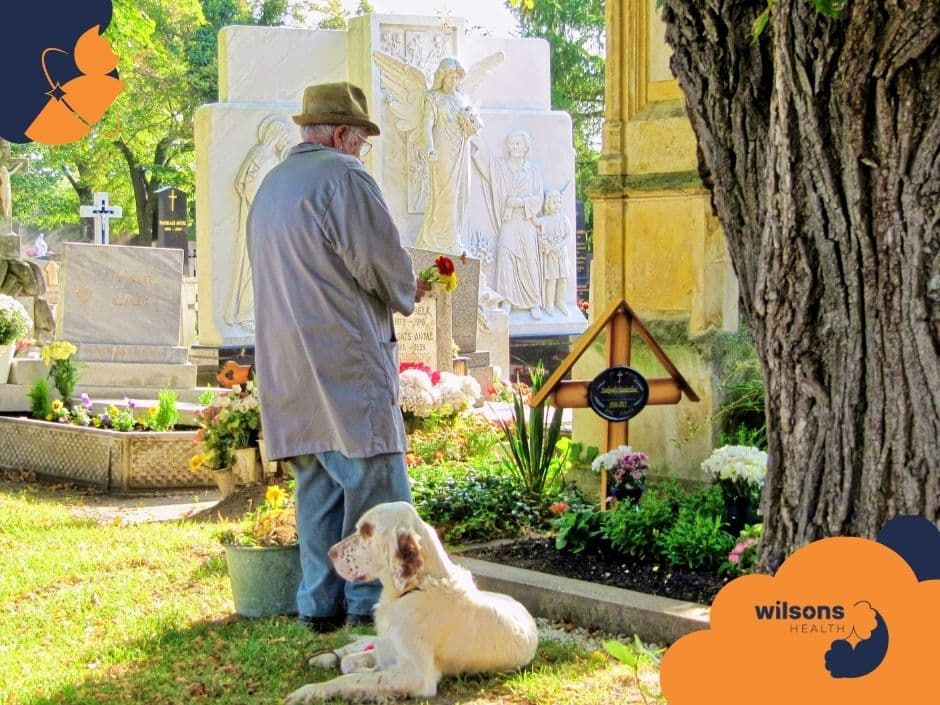
This article is meant to sit with you in that pivot—clear about the options, honest about the trade‑offs, and gentle about the fact that there is no “right” way, only the way that fits your dog, your life, and your grief.
What “after‑care” actually means
In veterinary contexts, after‑care simply means: what happens to your dog’s body and memory after death.
It usually includes three layers:
Handling the body
Cremation (individual or communal)
Burial (at home, or in a pet cemetery)
Practical logistics
Who transports your dog
Legal and local regulations
Costs, timelines, and paperwork
Memorializing the relationship
Physical memorials (urns, plaques, paw prints)
Rituals and gatherings
Digital tributes and ongoing “continuing bonds”
Most people only think about the first layer. But in practice, all three matter—especially after chronic illness, when your relationship has already been through a lot.
Why planning after‑care feels so emotionally loaded
When a dog has been ill for a long time, the end is rarely a single moment. It’s a series of decisions: more treatment or not, another night in the hospital or home, euthanasia now or later.
By the time after‑care comes up, many owners are already carrying:
Grief for the dog they’re losing
Moral distress over whether they “waited too long” or “let go too soon”
Exhaustion from caregiving
Financial strain from ongoing treatment
Family disagreements about “what’s respectful” or “what they would have wanted”
So when someone asks, “Do you want cremation or burial?” it can feel like a test of how much you loved your dog, rather than what it actually is: a practical choice among several valid options.
Naming this is important:Your after‑care choice is not a measure of love. It’s a combination of logistics, cost, culture, and what feels emotionally bearable.
Cremation: what it is, and how it actually works
In both human and pet after‑care, cremation has become the most common choice. For pets, it’s usually arranged through your veterinarian or a dedicated pet crematorium.
Types of pet cremation
Different providers use slightly different terms, but the core categories are:
Type of cremation | What it means | Ashes returned? | Typical reasons people choose it |
Individual (private) | Your dog is cremated alone, in a separate chamber or clearly separated space. | Yes – you receive only your dog’s ashes. | Wanting a specific urn, scattering, or keepsake; desire for privacy and certainty. |
Partitioned / semi-private | Multiple pets in the same chamber, separated by barriers. | Yes – you receive ashes believed to be primarily your dog’s. | Middle ground between cost and having ashes returned. |
Communal (mass) | Several pets cremated together, no separation. | No – ashes are usually scattered or buried by the facility. | Lower cost; owners who don’t need ashes returned but want respectful handling. |
It’s reasonable to ask your vet or the crematorium:
Which type do you offer?
How do you ensure separation in individual cremations?
How are communal ashes handled?
Good providers are used to these questions. You’re not being difficult; you’re being a guardian.
Why cremation has become so common
The rise of cremation in human after‑care is driven by a few key factors that translate almost directly to pets:
Cost
Human cremation typically costs thousands less than burial because there’s no embalming, casket, or cemetery plot.[1][7][8]
Pet cremation is usually more affordable than a cemetery burial, though prices vary widely by region and service type.
For families already stretched by medical bills, this matters.
Flexibility
Ashes can be:
Kept at home
Scattered in a meaningful place (where local rules allow)
Divided among family members
Incorporated into jewelry, glass art, or memorial stones
This flexibility can be comforting if you move often or don’t have access to land for burial.
Logistics
Your vet can typically arrange transport and paperwork.
No need to navigate cemetery rules or home burial regulations in a time of acute grief.
Cultural shift
As cremation becomes “normal” in human funerals, it also feels more familiar and acceptable for pets.
Families often mirror their own cultural or religious practices with their animals, adapting them as needed.
Emotional realities of cremation
For some people, cremation feels peaceful: a clean, contained process with a tangible result—ashes in a box, an urn, a pendant.
For others, the idea of fire is deeply uncomfortable or conflicts with spiritual beliefs.
Both reactions are valid.
What research from grief psychology and veterinary practice does suggest is that:
Having a choice and understanding what will happen can reduce traumatic stress.
Receiving ashes back (for those who want them) often supports a sense of ongoing connection and ritual.
If you’re unsure, it can help to ask yourself:
Do I want something physical to keep or scatter?
Does the idea of burial feel comforting, or does it feel logistically overwhelming?
Are there cultural or religious traditions in my family that matter to me here?
Your first, quiet instinct is often a good guide.
Burial: from backyard graves to pet cemeteries
Burial is older than cremation by several millennia, and for many people, it still feels like the most intuitively “natural” choice.
In pet after‑care, burial generally happens in one of two places:
Home burial – in a yard or garden
Pet cemetery burial – in a dedicated animal cemetery
Home burial: what to consider
For some families, especially those in rural or semi‑rural areas, burying a dog at home feels right: close, familiar, and part of the landscape of everyday life.
But home burial is not always allowed—or advisable.
Key considerations:
Local laws and regulations
Some municipalities or states prohibit home burial, especially in urban or high‑density areas.
Others require minimum distances from water sources or property lines.
Your vet or local animal control office can often point you to relevant rules.
Practicalities
The grave needs to be deep enough to prevent disturbance by wildlife (local guidelines vary, but your vet can advise).
Temperature and soil conditions matter; in frozen ground or flood‑prone areas, burial may be unsafe or impossible at certain times.
Future moves
If you’re likely to move, consider how it will feel to leave that grave behind.
Some people find comfort in the idea of their dog “staying with the house”; others find it deeply painful.
For many, the greatest comfort of home burial is the ability to create a small, personal ritual: a tree planted above the grave, a stone marker, a place to sit.
Pet cemeteries: formal, regulated spaces
Pet cemeteries offer a middle path between home burial and cremation:
What they provide
Designated plots
Maintenance of grounds
Sometimes shared or private markers
Occasionally, options for combined human–pet plots (where local regulations allow)
Why people choose them
Lack of private land
Desire for a more formal ritual
Comfort in a dedicated, respectful space
Wishing for something that feels parallel to human funerals
Costs and contracts
Fees can include:
Plot purchase or lease
Burial service
Ongoing maintenance
Ask specifically about:
Long‑term operation of the cemetery
What happens if ownership changes
Rules about markers, decorations, or visiting hours
As with cremation, there’s no moral hierarchy here. Some families feel strongly that burial in the earth is the only acceptable option. Others feel overwhelmed by the logistics and choose cremation with a memorial tree instead.

Environmental questions: “green” vs reality
In human after‑care, there’s growing interest in green or natural burial—no embalming, biodegradable shrouds, and minimal disturbance of the land.[3]
For pets, the picture is less clearly mapped:
Cremation
Uses significant energy and produces carbon emissions.
Some newer facilities use more efficient equipment or offer carbon‑offset programs, but standardized data are limited.
Burial
At home: can be relatively low‑impact if done safely and legally.
In cemeteries: involves land use, possible use of concrete vaults or non‑biodegradable materials, and ongoing maintenance.
Research on how environmental concerns specifically shape pet after‑care choices is still sparse. What we do know is:
Many owners want to make environmentally kind choices.
The options available vary hugely by region.
Sometimes the most realistic “green” action is small: choosing a simple biodegradable urn, or a natural stone instead of a large manufactured monument.
If environmental impact matters to you, it’s reasonable to ask providers:
Do you offer any eco‑conscious options?
Are there biodegradable urns, shrouds, or markers?
How are communal ashes handled?
Memorials: how we keep the relationship going
Whatever happens to the body, almost everyone does something to mark the life.
In grief research, this is sometimes called continuing bonds: the way we stay connected to someone (or some‑dog) who has died.
For dogs, memorials often fall into three broad categories:
1. Physical memorials
These are the things you can see and touch:
Urns (simple wood, ceramic, metal, or custom art pieces)
Paw prints in clay or ink
Fur clippings
Collars framed with a photo
Engraved stones or plaques
Trees or flowers planted in their honor
Custom jewelry with ashes or fur embedded
Veterinary psychology literature suggests that tangible reminders can help many owners process grief and feel that their dog’s life is acknowledged.[Veterinary psychology]
Some people worry this will “trap” them in sadness. In practice, the opposite often happens: the object becomes a quiet, steady presence rather than a constant trigger.
2. Rituals and gatherings
Rituals don’t have to be religious, or even formal. They’re simply repeated, intentional actions that give shape to emotion.
Examples:
A small gathering in the yard to bury ashes or place a stone
Reading a letter to your dog before euthanasia or burial
Lighting a candle on their adoption date each year
Taking a walk on their favorite route on their birthday
Donating to a rescue in their name
Owners who engage in some form of ritual often report:
Less complicated guilt (“I did something to mark their passing”)
A stronger sense of closure
Easier conversations with children, who benefit from clear, visible ways to say goodbye
3. Digital memorials
As our lives move online, so do our goodbyes. This can look like:
Online memorial pages with photos and stories
Social media posts and comment threads
Shared albums among family members
Digital scrapbooks or videos
The rise of digital memorials raises new questions—about privacy, commercialization of grief, and how long platforms will exist—but it also offers something simple and human: a place where other people can say, “He mattered. She was loved.”
For some, this is deeply healing. For others, grief feels too private to share online. Again: both are valid.
How vets fit into this: more than just a checkbox
In an ideal world, conversations about after‑care start before the crisis point—especially in chronic illness.
Veterinary practice reports suggest that when vets gently introduce after‑care planning as part of long‑term care:
Owners have more time to think, ask questions, and explore options.
Costs and logistics are less likely to be a shock.
Decisions feel more deliberate, less like a panicked default.
Common patterns in vet–owner communication:
Timing
Introduced during chronic illness management or at least before euthanasia day.
Revisited if the dog’s prognosis changes.
Content
Types of cremation and burial available locally
Who handles transport
How long it takes to receive ashes, if requested
Approximate costs and payment options
Any regulatory limits on home burial or scattering
Support
Referrals to:
Pet loss support groups
Grief counselors familiar with animal loss
Online resources and hotlines
If your vet hasn’t brought this up and you feel able, it’s okay to say:
“I’d like to understand what happens after. Can we talk through cremation and burial options?”
“What do most of your clients do? What’s available in this area?”
“Are there any decisions I should make ahead of time so I’m not overwhelmed later?”
This isn’t being morbid. It’s a form of care—for your dog and for your future self.
Cost, guilt, and the myth of the “perfect” goodbye
One of the quietest sources of shame in after‑care is money.
Human data show that cost is a major driver of the shift toward cremation—often saving families thousands of dollars.[1][7][8] Pet owners are no different, but it’s rarely discussed openly.
Common internal scripts sound like:
“If I really loved her, I wouldn’t worry about the price.”
“He deserved a nicer urn / a cemetery plot / a bigger service.”
“I spent so much on treatment—how can I not spend on the funeral?”
It may help to hold onto a few grounding truths:
Love is not measured in invoices. Months or years of medication, special food, sleepless nights, and careful watching are also part of the story.
Being financially responsible is not disrespect. It’s okay to choose communal cremation or a simple grave because that’s what you can afford.
Ritual doesn’t have to be expensive. A handwritten letter, a stone you choose on a walk, a photo on the fridge—these can be as meaningful as any custom urn.
If you’re comfortable, you can ask your vet directly:
“What are the most affordable options that are still respectful?”
“Are there payment plans or lower‑cost providers you trust?”
Clinics are increasingly aware that transparent cost discussions reduce stress and regret. You are not the first person to ask.
When family members disagree
Because after‑care touches on culture, religion, money, and grief styles, it’s not unusual for families to want different things.
Common conflicts:
One person wants ashes at home; another finds that unsettling.
One prefers home burial; another worries about moving away.
One is attached to a specific urn or cemetery; another is focused on cost.
There’s no universal solution, but a few principles can help:
Name the feelings underneath the preference. “I want to bury him here” might really mean “I’m afraid of forgetting him” or “I need a place to visit.”
Look for “both/and” options.
Individual cremation with:
Some ashes kept at home
Some buried under a tree
Some scattered in a favorite place
A simple communal cremation plus a meaningful home memorial.
Remember the shared goal. Almost everyone in the conversation is trying, in their own way, to honor the same dog.
If needed, a neutral third party—a vet, counselor, or trusted friend—can help keep the focus on care rather than blame.
Thinking ahead during chronic illness
When your dog is still here, thinking about after‑care can feel like a betrayal. Many owners quietly delay it until the last possible moment for that reason.
But there’s a difference between hopelessness and preparedness.
In chronic or terminal illness, gentle anticipatory planning can:
Give you space to explore what actually feels right
Reduce the risk of rushed decisions you later regret
Allow you to set aside money over time
Make euthanasia day (if it comes to that) a little less logistically chaotic
You don’t have to plan everything. Even deciding:
“Cremation feels right, and I’d like her ashes back,” or
“We want home burial if it’s legal here,”
…can significantly reduce future stress.
Writing these wishes down—just a few lines in a notebook or note on your phone—can also help other family members understand and honor your intentions.
A few grounding questions to carry into conversations
When you talk with your vet, your family, or an after‑care provider, it can help to have a few questions ready—both practical and emotional.
Practical
What after‑care options are available in our area?
What are the approximate costs of:
Individual cremation?
Communal cremation?
Pet cemetery burial?
How long does it take to receive ashes, if we choose that?
Who handles transport, and when?
Are there local rules about:
Home burial?
Scattering ashes in public places?
Emotional
What would feel most comforting to me in six months?
Do I want something I can visit, or something I can hold?
Is there a ritual or tradition—religious, cultural, or personal—that I want to adapt for my dog?
What choices will be kind to my future self, not just my current grief?
You don’t have to have perfect answers. You just have to be allowed to ask.
Ending with the box on the shelf
Many families who choose cremation end up with something deceptively simple: a small wooden box on a shelf, or a ceramic urn on a mantel.
From the outside, it can look like nothing much. From the inside, it can feel like a quiet anchor: a way of saying, “You were here. You mattered. This home remembers you.”
Others find that their anchor is a patch of sun in the yard, a stone under a tree, a password‑protected photo album, or a collar hanging by the door.
Biology, law, and industry trends can explain what happens to a body. They can’t dictate what you do with a life.
Whatever you choose—cremation, burial, a memorial that takes shape slowly over months—you’re not being graded. You’re doing the best you can in a moment that is, by nature, hard.
The science tells us that having some way to honor the bond helps grief soften over time. The rest is up to you: one small, human decision at a time.
References
Cremation Association of North America (CANA). Cremation Statistics and Projections (including projections to 2025 and 2045).
National Funeral Directors Association (NFDA). Cremation and Burial Report, 2025.
NFDA. Trends in Green and Natural Burial Practices.
Time.com. How Cremation Overtook Burial in the United States.
Cremation Society of Philadelphia. Cost Comparison: Cremation vs. Traditional Burial.
Funeral Advantage (Lincoln Heritage). Average Funeral Costs and Cremation Costs in the U.S.
Veterinary psychology literature on pet loss, grief processing, and the role of memorialization (various clinical and observational studies).
Veterinary practice reports and clinical observations on pet after‑care trends, owner preferences, and communication practices around euthanasia and after‑care.



Comments