
Celebrating Your Dog’s Life Now

By some estimates, people who live with dogs report 3–4 points higher life satisfaction on standard scales than people who don’t—an effect size similar to having a close human relationship in your life.[11]But when researchers asked why, the answer wasn’t “more fun” or “more walks.” It was something quieter and heavier:
“Doing things for him gives me a purpose and makes my life more fulfilled.”[7]
If you’re reading this with an aging dog at your feet, or a chronically ill dog whose pill schedule is bookmarked in your brain, that sentence probably lands with a thud of recognition. You’re not just “a pet owner.” You are, in a very real biological and psychological sense, living your life with and through this dog.
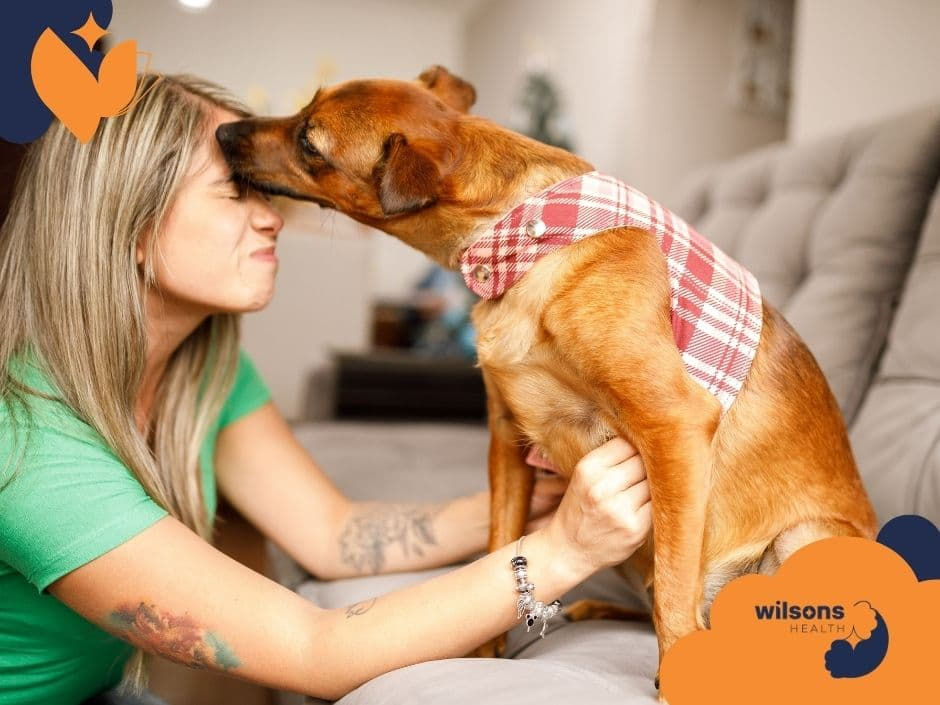
This article is about that: what it means to celebrate your dog’s life now, not only at the end—and how living with purpose alongside them can steady you through everything that’s coming.
What “celebrating your dog’s life now” actually means
Celebration here is not balloons, bucket lists, or elaborate photo shoots (though those can have their place).
In the research, the deepest sources of meaning in dog ownership are surprisingly ordinary:[1][7]
The care routine: feeding, walking, medications, grooming
The relationship work: learning what calms them, what scares them, what makes their eyes go soft
The shared life: the way your day is shaped by their needs
Scientists call this eudaimonic well-being—a sense of meaning, growth, and purpose—distinct from hedonic well-being (pleasure, comfort).[7] Most of what makes a dog’s life feel worth celebrating while it’s still happening sits in that eudaimonic space.
In practice, “celebrating your dog’s life now” often looks like:
Letting their presence structure your day in a way that feels intentional, not just obligatory
Noticing how caring for them has changed who you are
Making small, realistic choices that prioritize shared quality of life, even in illness
Allowing yourself to feel that this relationship is one of the central projects of your life, not a side hobby
This isn’t sentimental. It’s physiological, psychological, and social—down to your heartbeat.
The biology of being needed: what’s happening in both your bodies
When you stroke your dog, sit near them, or even just share a room, several things happen at once:
Oxytocin rises in both of you—this is the hormone associated with bonding and caregiving.[2][4]
Cortisol (a stress hormone) tends to fall, especially in emotionally close pairs.[2]
Your heart rhythms begin to sync; over time, dog and owner show more coordinated heart rate variability (HRV), a marker of calm regulation.[4]
In long-term relationships, particularly where the dog and human share many daily activities, researchers see:
“Ownership duration, emotional closeness, and shared activities predict synchronized HRV between dog and owner.”[4]
In simpler language: the longer you live together and the more you do together, the more your nervous systems learn to co-regulate. You become, quite literally, each other’s steadying presence.
For many caregivers of sick or elderly dogs, this explains a feeling that can be hard to name:
Why leaving them at the vet feels physically wrong
Why sitting on the floor next to their bed calms you as much as it calms them
Why “being there” feels like doing something, even when you can’t fix anything
You are not imagining that your presence matters. Your dog’s body is using you as a secure base—the same way a child uses a trusted caregiver.[2] And your body is using them the same way.
That’s one reason purpose in this relationship doesn’t feel abstract. It’s literally wired into your physiology.
How dogs quietly give us a reason to live on purpose
Across multiple studies, dog owners describe remarkably similar experiences:[1][5][7][11]
“He gives me a reason to get out of bed in the morning.”
“I have to walk her, so I get outside and move, even when I don’t feel like it.”
“Taking care of him has made me a better person.”
Researchers group these into a few key pathways.
1. The care routine as an anchor
A large thematic analysis of dog owners found that the routine of caring for a dog was one of the foundational routes to well-being.[1]
That includes:
Feeding at predictable times
Walks and toileting
Medication schedules
Grooming and hygiene
Training or gentle enrichment
These aren’t just chores. They:
Structure time – days have shape: morning, midday, evening
Interrupt rumination – you can’t stay entirely in your head when someone needs to go out now
Create micro-achievements – “He ate his breakfast,” “We did our slow walk,” “She took her meds”
For people living with depression, grief, or general life drift, this structure can be quietly life-preserving.[5][7] One study found that pet ownership (mostly dogs) was associated with clinically meaningful increases in life satisfaction—again, on par with major life relationships.[11]
2. Identity-level change
Owners often report that their dog has changed their sense of self:[7]
More patient
More responsible
More compassionate
More aware of their own emotions and limits
In psychological terms, the dog becomes part of your identity narrative—the story you tell yourself about who you are and what your life is for.
When you’re caring for a dog with chronic illness or age-related decline, this identity dimension can feel especially strong:
“I’m the person who sees him through this. That’s who I am.”
That is celebration, in its most grounded form.
3. Social connection: the “pack effect”
The Dog Aging Project, which has data on more than 25,000 dogs, found that social support was five times more influential on dog health than financial factors.[3] Dogs with richer social lives—more connection to humans and other dogs—tend to age better.
The same pattern shows up on the human side:
Dogs act as social catalysts—they make conversations with strangers easier and help people feel part of a community.[1]
Simply needing to walk the dog or go to the vet pushes owners into public spaces, which can reduce isolation.
Owners who do more shared activities with their dogs (play, training, outings) report stronger bonds and more emotional closeness.[2]
So when you take your aging dog to sit on a park bench, or carry your arthritic dog around the block in a stroller, you’re not just being sentimental. You’re actively supporting:
Their health
Your own sense of belonging
A shared life that still has outward-facing connections

The paradox: when deep attachment hurts as well as helps
The research is clear: dogs can buffer stress, reduce loneliness, and support mental health.[5][9][12] But one large study of 610 dog owners revealed a more complicated layer.[6]
People with insecure attachment styles in their human relationships—especially those who are anxious, fear rejection, or struggle to trust—often:
Report very strong emotional attachment to their dogs
Rely heavily on the dog for emotional support
Also report higher levels of overall mental health burden[6][8]
It’s not that the dog is harmful. It’s that:
Insecure human attachment → intense reliance on the dog → less engagement with human support → more isolation and distress overall.[6]
This matters if you are:
Pouring everything into your dog and quietly withdrawing from other people
Feeling that your dog is the only one who understands you
Terrified of what will happen to you when they die
None of this makes your attachment wrong or unhealthy. It simply means your relationship with your dog is carrying more weight than one relationship can comfortably hold.
Celebrating your dog’s life now can include a gentle, self-protective step: allowing this bond to supplement, not completely replace, human connection.
That might look like:
Letting one trusted person into the inner circle of your dog’s care
Being honest with your vet about how emotionally central this dog is to you
Joining a support group (online or local) for owners of senior or chronically ill dogs
Your dog is not meant to be your entire support system. They’re part of your pack, not the whole thing.
When your dog is ill or aging: purpose and strain at the same time
Most of the research we have looks at dogs in general, not specifically those with chronic illness. But we can reasonably extend some findings.
What we know applies in illness too:
The care routine remains a source of purpose, even when it becomes more medical (pills, injections, special diets).[1][7]
Physiological co-regulation—that calming effect you have on each other—likely intensifies when your dog is anxious or unwell.[2][4]
Social support is still crucial: isolation during long-term caregiving is consistently linked to worse outcomes for both humans and animals.[3][5]
What we don’t fully know yet:
How the burden of complex medical care affects your sense of meaning over time
What distinguishes owners who feel “purposefully tired” from those who feel crushed and burned out
How veterinary communication and support can best sustain your sense of purpose
So if you feel both:
Deeply purposeful and deeply exhausted
Grateful for the time and resentful of the responsibility
Fiercely devoted and quietly afraid you’re losing yourself
You are not failing. You are standing in a space the research is only beginning to name.
Turning everyday care into conscious celebration
You don’t need to manufacture big experiences to “make memories.” The science suggests that what matters most is how you inhabit the ordinary things you’re already doing.
Here are ways to let purpose and celebration coexist in daily care—especially when time feels short.
1. Name what you’re already doing
Care tasks often blend into the background. Bringing them into awareness can shift them from “burden” to “chosen act of love.”
You might quietly note to yourself:
“I’m washing these blankets so her bed is soft and clean. This is one way I celebrate her.”
“This slow, sniffy walk is not a ‘lesser’ walk. It’s the walk that fits the dog he is today.”
“Writing out his medication chart is me building a structure around him so he feels safe.”
This isn’t about forcing positivity. It’s about letting your brain register that these are meaningful actions, not just obligations.
2. Protect a few non-medical rituals
When illness takes over, everything can start to feel clinical. Purpose is easier to sustain when at least some interactions are not about symptoms.
Depending on your dog’s condition, that might be:
A gentle grooming session they enjoy
Ten minutes of “nose work” with treats around the room
Sitting in a favorite spot together, doing nothing in particular
A bedtime phrase you always say, even if they can’t hear well anymore
These small, predictable rituals reinforce the relationship itself, not just the illness management.
3. Adjust the idea of “a good day”
With a healthy dog, “celebration” might mean hikes, training wins, or new tricks.
With an aging or ill dog, the criteria often change. A “good day” might be:
They ate something they like
Pain seemed reasonably controlled
They showed interest in the world—sniffed the breeze, wagged at a person, watched birds
There was a moment of relaxed contact between you
Working with your vet to define what quality of life looks like for this specific dog can help you see and honor the good days while they’re still happening, instead of only in hindsight.
4. Let others witness your bond
Because social connection is so protective—for both you and your dog—it can help to let the relationship be seen.[1][3]
That could involve:
Sharing a story or photo with a trusted friend, not just on social media
Telling your vet or a technician, “He’s been my anchor through some very hard years,” and letting that be part of his medical record, not just his medical chart
Joining a group specifically for senior dog owners or chronic illness caregivers
Allowing your dog’s life to be witnessed by others is a form of celebration that also builds the human support you’ll need.

Working with your vet as a partner in purpose
Veterinary visits can feel like a series of technical decisions, but they’re also a place where your sense of purpose can be supported—or inadvertently undermined.
The research suggests that social support and feeling understood are powerful determinants of resilience.[3][5] With that in mind, some topics you might bring into the room:
“A big part of my purpose right now is keeping her days comfortable and enjoyable. Can we talk about what that realistically looks like?”
“I want to be very involved in his care, but I’m also getting overwhelmed. Where do my efforts make the biggest difference?”
“These routines matter to both of us. Are there ways to adapt them safely instead of stopping them altogether?”
You are not asking for therapy. You’re giving your vet the information they need to help you shape a care plan that aligns with your values and your dog’s reality.
When you’re already grieving a dog who is still here
Anticipatory grief—the grief that begins before the loss—often shows up as:
A constant sense of countdown
Guilt for not doing or feeling “enough”
A pressure to make every moment “special”
The science offers a quieter, more sustainable frame:
Your dog’s body and nervous system are already using you as a source of safety. Your steady presence, even when you’re sad or tired, is part of what makes their life good.[2][4]
Care routines are meaningful, even when they’re not magical. A well-timed pain medication or a soft bed is a genuine act of celebration in a body that hurts.[1][7]
Social support matters more than perfection. Being resourced yourself—emotionally and practically—probably does more for your dog’s actual quality of life than squeezing in one more elaborate “experience.”[3][5]
You do not have to turn their last months into a highlight reel. You are allowed to simply live them together, on purpose.
A different way of thinking about “before it’s over”
Many people only start “celebrating” a dog’s life when euthanasia is scheduled: favorite foods, special outings, a flood of photos and tributes. Those rituals can be beautiful and important.
But if we take the research seriously, much of what truly defines a dog’s good life—and your own—has been happening all along:
Thousands of small decisions to show up for them
The way your nervous systems have learned to calm each other
The identity you’ve built as someone who cares, consistently, even when it’s hard
The social web, however small, that has formed around this shared life
In that sense, when someone says, “We started celebrating his life before it was over,” what they’re really describing is a shift in awareness, not in behavior.
They didn’t suddenly become more loving. They started to see that the love had been active, specific, and purposeful all along.
You are already doing more celebrating than you think.
References
Degeling C, Rock M. Dog ownership and well-being: a thematic analysis. Qualitative Research in Psychology. 2024. https://www.tandfonline.com/doi/abs/10.1080/14780887.2024.2364330
Katayama M, Kubo T, Yamakawa M, Fujiwara K. Association between the dog–owner relationship and the emotional reactivity of dogs to their owners. Frontiers in Veterinary Science. 2022;9:917943. https://pmc.ncbi.nlm.nih.gov/articles/PMC9179432/
Creevy KE, et al. Dog Aging Project study identifies keys to a healthier life. University of Washington Newsroom. 2023. https://newsroom.uw.edu/blog/dog-aging-project-study-identifies-keys-healthier-life
Wanser SH, et al. Behavioral and emotional co-modulation in dog–owner dyads. Scientific Reports. 2024;14:76831. https://www.nature.com/articles/s41598-024-76831-x
Brooks HL, Rushton K, Lovell K, et al. The power of support from companion animals for people living with mental health problems: a systematic review and narrative synthesis of the evidence. BMC Psychiatry. 2018;18:31. (Summarized within: Herzog H. Dogs and human health: a biopsychosocial model). https://pmc.ncbi.nlm.nih.gov/articles/PMC8042315/
Grajfoner D, Harte E, Potter LM, McGuigan N. The relationship between pet attachment and mental health: the role of insecure attachment and rumination. Human–Animal Interactions. 2022. https://pmc.ncbi.nlm.nih.gov/articles/PMC9441033/
Martens P, Enders-Slegers MJ, Walker JK. The emotional lives of companion animals: dogs and the good life—hedonic and eudaimonic well-being. Frontiers in Psychology. 2022;13:903647. https://www.frontiersin.org/journals/psychology/articles/10.3389/fpsyg.2022.903647/full
Herzog H. The surprising link between pet attachment and mental health. Psychology Today. 2025. https://www.psychologytoday.com/us/blog/animals-and-us/202511/the-surprising-link-between-pet-attachment-and-mental-health
Mayo Clinic Health System. Dogs are good for your health. 2023. https://www.mayoclinichealthsystem.org/hometown-health/speaking-of-health/dogs-are-good-for-your-health
Lieberman DZ. Why dogs are better than people: emotional comfort. The Journal of Clinical Psychiatry News. 2024. https://www.psychiatrist.com/news/why-dogs-are-better-than-people/
Hielscher K, et al. Life’s better with a pet: study reports. Journal of Health Economics and Outcomes Research. 2023. https://jheor.org/post/3111-life-s-better-with-a-pet-study-reports
UC Davis Health. Health benefits of pets: how your furry friend improves your mental and physical health. 2024. https://health.ucdavis.edu/blog/cultivating-health/health-benefits-of-pets-how-your-furry-friend-improves-your-mental-and-physical-health/2024/04
American Heart Association. A dog could be good for your heart: science-backed reasons to adopt. 2023. https://www.heart.org/en/healthy-living/healthy-bond-for-life-pets/pet-owners/a-dog-could-be-good-for-your-heart



Comments