
Chronic Dermatitis in Dogs – Internal vs. External Triggers

About 10–15% of dogs will develop atopic dermatitis at some point in their lives – and for many of them, the itching doesn’t really “go away,” it just moves between quiet and crisis. Yet when you look at the skin, all you see is red, inflamed, maybe a bit smelly. It doesn’t tell you whether the real problem is inside your dog (their immune system, their genetics) or outside (something they’re touching, breathing, or being bitten by).
That inside–outside distinction is where a lot of confusion, guilt, and money gets lost.
Is this the food? Is it the grass? Is it “just allergies”? Why does the shampoo help for three days and then we’re back to square one? And why does every flare look exactly the same, no matter what the trigger was supposed to be?
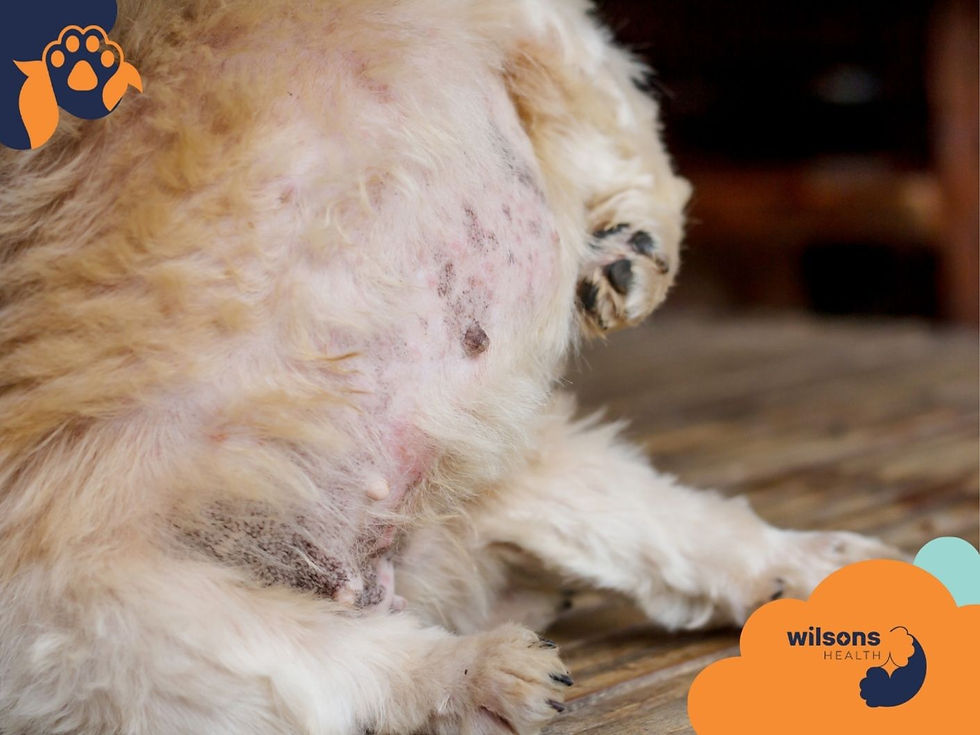
This article is about that tangle: how internal and external triggers interact in chronic dermatitis, what’s known, what’s guesswork, and how to think about your dog’s skin in a way that makes the next vet visit calmer and more productive.
Chronic dermatitis: what’s actually going on in the skin?
“Dermatitis” just means inflammation of the skin. “Chronic” means it keeps coming back or never really resolves.
Common signs:
Itching (pruritus): licking, chewing, scratching, rubbing
Redness, bumps, or rashes
Thickened, darkened skin over time
Hair loss
Odor, greasiness, or crusts
Recurrent ear infections
Under the surface, three big processes tend to be happening at the same time:
Immune system misfiring: In many dogs, especially those with canine atopic dermatitis (CAD), the immune system overreacts to ordinary things like dust mites or pollen. This is an internal problem – a genetic and immunologic tendency.
Skin barrier breakdown: The outer layer of the skin is slightly “leaky” in atopic dogs. Allergens and microbes get in more easily, water escapes more easily, and the skin becomes dry, irritated, and vulnerable.
Microbes taking advantage: Bacteria (often Staphylococcus) and yeast (Malassezia pachydermatis) love warm, inflamed, moist skin. They’re usually present in small numbers, but when the barrier is damaged, they overgrow and create secondary infections that make everything worse.
The result: even if the original trigger was quite small – one flea bite, a new cleaning product, a burst of spring pollen – the skin’s reaction can be big, persistent, and distressing.
Internal vs. external triggers: not a fight, a feedback loop
It’s tempting to think in either/or terms:
“If it’s internal, it must be food or genetics.”
“If it’s external, I just need the right shampoo or to change the grass.”
In reality, internal and external triggers are usually dancing together. A useful way to picture it:
Internal = what your dog brings to the problemTheir genes, immune response, skin barrier quality, overall health.
External = what the world brings to the problemAllergens, parasites, irritants, climate, grooming products, home environment.
Most chronically itchy dogs have a mix of both. The internal part sets the stage; the external part pulls the fire alarm.
Key terms you’ll hear – and what they really mean
You’ll encounter a small dictionary of skin words. Here’s how to decode them in everyday language.
Term | What it means | Why it matters for “internal vs. external” |
Canine Atopic Dermatitis (CAD) | A genetically predisposed, chronic, relapsing inflammatory skin disease. The immune system overreacts (often via IgE antibodies) to environmental allergens like dust mites, pollens, molds, sometimes foods. | Strongly internal (genes, immune dysregulation, barrier defect) but triggered by external allergens. Usually life-long. |
Contact Dermatitis | Skin inflammation from direct contact with an irritant or allergen (plants, chemicals, fabrics, shampoos). Often sharply localized to contact areas. | Primarily external. Remove the contact, and the problem often resolves. Can become chronic if exposure keeps happening. |
Flea Allergy Dermatitis (FAD) | Hypersensitivity to flea saliva. One or two bites can trigger intense itching and lesions, often over the back and tail base. | External (fleas), but the internal sensitivity determines how severe it gets. |
Secondary Infection | Overgrowth of bacteria or yeast on damaged/inflamed skin. Often causes smell, oozing, crusts, and more itching. | Feels like a new problem, but it’s usually a complication of the underlying internal/external triggers. Needs its own treatment. |
Flare factors | Anything that suddenly worsens dermatitis: fleas, pollen surges, dietary changes, infections, stress, grooming products. | Flare factors can be internal (immune shifts) or external (environment). Identifying them is key to prevention. |
Pruritus | Medical term for itching. Often the main symptom owners notice. | The intensity of pruritus doesn’t tell you the cause – internal and external triggers can feel identical. |
Immunotherapy (ASIT) | Allergen-specific immunotherapy: injections or drops with small doses of allergens to retrain the immune system over months. | Targets the internal immune overreaction to specific external allergens. Long-term, not a quick fix. |
Internal triggers: when the problem lives in the immune system
1. Genetics and immune dysregulation
Atopic dermatitis is, at its core, an immune system wiring issue.
Research shows that atopic dogs often:
Produce abnormal levels of IgE antibodies to common environmental allergens
Have immune cells that respond too strongly to those allergens
Show chronic, relapsing inflammation even when the trigger seems minor
Certain breeds are over-represented in CAD studies, which supports a genetic component, though any dog can be affected.
What you might see at home
Itching that starts young (often under 3 years) and keeps returning
Seasonal flares that gradually become year-round
Involvement of typical “allergy zones”: paws, face, ears, armpits, belly, groin
A pattern that multiple medications help, but nothing “cures”
This is the classic “my dog is allergic to the world” picture. The external allergens matter, but the underlying immune tendency is what makes them such a problem.
2. Skin barrier dysfunction
In many atopic dogs, the skin barrier is structurally weaker. Think of it as:
Fewer or defective “bricks and mortar” in the outer skin layers
More water loss → dryness and micro-cracks
Easier passage of allergens and microbes into the skin
That’s why regular, gentle bathing and topical care are not just cosmetic; they’re part of correcting a physical defect in the barrier.
3. Systemic factors
Other internal factors can influence dermatitis:
Hormonal conditions (like hypothyroidism) can alter skin health
Chronic stress or illness can change immune balance
The skin microbiome – the community of bacteria and yeast on the skin – may shift in ways that promote inflammation, though this area is still being researched
These don’t always cause atopic dermatitis, but they can worsen it or make it harder to control.

External triggers: when the world keeps poking the skin
1. Environmental allergens
For atopic dogs, everyday surroundings are full of potential sparks:
Pollens (grasses, trees, weeds)
Mold spores
House dust mites
Storage mites in dry foods or bedding
These particles are inhaled or land on the skin, slip past the compromised barrier, and meet an immune system that’s primed to overreact.
You might notice:
Seasonal flares (spring, summer, fall) that later become less seasonal
Worse itching after outdoor time, or in certain locations
Dogs licking paws after walks (pollens on fur)
Despite the strong role of environment, completely eliminating allergens is usually impossible, which is why external management focuses on reduction, not eradication.
2. Contact dermatitis: direct irritation or allergy
This is where the external cause is more straightforward:
Common culprits:
Certain plants (e.g., some grasses, ground covers)
Cleaning products, detergents, floor cleaners
Shampoos, sprays, topical medications
Some fabrics or dyes
Signs that point toward contact dermatitis:
Lesions where the skin touches the source (belly, groin, feet, chin)
Clear link with a new product or surface
Improvement when the suspected item is removed or avoided
Even here, though, dogs with atopic skin are often more prone to contact problems because their barrier is already compromised.
3. Parasites: fleas and beyond
Fleas are a classic external trigger, especially in flea allergy dermatitis:
One or two flea bites can cause a major reaction in sensitive dogs
The pattern often focuses on the lower back, tail base, and hindquarters
Dogs may chew themselves raw in these areas
Other parasites (mites, for example) can also cause dermatitis or complicate an existing condition.
Because fleas are so common and so powerful as flare factors, consistent flea control is considered non-negotiable in managing chronic dermatitis.
Secondary infections: the great imitator
Bacterial and yeast infections are not “true causes” of most chronic dermatitis, but they often determine how miserable the dog feels.
Common clues:
Strong odor
Oily or greasy skin
Red-brown discoloration, especially between toes or in skin folds
Pustules, crusts, or moist areas
Recurrent ear infections (often yeast)
Studies show that antimicrobial therapy (topical and sometimes systemic) is crucial in controlling these infections and reducing flare frequency. But there’s a tension here: repeated antibiotic use raises concerns about resistance and antibiotic stewardship.
This is why many dermatologists favor topical treatments (medicated shampoos, wipes, sprays) as first-line tools for managing recurrent infections.
How internal and external triggers interact in real life
If your dog has chronic dermatitis, their skin is usually not reacting to just one thing. Instead, think of:
Internal predisposition as the volume knob
External triggers as the playlist
Secondary infections as the distortion that makes everything sound worse
Some typical patterns:
Genetically atopic dog + spring pollen surge + a few fleas→ Sudden severe flare, even though each individual trigger might be modest.
Mildly atopic dog + new scented shampoo→ Contact irritation on top of underlying sensitivity; looks like “the shampoo caused the allergy,” but the dog was already primed.
Dog with good flea control + dust mite allergy→ Non-seasonal itching, especially indoors, that improves somewhat with environmental changes but never fully disappears.
Understanding this interplay can help you avoid magical thinking (“if I just change the food, everything will stop”) and hopelessness (“nothing works, so why bother”). Many small improvements, layered together, can change the overall picture.
How vets sort through internal vs. external causes
There is no single test that neatly says “internal” or “external.” Instead, veterinarians build a picture using:
Detailed history
They’ll ask about:
Age of onset
Seasonality
Environment (home, yard, other animals)
Diet history and any changes
Flea prevention
Previous treatments and responses
Household cleaning and grooming products
This history is often as important as any lab test.
Physical exam patterns
Distribution of lesions (paws, ears, belly, tail base, etc.)
Type of lesions (papules, crusts, thickened skin)
Signs of secondary infection
Evidence of parasites
Rule-outs and stepwise testing
Depending on the case, this may include:
Skin scrapings or tape preps for mites, yeast, bacteria
Cytology (looking at cells and microbes under a microscope)
Fungal culture in some cases
Strict flea control trial
Sometimes a diet trial to evaluate for food-responsive dermatitis
Allergen testing (blood or intradermal) to guide immunotherapy, not to diagnose “allergies” in isolation
The goal is not just to put a name on the condition but to map the triggers: which are internal, which are external, and which are currently causing the most trouble.

Treatment: why it’s almost always multimodal
Because chronic dermatitis is multifactorial, treatment usually comes as a combination package, tailored to your dog and adjusted over time.
1. Itch and inflammation control (internal focus)
These medications aim to calm the immune response and reduce pruritus:
Oclacitinib (Apoquel) – a Janus kinase inhibitor that can provide rapid itch relief with a relatively favorable side effect profile compared to some older immunosuppressants.
Cytopoint – a monoclonal antibody that targets a key itch-signaling molecule (IL-31).
Corticosteroids – powerful anti-inflammatories, often used short-term or for severe flares due to potential long-term side effects.
Cyclosporine – an immunosuppressant shown in trials to improve atopic dermatitis after several weeks of daily use, often used for longer-term control in some dogs.
These don’t “cure” the condition; they dial down the internal overreaction so the skin can cope better with the outside world.
2. Immunotherapy (ASIT): retraining the immune system
Allergen-specific immunotherapy involves:
Identifying key environmental allergens
Giving controlled doses (injections or oral drops) over many months
Gradually shifting the immune response to be less reactive
Important realities:
It can take up to 12 months to see full benefit.
It’s not effective for acute flares – it’s a long game.
Not all dogs respond, but for those who do, it can reduce the need for other medications.
Think of ASIT as working on the internal root of the problem, while other treatments manage the branches.
3. Managing secondary infections
Because bacterial and yeast infections are so common in chronic dermatitis, treatment often includes:
Topical antimicrobials – medicated shampoos, wipes, sprays
Systemic antibiotics or antifungals – when infections are deeper or widespread
Studies support topical therapy in reducing the frequency of infections in CAD dogs. At the same time, vets must balance the need to treat with the need to avoid overusing antibiotics.
4. Environmental and external management
This is where you can often make the most consistent day-to-day difference:
Strict flea control – for all animals in the household, all year, in most regions.
Regular bathing – with vet-recommended products to remove allergens and excess microbes, and to support the skin barrier.
Contact irritant avoidance – adjusting cleaning products, avoiding harsh shampoos, restricting access to known irritant plants or surfaces.
Allergen reduction – as feasible: washing bedding regularly, vacuuming, using air filters, rinsing paws and coat after high-pollen exposure.
None of these will usually fix atopic dermatitis alone, but they reduce external load, meaning your dog may need lower doses or fewer medications to stay comfortable.
Emotional realities: for you and your dog
Living with a dog whose skin never fully settles is emotionally and financially draining.
Common experiences:
Watching your dog scratch until they bleed, feeling helpless
Frustration when a new treatment works… until it doesn’t
Guilt about not catching it earlier, not bathing enough, not affording the “best” option
Decision fatigue around diets, shampoos, medications, and follow-up visits
On the veterinary side, there’s also emotional labor:
Balancing ideal treatment plans with what’s affordable and realistic
Managing expectations around “control” versus “cure”
Navigating antibiotic stewardship while a dog is clearly suffering
It helps to name this: chronic dermatitis is not just a skin disease; it’s a long-term caregiving situation. You are not failing because it isn’t “fixed.” The biology is chronic by nature.
Ethical tensions and unanswered questions
The science is strong in some areas and evolving in others.
Well-established:
CAD is a genetically predisposed, immune-mediated disease.
Secondary infections worsen and perpetuate chronic dermatitis.
Multimodal treatment improves quality of life but does not cure the condition.
Environmental allergens (pollens, mites) are major external triggers.
Still uncertain or emerging:
Exactly how individual flare factors interact in each dog
The best long-term combinations and durations of therapies
The full role of the skin microbiome in health and disease
How to create practical, effective allergen avoidance strategies in real homes
Ethical tensions include:
Quality of life vs. side effects – how aggressively to suppress the immune system, and for how long
Antibiotic resistance – balancing the need to treat infections with global concerns
Affordability – lifelong management can be costly; this shapes what’s possible for many families
Acknowledging these uncertainties can actually be freeing. If experts don’t have a perfect algorithm, you’re not supposed to either. The goal is thoughtful, evolving management, not perfection.
How to think about “next steps” with your vet
You don’t need to arrive at the clinic with a diagnosis, but you can arrive with a framework and good questions.
Some useful ways to organize your thoughts:
Separate triggers in your mind
What might be internal in my dog? (Early onset, breed, year-round itch, history of “allergies.”)
What might be external? (Seasonal changes, new products, visible fleas, environment.)
Track patterns
When are flares worst? Season, weather, location, activities?
Which areas of the body are consistently affected?
What has clearly helped, even partially, and for how long?
Questions to discuss
“Based on what you see, what do you think are my dog’s main internal and external triggers?”
“How can we prioritize: what should we tackle first – fleas, infections, itch control, diet, environment?”
“What would a realistic long-term plan look like for my dog, not just this flare?”
“What are the pros and cons of the medications you’re recommending over the long term?”
“Is my dog a candidate for immunotherapy, and what should I expect if we try it?”
Set expectations together
Chronic dermatitis is usually about control, not cure. A helpful shared goal might be:
“We want my dog comfortable enough to sleep through the night, play, and not be constantly focused on their skin, with the fewest side effects we can manage.”
That kind of clarity makes it easier to evaluate whether a plan is working.
A more grounded way to see your dog’s skin
When your dog is chewing their paws again, it’s easy to feel like nothing is working. But if you zoom out, chronic dermatitis often looks less like failure and more like maintenance of a complex system:
Internal predisposition you can’t change completely
External triggers you can only partially control
Infections you can treat and often prevent more successfully over time
Treatments you can fine-tune as you learn how your dog responds
Understanding the internal vs. external dance doesn’t make the disease gentler, but it does make it more understandable. And understanding is often the first thing that softens fear and self-blame.
You’re not supposed to solve this alone or all at once. You’re supposed to keep learning your particular dog, alongside a veterinary team that takes both the science and your daily reality seriously.
That, in the long run, is what turns “itchy skin that never heals” into “a condition we manage, together, so my dog can still have a good life.”
References
Olivry T, et al. Current knowledge on canine atopic dermatitis. NIH / PubMed Central (PMC).
Total.vet. Contact Dermatitis in Dogs: Causes, Symptoms, and Treatments.
BOVH. Atopic Dermatitis Treatment in Dogs: Understanding This Skin Condition.
VCA Animal Hospitals. Yeast Dermatitis in Dogs.
AnimalBiome. Managing Atopic Dermatitis in Dogs.
Merck Veterinary Manual. Canine Atopic Dermatitis.
Lavengel. 11 Common Types of Canine Dermatitis and Rashes.
American Kennel Club (AKC). Dermatitis in Dogs: Signs, Symptoms, and Treatments.
Cornell University College of Veterinary Medicine. Atopic Dermatitis (Atopy).
PetMD. Contact Dermatitis in Dogs: Common Causes and How To Help.


Comments