
Yeast Infections & Malassezia Dermatitis in Dogs: Causes, Symptoms, Diagnosis, and Treatment

The most useful “hard” number in the yeast literature isn’t about prevalence—it’s about what works: veterinary dermatology consensus summaries repeatedly point to 2% miconazole + 2% chlorhexidine shampoo, typically used twice weekly with adequate contact time, as the topical option with the strongest evidence for Malassezia dermatitis control. That tells you something quietly important: in dogs, yeast trouble is most often managed like an ecosystem problem (skin biology + inflammation + moisture), not like a one-off invader you “kill” once and never see again.Sources: [6], [22], [4]
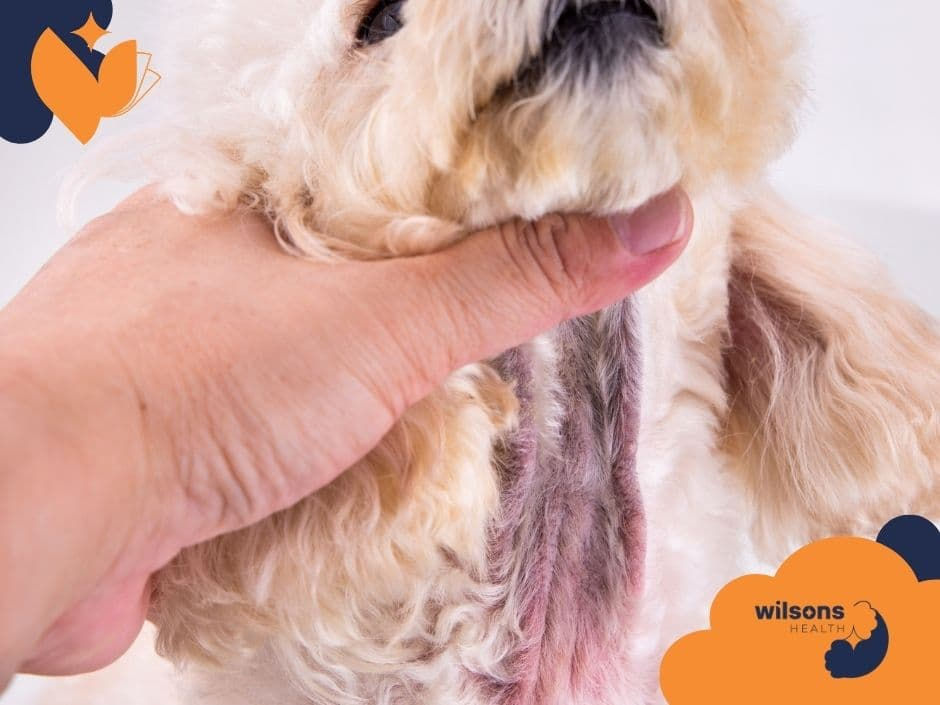
If you’ve been living with the musty odor, the greasy coat that seems to reappear right after a bath, the red belly or armpits, the ear gunk, the paw-licking… the science lines up with your lived experience: yeast in dogs is usually real, but it’s usually also secondary—a sign that something underneath is making the skin a welcoming place for overgrowth.Sources: [12], [18], [19]
“Yeast infection” in dogs usually means Malassezia—a normal resident that got the upper hand
The yeast most often involved is Malassezia pachydermatis. It’s not an exotic pathogen; it’s commonly found on normal canine skin. Problems happen when conditions change—more oil, more moisture, more inflammation, a disrupted barrier—and the yeast population expands enough to drive dermatitis (skin inflammation) or otitis externa (outer ear canal inflammation).Sources: [19], [22], [10]
That’s why the owner phrase “yeast infection” can be misleading. It often describes Malassezia dermatitis or Malassezia otitis externa, not a human-style infection model where a contagious germ appears out of nowhere.Sources: [12], [19]
A helpful mental model:
Malassezia is often less like a new intruder and more like smoke from a fireplace. You can clear the smoke (antifungals), but if the damper is broken (allergy, moisture, hormonal disease), the smoke returns.
What yeast flare-ups tend to look (and smell) like
Across veterinary and owner-facing sources, the recurring cluster of signs is remarkably consistent:
Odor: musty, cheesy, “corn chip,” sometimes sour
Greasy / waxy / oily coat (seborrhea-like feel)
Redness and irritation—often in predictable locations
Itching (scratching, rubbing, licking, chewing)
Thickened skin in chronic cases (“elephant skin”), plus crusting or scaling
Darkened pigmentation (hyperpigmentation) after repeated inflammation
Hair loss from chronic irritation/self-trauma
Sources: [1], [2], [7], [19], [10]
Common “yeast geography” on the dog
Yeast thrives where skin is warm, moist, folded, or oily:
Area | Why it shows up there | What owners often notice |
Paws / between toes | moisture + licking + inflammation | staining, smell, persistent chewing (often mistaken for “behavior”) |
Ears | warm, humid canal; wax changes | dark discharge, head shaking, ear rubbing, pain |
Groin, armpits, belly | friction + humidity | redness, greasy film, odor |
Skin folds | moisture trapping | recurrent flare in same fold lines |
Under collars/harness | trapped heat/moisture | localized odor, redness |
Sources: [3], [8], [16], [19] |
If the center of your dog’s misery is the feet, it can help to frame this as a skin-and-allergy problem first, not a mystery habit—many dogs with yeast involvement also have chronically inflamed feet that cycle through licking and relapse (the lived reality behind itchy paws). (Internal link: https://wilsonshealth.com/post/itchy-paws-dogs/)
And if the ears are the main battlefield, recurrent yeast is often braided together with the same drivers that cause chronic ear inflammation—especially allergy (the pattern behind dog ear allergies). (Internal link: https://wilsonshealth.com/post/dog-ear-allergies/)
The part that makes it recur: yeast is usually secondary to something else
Veterinary dermatology sources repeatedly emphasize that Malassezia problems are commonly secondary—yeast takes advantage of a pre-existing shift in the skin environment. The most repeated drivers include:
Allergies (environmental/atopic dermatitis; sometimes food-related)
Heat and humidity
Moisture trapping (ears, paws, folds, under gear)
Excess oils / seborrhea
Immune suppression (including medication-related, e.g., corticosteroids)
Endocrine disease (commonly named: hypothyroidism and Cushing’s disease)
Antibiotic exposure (can alter microbial balance)
Sources: [2], [8], [9], [14], [16], [19], [20], [26], [27] (as cited within the synthesis)
Two clarifications that reduce a lot of self-blame:
“We cleaned it and it came back” doesn’t mean you failed. It often means the underlying driver—commonly allergy—was still active.Sources: [12], [18], [19]
Odor can be the first “loud” sign of a quiet biology problem. Smell feels like a hygiene issue, but it’s often a skin barrier + inflammation issue that needs medical context.Sources: [1], [7], [19]
Yeast and allergy: the most common partnership in the room
The literature is consistent on this point: allergic skin disease is one of the most important drivers of recurrent Malassezia problems.Sources: [2], [7], [12], [19]
Here’s the mechanism in plain English (without flattening it):
Allergies create chronic inflammation
Inflammation disrupts the skin barrier
Barrier disruption changes the skin’s microenvironment (oiliness, moisture, surface chemistry)
Yeast has an easier time multiplying, and yeast itself can then amplify inflammation
Sources: [16], [19], [18]
This is the paradox owners feel in their bones:
Antifungals can make the skin look and smell better—then it returns anyway.Not because the antifungal “didn’t work,” but because allergy-driven inflammation kept loading the dice.
When your veterinarian talks about investigating allergy—sometimes including discussion of dog allergy testing—it’s often because recurrent yeast is serving as a marker of uncontrolled inflammation, not just a superficial infection. (Internal link: https://wilsonshealth.com/post/dog-allergy-testing/)
Diagnosis: why appearance and odor are not enough (even when they’re iconic)
A classic yeast smell is recognizable, but veterinary sources caution against diagnosing by odor or visuals alone because many skin conditions can mimic each other—and dogs can have mixed infections (yeast plus bacteria) or a noninfectious inflammatory condition with similar redness and itch.Sources: [12], [19], [10]
That matters because the plan changes if the dog has:
yeast alone,
bacteria alone,
or yeast + bacteria together.
Mixed infections are common enough that it’s worth having a mental placeholder for the bacterial side of the story—especially if there are pustules, oozing, or a “pimpley” rash pattern (how bacterial skin infections in dogs enter the picture). (Internal link: https://wilsonshealth.com/post/bacterial-skin-infections-dogs/)
A calm, practical way to approach a vet visit is to treat it like two parallel questions:
Is yeast currently part of this flare?
What keeps making this dog’s skin such good yeast real estate?
Sources: [12], [18], [19]
Treatment reality: what the evidence most strongly supports (and why it’s topical-first)
Consensus guidance and reviews emphasize topical antifungal therapy as the mainstay, with control of predisposing factors as essential to prevent relapse.Sources: [4], [6], [12], [18]
Topicals: the workhorse
Evidence syntheses cited in veterinary literature report strong evidence for:
2% miconazole + 2% chlorhexidine shampoo, often twice weekly, with adequate contact time
Sources: [6], [22]
Topicals are repeatedly favored because they:
directly reduce yeast on the skin surface,
can also help with oil/scale control,
avoid some systemic medication tradeoffs in many cases.
Sources: [4], [6], [17]
If topical care is part of your dog’s long-term life, that’s not a sign you’re “stuck” forever; it’s often simply what chronic skin biology requires—similar to how some humans need ongoing dandruff or eczema routines.
Many households end up building a rotation of medicated washes, wipes, and mousses into real life—especially for paws, folds, and “hot spots”—and the details (frequency, ingredients, contact time, what’s safe for your dog) are exactly the kind of nuance that belongs in a veterinarian-guided topical plan (the practical landscape behind itchy dog shampoos & topicals). (Internal link: https://wilsonshealth.com/post/itchy-dog-shampoos-topicals/)
Systemic antifungals: useful, but typically “next-line”
When topical therapy is ineffective, impractical, or the disease is severe/extensive, reviews support oral azoles such as:
ketoconazole
itraconazole
Sources: [13], [22]
These decisions are case-dependent (severity, distribution, other health factors, monitoring needs), which is why yeast management so often becomes a partnership with your veterinary team rather than a single over-the-counter purchase.Sources: [12], [22]
Long-term control: sometimes preventive, sometimes “pulse”
Recent reviews emphasize that if the primary condition isn’t curable or can’t be fully identified, some dogs do best with:
ongoing preventive topical treatment, and/or
pulse oral therapy to reduce relapses
Sources: [18]
That’s a very different emotional story than “one course and done.” It’s closer to asthma logic: you manage a tendency, not a one-time event.
What’s well-established—and where the science is honestly less tidy
It helps to know where the evidence is strong versus where it’s more experience-driven:
Well established
Malassezia is a normal skin yeast that can overgrow and cause dermatitis/otitis.
Typical signs include odor, greasiness, redness, itch, and recurrent ear/paw involvement.
Allergies are a major predisposing factor for recurrence.
Miconazole + chlorhexidine topical therapy has strong evidence support.
Sources: [19], [22], [2], [7], [12], [6]
Still uncertain / variable in real-world dogs
Exact population prevalence (sources agree it’s common, but don’t converge on a single number).
Recurrence rates after treatment across all subtypes.
How often recurrence is driven by undiagnosed allergy versus endocrine disease or other factors in general practice.
The most cost-effective long-term prevention strategy for multifactorial cases.
Sources: [4], [18], [19], [22]
This uncertainty isn’t a failure of veterinary medicine; it’s a feature of a condition that’s often multifactorial, where the “cause” is sometimes a stack of small disadvantages rather than one dramatic villain.
The emotional load no one warns you about: the “treatment treadmill”
Yeast problems have a special way of making good owners feel strangely inefficient. The dog seems otherwise fine—but the house smells musty again, the paws are wet again, the ears are back to shaking, and you’re calculating bath schedules like you’ve been hired as your dog’s spa manager.
That experience is baked into the biology: because Malassezia problems are so often secondary, people can be told (directly or indirectly) that they’re dealing with a “simple yeast issue,” when the real long-term project is controlling an inflammatory skin disorder and the conditions that favor overgrowth.Sources: [12], [18], [19]
A surprisingly relieving reframe is this:
Relapse isn’t proof you missed something obvious. It’s often proof you’re dealing with a chronic tendency.And chronic tendencies respond best to plans, not perfection.
Practical orientation for your next vet conversation (without trying to self-diagnose)
If you want to feel more steady in the exam room, these are the “adult questions” the literature supports asking—questions that keep the focus on both the flare and the driver:
“Do you think this is Malassezia dermatitis/otitis, or could it be bacterial, mixed, or noninfectious inflammation?”
“What predisposing factor seems most likely in my dog—allergy, moisture/folds, endocrine disease, medication effects?”
“If this improves with antifungals but returns, what’s our plan to address the underlying inflammation?”
“Would you expect maintenance topical therapy long-term in this case?”
“What signs would mean we should reassess for endocrine disease (like hypothyroidism or Cushing’s)?”
Sources: [12], [18], [19], [9], [14], [16]
No one gets bonus points for guessing right at home. The win is having a plan that matches the biology: treat the overgrowth, then change the conditions that keep inviting it back.
A closing thought that tends to hold up over time
Dogs with Malassezia problems often look like they’re dealing with a surface issue—something you should be able to scrub away. But the most consistent message across veterinary dermatology is almost the opposite: yeast is frequently a signal of deeper skin-barrier disruption, often allergy-driven, sometimes hormonal or environmental, usually multifactorial.
When you start treating it as a recurring climate problem instead of a single storm, the whole experience gets less personal. You stop asking, “Why won’t this go away?” and start asking, “What helps my dog’s skin stay stable?” That shift doesn’t just improve outcomes—it makes the caregiving lighter to carry.
References
CareCredit — Yeast Infections in Dogs: Causes, Symptoms and Treatments — https://www.carecredit.com/well-u/health-wellness/dog-yeast-infection/
PetMD — Yeast Infection in Dogs: Ears, Skin, and Paws — https://www.petmd.com/dog/conditions/skin/yeast-infections-dogs
WebMD Pets — Yeast Infection in Dogs: Causes, Treatment, and Prevention — https://www.webmd.com/pets/dogs/yeast-infection-in-dogs-causes-treatment-and-prevention
World Association for Veterinary Dermatology — clinical consensus guidelines (PDF) — https://www.dermatoclinica.com.br/wp-content/uploads/2021/01/malassezia.pdf
Purina — Yeast Infection in Dogs: Symptoms & Treatment — https://www.purina.com/articles/dog/health/skin-fur-ears/yeast-infection-in-dogs
WAVD — Summary of clinical consensus guidelines (PDF) — https://wavd.org/wp-content/uploads/summary-of-clinical-consensus-guidelines-biology-diagnosis-treatment-of-malassezia-dermatitis.pdf
American Kennel Club — Yeast Infections in Dogs: Signs, Symptoms, Treatments — https://www.akc.org/expert-advice/health/yeast-infections-in-dogs/
Vets for Pets — How to Spot and Treat Yeast Infections in Dogs — https://www.vets4pets.com/pet-health-advice/dog-advice/yeast-infections-in-dogs/
VetLens — Yeast Infection in Dogs: Symptoms, Causes & Treatment — https://www.vetlens.com/blog/yeast-infection-in-dogs
PMC — Canine Malassezia dermatitis — https://pmc.ncbi.nlm.nih.gov/articles/PMC5603939/
Germantown Animal Hospital — Yeast Dermatitis in Dogs: Signs and Treatment — https://germantownah.com/site/blog-memphis-vet/2022/03/15/yeast-dog-dermatitis
Royal Canin Academy — Malassezia dermatitis and otitis in dogs — https://academy.royalcanin.com/en/veterinary/malassezia-dermatitis-and-otitis-in-dogs
Veterinary Practice — Canine Malassezia dermatitis — https://www.veterinary-practice.com/article/canine-malassezia-dermatitis
Chewy — What Are Yeast Infections in Dogs? — https://www.chewy.com/education/dog/health-and-wellness/yeast-infections-in-dogs
Vetster — How to prevent and treat yeast skin infections in dogs — https://vetster.com/en/wellness/how-to-prevent-and-treat-yeast-skin-infections-in-dogs
University of Illinois Veterinary Medicine — Malassezia Dermatitis in Dogs and Cats — https://vetmed.illinois.edu/2019/04/16/malassezia-dermatitis-dogs-cats/
PMC — Malassezia species and its significance in canine skin disease — https://pmc.ncbi.nlm.nih.gov/articles/PMC9754143/
VCA Hospitals — Yeast Dermatitis in Dogs — https://vcahospitals.com/know-your-pet/yeast-dermatitis-in-dogs
Purina Canada — Understanding and Treating Dog Yeast Infections — https://www.purina.ca/articles/dog/health/yeast-infection-in-dogs
AKC — Yeast Dermatitis (Malassezia) in Dogs: Signs, Symptoms, and … — https://www.akc.org/expert-advice/health/yeast-dermatitis-in-dogs/
PMC — Malassezia Yeasts in Veterinary Dermatology — https://pmc.ncbi.nlm.nih.gov/articles/PMC7059102/
BluePearl Pet Hospital — Malassezia (Yeast Dermatitis) in Dogs and Cats — https://bluepearlvet.com/medical-articles-for-pet-owners/yeast-malassezia-dermatitis/


Comments