
Natural Antimicrobials for Dog Wound Care

Updated: May 20
About 10–20% of dog wounds develop infections that slow or derail healing, even when they’re cleaned and bandaged properly. In chronic or contaminated wounds, that risk is higher still. Against that backdrop, it’s not surprising that “natural” antimicrobials—honey, herbal gels, silver dressings—have become a quiet revolution in veterinary wound care clinics and home medicine cabinets alike.
The science is no longer just folklore. Amazonian plant extracts, Manuka honey, and even a dog’s own blood components have shown they can inhibit bacteria like Staphylococcus aureus and E. coli, and in some studies help wounds close faster than standard ointments. But the picture is nuanced, and sometimes counterintuitive: one honey trial in dogs found that bacterial counts were actually higher in the honey group early on, even though those same wounds healed well and ended up with fewer bacteria by day 21.
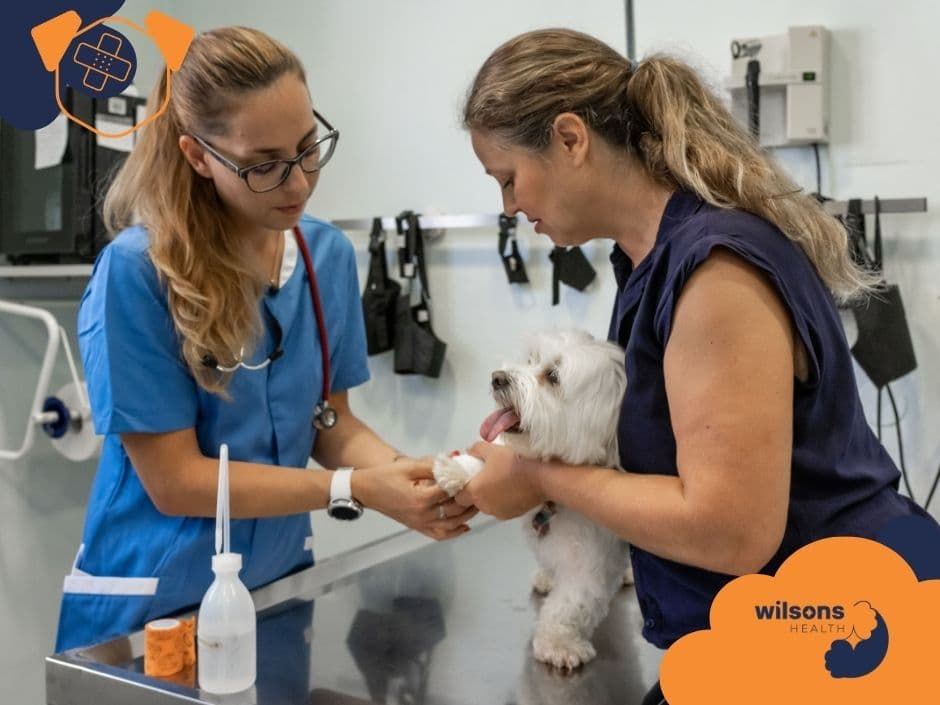
This article walks through what’s actually known about natural antimicrobials for dog wounds—what looks promising, what’s still experimental, and how to think about these tools alongside (not instead of) conventional antibiotics.
What “natural antimicrobials” really means in dog wound care
In this context, natural doesn’t mean “harmless” or “weak.” It means the active substance originates from plants, animals, or microorganisms rather than being fully synthetic.
Common categories you’ll see:
Phytopharmaceuticals: Plant-based formulations (extracts, gels, ointments) used to combat microbes and support healing.
Essential oils: Highly concentrated plant oils (e.g., tea tree, lavender) with antimicrobial and anti‑inflammatory effects in lab and animal models.
Honey (especially Manuka): A complex mix of sugars, enzymes, and plant compounds with both antimicrobial and healing properties.
Autologous platelet-rich plasma (PRP): A concentrate prepared from the dog’s own blood; rich in platelets, growth factors, and some antimicrobial activity.
Natural oils and animal-derived products: For example, ostrich oil, which has shown antibacterial and healing-promoting effects in wound models.
Hybrid therapies: Natural actives (like iodine, derived from natural sources) combined with synthetic biodegradable materials for dressings or gels.
These are typically used as local antimicrobial wound therapy—applied directly to the wound—rather than as systemic medications like oral antibiotics. That local focus means you can get high antimicrobial activity right where it’s needed, with less impact on the rest of the body.
Why natural options are on the table at all
There are three big drivers:
Antibiotic resistance: Resistant bacteria like MRSA (methicillin-resistant Staph aureus) are an increasing concern in both human and veterinary medicine. Using effective local therapies can sometimes reduce the need for systemic antibiotics or shorten the course.
Chronic and “stalled” wounds: Pressure sores, lick granulomas, old bite wounds—these can linger for weeks or months. Natural antimicrobials with healing-promoting properties (not just germ-killing) are attractive in this setting.
Owner preferences and emotional comfort: Many caregivers feel more at ease using products they perceive as gentler or more “biological,” especially after a long course of conventional drugs. That hope is understandable—but it needs to be matched with realistic expectations and good evidence.
The key ethical tension for vets is this: natural antimicrobials can help and may reduce antibiotic use, but used in the wrong situation they can delay effective treatment of a serious infection. Navigating that tension is part science, part communication.
How scientists judge whether a “natural” antimicrobial works
You may see terms like MIC (Minimum Inhibitory Concentration). MIC is the lowest concentration of a substance that stops a microbe from growing in a lab dish.
For wound products, researchers look at:
Which microbes are inhibited: Common wound pathogens include Staph aureus, E. coli, Pseudomonas aeruginosa, and various yeasts like Candida.
How strong the effect is: Lower MIC = stronger activity in lab conditions.
What happens in living animals: Lab data is only the first step. The more convincing studies are:
controlled trials in dogs with real wounds
measurements of healing time
bacterial counts over time
histology (microscopic evaluation of tissue repair)
This is where the story gets interesting—and sometimes messy.

Plant-based antimicrobials: from Amazonian trees to garden herbs
Jucá (Libidibia ferrea): a serious contender
One of the best-studied plant-based treatments in dogs comes from an Amazonian tree called Jucá.
In a controlled study of dog wounds, Jucá formulations showed:
Antimicrobial activity against:
Staphylococcus aureus
E. coli
Pseudomonas aeruginosa
Candida krusei
MIC values between 16.625 and 250 µg/ml, indicating meaningful antimicrobial potency in lab tests [1].
By day 21, about 91% of wounds were fully healed.
Histology showed:
increased fibroblast activity (the cells that build new tissue)
better collagen organization
more mature, organized skin layers compared with standard ointments [1].
In other words, Jucá didn’t just keep bacteria at bay; it seemed to orchestrate better-quality healing.
Where this leaves owners: Jucá is promising, but it’s not yet a mainstream over-the-counter product in most countries. If you see it in a veterinary formulation, it’s one of the more evidence-backed plant extracts.
Everyday herbs: plantain, calendula, St John’s wort, yarrow
These plants are common in herbal traditions and increasingly in dog-care discussions:
Plantain (Plantago spp.)
Contains allantoin, which stimulates skin cell growth and tissue regeneration.
Traditionally used for cuts, abrasions, and mild infections.
Offers anti-inflammatory and mild antimicrobial effects [5].
Calendula (Calendula officinalis)
Anti-inflammatory and supports granulation tissue (the pink, healthy tissue that fills wounds).
Mild antimicrobial properties; often used in ointments and washes.
Hypericum (St John’s wort) and Yarrow
Both have documented antibacterial and anti-inflammatory activity [5].
Used topically in herbal practice for minor wounds.
Evidence in dogs is much thinner than for Jucá or honey. Most data comes from broader reviews, lab studies, and traditional use, not large canine trials [8]. That doesn’t make them useless—but it does mean:
Concentration and preparation matter.
You’re often relying on practitioner experience as much as formal data.
They’re best thought of as adjuncts for minor or well-controlled wounds, not stand-alone treatments for deep or heavily infected injuries.
Essential oils: potent, but not toys
Essential oils like tea tree and lavender are often mentioned in DIY wound-care recipes. The science is more complex than the Pinterest boards.
What research suggests:
Tea tree oil can inhibit Staph aureus at concentrations as low as 0.5% in lab conditions [3].
In animal wound models, essential oils have:
inhibited common wound bacteria (S. aureus, E. coli)
enhanced fibroblast proliferation
improved collagen synthesis and wound strength [3].
But there are important cautions:
Essential oils are highly concentrated. Undiluted application can cause chemical burns, dermatitis, or toxicity if licked.
Dogs are more sensitive to some oils than humans.
There is limited controlled research specifically in canine clinical wounds, with clear dosing and safety margins.
So the practical takeaway: essential oils are not for home improvisation on open wounds. If they’re used, it should be in veterinary-formulated products where concentration, carrier, and safety have been considered.
Animal-derived and “bio-logical” therapies
Honey: more than a folk remedy
Honey—especially Manuka honey—has one of the stronger evidence bases among natural wound treatments in dogs.
Across randomized controlled trials and reviews [4,8]:
Honey-treated dog wounds:
often healed faster than saline-treated controls
were fully healed in nearly all cases by day 21
showed significant reductions in bacterial counts by the end of the study period
Some trials noted:
higher bacterial counts early on in honey-treated wounds compared with controls
but ultimately lower counts and better healing by day 21 [4].
This pattern can be confusing at first glance. A useful way to think about it:
Honey’s high sugar content and osmotic effect can initially draw fluid (and bacteria) into the wound surface.
Its antimicrobial components—like hydrogen peroxide, low pH, and plant-derived compounds—then gradually shift the environment to be less hospitable to microbes.
Meanwhile, honey:
maintains a moist (but not soggy) environment
supports autolytic debridement (the body’s way of clearing dead tissue)
may modulate inflammation and promote granulation tissue.
So if a vet recommends a medical-grade honey dressing, early swab results or appearances might briefly look “busier” before they look better. The endpoint—healing time and final bacterial load—is what matters.
Key point: this applies to sterile, medical-grade honey products, not kitchen honey from the pantry, which can carry spores and contaminants.
Platelet-rich plasma (PRP): using the dog’s own blood as medicine
Autologous PRP is made by drawing a small amount of the dog’s blood, spinning it in a centrifuge, and concentrating the platelets and growth factors into a small volume. This is then applied to or injected around the wound.
In dogs with MRSA-infected wounds:
PRP showed significant antimicrobial activity against MRSA [7].
Wounds treated with PRP had:
faster wound contraction
accelerated re-epithelialization (the new skin layer closing over)
better histological signs of healing and reduced inflammation after two weeks, compared with those treated with conventional topical antibiotics [7].
PRP is not a “natural ointment” you can buy; it’s a procedure done in a veterinary clinic. It’s more invasive and more expensive than a cream, but for stubborn or resistant infections it can be a powerful tool.
For owners, the emotional appeal is obvious: you’re helping your dog heal using their own biology, not adding more drugs. The scientific reality is also compelling—but it’s still an emerging field, and not every clinic offers it.
Ostrich oil and other animal oils
Ostrich oil has been studied in animal wound models, showing:
antibacterial effects
reduced inflammation
increased fibroblast proliferation and improved healing [3].
Like many natural oils, it seems to work both by:
directly inhibiting some microbes
modulating the inflammatory environment and supporting tissue repair
At present, evidence in actual clinical canine cases is limited. If you come across ostrich oil in a veterinary product, know that it’s not pure marketing fluff—but it’s also not as well studied as honey or PRP.
Synthetic–natural hybrids: not quite “kitchen cupboard,” but very effective
Some of the most successful wound therapies in dogs blur the line between natural and synthetic. An example: iodine-based ointments combined with biodegradable polymers.
In one study using a blend of:
PVP-iodine (povidone-iodine, an iodine complex)
biodegradable materials like PCL (polycaprolactone) and GelitaSpon
researchers found:
significant inhibition of wound bacteria [2]
wound closure times between 14 and 38 days
average healing time around 22 days
>90% reduction in wound size in some chronic and severe cases [2]
These dressings harness iodine’s broad-spectrum antimicrobial effect while using modern materials to control release and support tissue.
They’re “natural” in the sense that iodine is an element and part of biological systems—but also very much products of biomedical engineering.
They illustrate an important point: the natural vs. synthetic divide is less important than whether something is well designed, evidence-based, and appropriate for your dog’s specific wound.

Where natural fits with conventional antibiotics
Local natural antimicrobials don’t live in a separate universe from standard drugs. In real veterinary practice, they’re part of multimodal wound management, which may include:
mechanical cleaning and debridement
systemic antibiotics when indicated
local antibiotic therapy (e.g., amikacin infusions for deep bite wounds) [6,10]
topical natural or hybrid antimicrobials
bandaging techniques, pressure management, and sometimes surgery
A retrospective study of dog-to-dog bite wounds showed that local antimicrobial therapies, including agents like amikacin, are commonplace in practice [10]. Natural products can slot into this local-therapy space, especially where:
the infection is superficial or well controlled
the main goal is to support healing and reduce bacterial load
resistance concerns make heavy systemic antibiotic use less desirable
But there are limits. Deep, rapidly spreading, or systemic infections are not the place to experiment with honey alone.
What’s solid, and what’s still emerging?
Here’s a quick orientation:
Better established in dogs | Still uncertain / under study |
Jucá (Libidibia ferrea) has antimicrobial and healing-promoting effects, with improved fibroblast activity and collagen formation in canine wounds [1]. | Long-term, head‑to‑head comparisons of natural antimicrobials vs. standard antibiotic protocols in large populations of dogs. |
Medical-grade honey shortens healing time and reduces bacterial load by day 21 in several dog studies, though early bacterial dynamics can be variable [4,8]. | Exact optimal concentrations, carriers, and regimens for many plant extracts and essential oils in canine wounds. |
PRP enhances healing and has antimicrobial activity against resistant bacteria like MRSA in dogs [7]. | The real-world risk–benefit and regulatory oversight of commercial “natural” wound products marketed directly to pet owners. |
Iodine–biodegradable polymer blends (e.g., PCL/GelitaSpon/PVP-I) are effective and safe for chronic and severe wounds in dogs [2]. | How using natural antimicrobials affects owner–vet trust, adherence to follow-up, and long-term antibiotic stewardship. |
The takeaway: some natural therapies (honey, PRP, certain iodine blends, Jucá) are now part of a serious, evidence-informed toolkit. Many others are promising but still in the “early chapters” of their story.
The emotional side: hope, guilt, and the long haul of wound care
If you’re caring for a dog with a chronic or stubborn wound, you’re not just managing bandages. You’re managing:
the daily sight (and smell) of something that looks painful
the dog’s frustration, licking, or restlessness
your own worry that you’re missing something or not doing enough
the cost and time of repeated vet visits
Natural options often enter this picture as emotional relief valves:
“Maybe this will finally help.”
“At least I’m not just giving more antibiotics.”
“This feels gentler, more in tune with their body.”
Those feelings are valid. But they can also set up disappointment if expectations don’t match the biology.
Some realities that can help ground the process:
Good natural therapies are not quick fixes. Even in successful studies, healing times of 14–22 days (or more) are normal for significant wounds [2,4].
Bacterial counts can be misleading in the short term. Honey trials show early ups and downs before a clear downward trend by day 21 [4]. A single swab result doesn’t define success or failure.
You are not “failing” if antibiotics are still needed. Natural antimicrobials can reduce antibiotic use, but they don’t erase the need for systemic drugs in all cases. Severe infection is a medical reality, not a moral judgment.
Vets are balancing more than one responsibility. They’re trying to help your dog, respect your preferences, and also steward antibiotics responsibly. When they push back on a purely natural approach for a deep abscess, it’s about risk, not disrespect.
Using this knowledge in conversations with your vet
You don’t need to walk into the clinic speaking fluent microbiology. But having a few grounded concepts in your pocket can make discussions feel more collaborative and less confusing.
You might ask:
“Would a medical-grade honey dressing or a plant-based topical be appropriate for this kind of wound, alongside other treatments?”
“Is PRP something that could help if this doesn’t respond to standard care?”
“Are there any evidence-based natural products you’re comfortable using here, or would they risk delaying proper infection control?”
“If we use a natural topical, what should I watch for that would tell us we need to escalate to systemic antibiotics?”
“Are there specific products or brands you trust for things like honey or herbal gels, so we avoid low-quality versions?”
And you can expect in return:
clarity about what the main goal is right now (e.g., “We need to get this infection under control fast,” versus “We’re mainly supporting granulation and closure.”)
a plan for monitoring—what signs mean “this is working” vs. “we need to change course”
honesty about what’s well supported and what’s more experimental
Thinking about “natural” without the halo or the fear
It’s tempting to divide the world into “chemical” (bad) and “natural” (good), or the reverse. Wound biology doesn’t care about those labels. It cares about:
whether bacteria are controlled
whether inflammation is appropriate, not excessive
whether new tissue can grow and organize properly
whether the dog’s overall health supports healing
Natural antimicrobials can help on all of those fronts. So can some very unromantic synthetic drugs. The most dog-centered approach is usually “and”, not “or”.
If there’s a single, calming way to hold all of this, it might be this: your job is not to pick the “purest” treatment or the most high-tech one. Your job is to stay in honest partnership with your vet, ask the questions that matter to you, and choose the combination of tools—natural and conventional—that gives your particular dog the best chance to heal, with the least suffering along the way.
The science is still unfolding. But even now, it’s clear that honey, certain plant extracts, carefully designed iodine dressings, and your dog’s own platelets are more than hopeful stories. They’re part of a growing, evidence-based language of care—one that can sit comfortably beside antibiotics, rather than in their shadow.
References
Frontiers in Veterinary Science. Efficacy of Phytopharmaceuticals from the Amazonian Plant (Jucá, Libidibia ferrea) for Wound Healing in Dogs.
Popp, L., et al. Antibacterial Effect and Therapy of Chronic Skin Defects Using Biodegradable Materials with Iodine in Dogs. PMC (NIH).
Cambridge Media. Antimicrobial and Healing Promoting Properties of Animal and Plant Oils in Wound Treatment.
Veterinary Evidence. Honey Application in Wound Management in Dogs — Prospective Randomised Controlled Trials.
Dogs Naturally Magazine. Five Natural Topical Antibiotics for Dogs (plantain, calendula, yarrow, and others).
Wiley Online Library. Serum Amikacin Concentrations in Dogs with Naturally Occurring Infections and Local Antimicrobial Therapy.
Scientific Reports (Nature). Antimicrobial Action of Autologous Platelet-Rich Plasma on MRSA-Infected Wounds in Dogs.
PMC (NIH). A Scoping Review of the Evidence for Medicinal Use of Natural Products in Veterinary Wound Healing.
PMC (NIH). Natural Antimicrobials Promoting Inhibition of COX-2 and Reducing Bacterial Infections.
Journal of Veterinary Internal Medicine. Antimicrobial Use in Dog-to-Dog Bite Wounds — Retrospective Study.


Comments