
Holistic Skincare for Dogs – Safe Oils and Remedies

Around 10–15% of dogs in developed countries live with atopic dermatitis – a chronic, genetically driven skin disease that makes them itch, chew, and rub often for life. For many of these dogs, standard medications help, but don’t fully control the problem. That’s why so many owners end up standing in the skincare aisle (or scrolling online) wondering: coconut oil or calendula? CBD or chamomile? And which “natural” remedies are actually safe for a dog who already seems to react to everything?
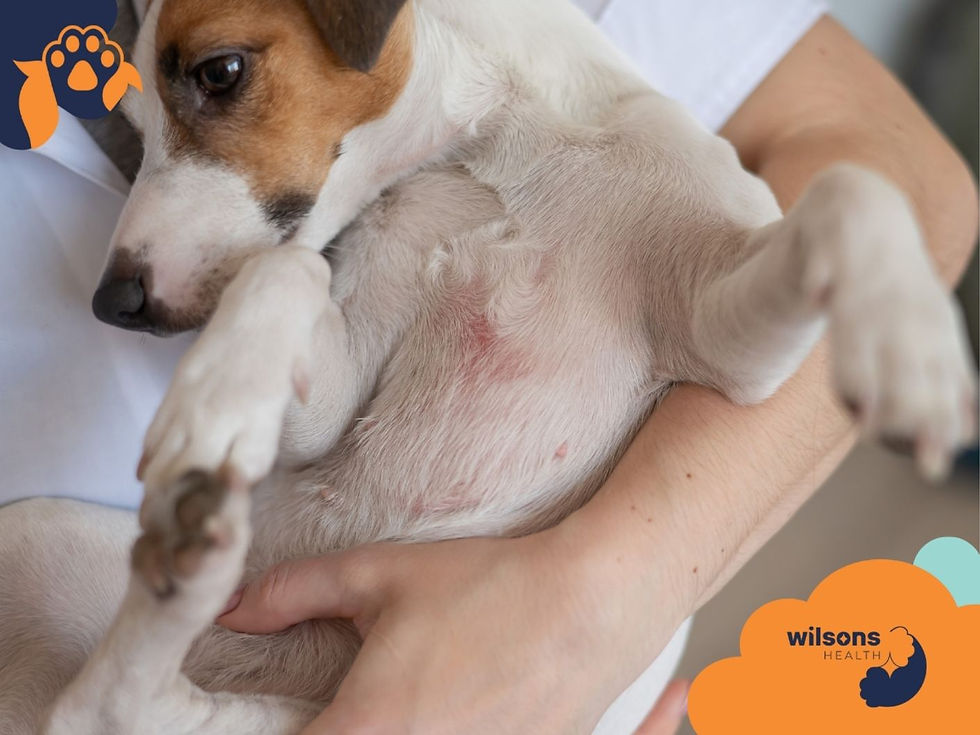
This article is here to sort that out: what’s genuinely evidence‑backed, what’s biologically plausible but still unproven, and what’s risky despite being sold as “gentle” or “holistic.”
What “holistic skincare” really means in a dog with chronic itch
In dogs, “holistic skincare” usually isn’t about spa days. It’s about three overlapping needs:
Managing a chronic medical condition – especially atopic dermatitis (AD), an inflammatory, allergy‑driven skin disease.
Rebuilding and protecting the skin barrier – because in AD, that barrier is thin, leaky, and easily colonized by yeast and bacteria.
Giving owners a sense of agency – something you can do with your hands, at home, that doesn’t involve another steroid refill.
A few key terms help orient the landscape:
Atopic dermatitis (AD) – a lifelong, genetically influenced allergic skin disease triggered by environmental allergens. The hallmark is pruritus (itching) that often precedes visible rashes.
Skin barrier – the outer “brick‑and‑mortar” layer of the skin. In AD, that “mortar” (especially lipids called ceramides) is damaged, so water leaks out and irritants and microbes get in.
Dermocosmetics – non‑drug skincare products (shampoos, moisturizers, sprays, oils) designed to support or repair the barrier.
Carrier oils – relatively inert plant oils (like coconut or jojoba) used to moisturize and to dilute stronger substances.
Essential oils – highly concentrated plant extracts. Powerful, sometimes useful, often irritating or toxic if misused.
Gut–skin axis – the idea (backed by growing data) that the gut microbiome and intestinal barrier influence skin inflammation.
Understanding these pieces makes “holistic skincare” less mystical and more about biology and strategy.
The core truth: skin barrier care is not optional in itchy dogs
Whatever else you try, the science points to one non‑negotiable: supporting the skin barrier.
Veterinary studies have shown that in dogs with AD and high transepidermal water loss (the skin literally leaking moisture):
Daily moisturization can increase the thickness of the outer skin layer and improve barrier function.[7]
When moisturizers are combined with advanced drugs like lokivetmab (a monoclonal antibody against itch), dogs often stay in remission longer than with the drug alone.[7]
Mechanistically, moisturization appears to:
Reduce water loss through the skin
Help normalize the mix of skin microbes (less overgrowth of Malassezia yeast and Staphylococcus bacteria)[7]
Make the skin less reactive to everyday irritants
This doesn’t mean a plant oil replaces prescription therapy. It means barrier care is a foundation everything else sits on – including medications, supplements, and diet.
Carrier oils: the quiet workhorses of dog skincare
Carrier oils are the base layer of many “natural” dog skincare routines. They’re not miracle cures, but used well, they can be safe, soothing allies.
Safer carrier oils for dogs
Evidence here is mostly from traditional use and lab data, not large clinical trials – but the safety profile is relatively good when used sensibly.
1. Coconut oil[2]
Properties: Moisturizing, with documented antibacterial and antifungal activity in lab settings.
Uses:
Dry, flaky patches
Cracked paw pads
Mildly irritated but not raw or infected areas
Considerations:
Many dogs will lick it; small amounts are generally safe, but large amounts can upset the stomach.
Oily fur picks up dirt – better for targeted spots than full‑body coating.
2. Jojoba oil[2]
Properties: Technically a liquid wax; closely mimics natural skin oils; non‑comedogenic; very stable.
Uses:
Sensitive skin areas
Dogs who seem greasy or react to heavier oils
Considerations:
Often well tolerated; still best to patch‑test a small area.
3. Sweet almond oil[2]
Properties: Rich in vitamins A and E; softening for dry skin.
Uses:
Dry elbows, flaky areas, brittle fur
Considerations:
Safe for dogs; used cautiously around cats.
Avoid if anyone in the household has a nut allergy.
Oils to avoid on dogs’ skin
Some oils are marketed for pets but carry real risks:
Castor oil – can be toxic if licked and ingested.[2]
Macadamia oil – macadamia nuts are toxic to dogs; avoid the oil as well.[2]
Mineral oil – forms a film that can block pores and trap irritants.[2]
Synthetic fragrance oils not formulated for animals – high risk of irritation or allergy.[2]
With any carrier oil, think of it as a moisturizer and barrier helper, not a standalone itch cure. If redness, heat, odor, or oozing are present, a vet visit comes first; oil over infection is like lotion over a burn – it can trap the problem.
Essential oils: powerful, marketable, and often misunderstood
Essential oils sit at the center of the “natural skincare” conversation – and at the center of many vet poison control calls.
Two truths can coexist:
Some essential oils likely have useful properties for skin and mood.
Many are irritating or toxic to dogs, especially when undiluted or used often.
Essential oils that are considered safer (with big caveats)
When properly diluted in a carrier oil and used under guidance, the following are generally considered lower risk for dogs:[4][8]
Lavender
Chamomile
Myrrh
Ginger
Rosemary
Bergamot
Frankincense
Even then, there are important rules:
Never apply essential oils directly to a dog’s skin or coat. They are far too concentrated.
Always dilute in a carrier oil to a low percentage (your vet or a qualified veterinary aromatherapist can guide this).
Avoid mucous membranes (eyes, nose, mouth, genitals) and damaged skin.
Monitor breathing and behavior – some dogs develop coughing, sneezing, or agitation around diffusers.
Essential oils to completely avoid in dogs
These are consistently flagged as unsafe or high‑risk:[4]
Cinnamon
Clove
Hyssop
Citrus oils (orange, lemon, lime, grapefruit)
Pennyroyal
Peppermint
Pine
Sweet birch
Wintergreen
Ylang ylang
Lemongrass
These can cause anything from skin burns to liver toxicity, neurological signs, or serious GI upset.

The safety protocol if something goes wrong
If your dog contacts an essential oil and shows redness, pawing, excessive licking, or distress:
Do not rinse with plain water – it can spread the oil and worsen irritation.[8]
Instead, gently wipe and dilute with milk, olive oil, or a mild soapy solution, then rinse.
Contact your vet or an emergency clinic, especially if ingestion or breathing changes are involved.
What about efficacy?
This is where marketing and science part ways.
Lab work on canine skin models shows that formulations with essential oils plus polyunsaturated fatty acids can increase ceramide content in skin samples (about 51.7 vs. 41.6 units in untreated samples) and produce a thicker, more compact outer layer.[5]
That’s mechanistic plausibility: they might help barrier repair.
But:
There are almost no robust clinical trials showing that essential oil products reduce itch or disease severity in real dogs with AD.[5][6]
Most claims (“lavender soothes irritated skin,” “cedarwood repels fleas and calms itch”) are based on tradition, testimonials, or extrapolation from humans.
A fair, grounded stance is:
Essential oils, if used at all, should be considered cosmetic or comfort‑oriented adjuncts, not treatments for atopic dermatitis.
Their risk profile is higher than carrier oils for relatively modest, unproven benefits.
When “natural” behaves like medicine: CBD, postbiotics, and Adelmidrol
Alongside oils, three “holistic” tools now have actual controlled data behind them. They blur the line between natural product and drug – and they’re worth understanding if your dog has chronic itch.
1. CBD + CBDA oil: promising for dogs who failed standard treatments
A year‑long, placebo‑controlled clinical trial by ElleVet Sciences looked at a proprietary CBD+CBDA oil in dogs with atopic dermatitis who had already failed common therapies.[1]
Key findings:
Over 65% of dogs had substantial improvement in itch scores after a month of treatment.[1]
Dogs receiving the sesame oil base alone (placebo) did not improve, pointing to CBD+CBDA as the active component.[1]
No significant side effects were reported, and all owners chose to continue treatment.[1]
Important nuance:
These were refractory cases – dogs that hadn’t responded well to typical medications.
The study emphasized that accurate, condition‑specific dosing is critical; casual, under‑dosed CBD from random sources is unlikely to give the same results.[1]
Long‑term safety and broader use (mild cases, different breeds, multi‑year treatment) still need more data.
How to think about it:
CBD+CBDA is not a “soft” herbal remedy; it’s an active compound with real pharmacology.
It belongs in the category of evidence‑supported adjunct, ideally under veterinary supervision, especially if your dog is already on other medications.
2. Postbiotics and the gut–skin axis: itch reduction from the inside out
A randomized, double‑blind, placebo‑controlled trial in Animals evaluated an indole‑rich canine immune health postbiotic (CIHP) – essentially a metabolite‑focused gut supplement.[3]
In dogs with subclinical but noticeable itching:
Scratching behavior dropped by about 20% in 14 days.[3]
Owner‑perceived itching scores improved by 27%.[3]
Skin and coat quality also improved over the same period.[3]
Researchers suggested this ingredient outperformed other pet probiotics by over 2.5 times on itch reduction.[3]
Mechanism:
Indoles activate the aryl hydrocarbon receptor (AhR), a key regulator of immune responses at barrier sites like the gut and skin.[3]
This pathway is already targeted in human dermatology (e.g., the drug tapinarof for inflammatory skin disease).
What this means practically:
Postbiotics are not just “gut support”; they can influence immune tone and skin inflammation.
The study didn’t focus on severe, diagnosed AD, but the mechanism is relevant, and researchers note potential broader applications.[3]
As with any supplement, quality and formulation matter – not all products labeled “postbiotic” will match the studied ingredient.
3. Adelmidrol (um‑PEA): a topical lipid with real QoL data
Adelmidrol is a derivative of palmitoylethanolamide (PEA), a naturally occurring lipid mediator involved in inflammation and pain regulation.
In a multicenter trial across 39 Italian veterinary clinics, dogs with moderate atopic dermatitis received a 2% Adelmidrol topical product daily.[9]
After one month:
Pruritus and skin lesions decreased by 55%.[9]
Nearly 80% of dogs had improved quality of life, regaining normal habits like playing, working, and social interaction.[9]
Why this matters:
The study didn’t just count lesions; it looked at behavior and daily function, acknowledging that chronic itch affects the whole life of the dog (and the owner).[9]
Adelmidrol sits at the intersection of “natural” and “pharmaceutical” – a purified compound derived from a naturally occurring substance, formulated and studied like a drug.
Positioning:
A strong candidate as a topical adjunct in a broader plan, especially for moderate AD.
Like CBD, it’s not a DIY oil blend; it’s a specific, tested preparation.
Moisturizers, lipids, and ceramides: what lab models tell us
An in‑vitro study using a canine skin equivalent model tested topical formulations containing essential oils plus polyunsaturated fatty acids.[5]
The treated skin samples showed:
Significantly higher ceramide content (51.7 vs. 41.6 units in untreated controls).[5]
A thicker epidermis with more viable cell layers.[5]
A denser, more compact outer layer (stratum corneum) and more continuous basal membrane.[5]
These are all features of a healthier barrier.
Caveats:
This was not a live dog study – it was a lab model.
We can’t assume the same results will occur in a living dog with scratching, licking, allergies, and microbes in the mix.
Still, this supports a broader principle: lipid‑rich topical care (whether from specialized dermocosmetics or well‑chosen oils) has a plausible role in barrier repair.

What is well‑established vs. what’s still murky
It can be calming to know which parts of this landscape are solid and which are still foggy. Here’s a snapshot:
Relatively Well‑Established | Emerging or Uncertain |
Skin barrier dysfunction is central to canine atopic dermatitis. | Exactly which moisturizers, and how often, are ideal for each dog. |
Regular moisturization can improve barrier function and prolong remission when combined with other therapies.[7] | Whether everyday oil application alone reduces itch in unselected dogs. |
Carrier oils like coconut and jojoba are generally safe topically when used appropriately.[2] | Their precise impact on itch scores or disease severity in controlled trials. |
Several essential oils (cinnamon, citrus, lemongrass, etc.) are clearly unsafe for dogs.[4] | Whether “safer” oils (lavender, chamomile) meaningfully reduce itch in clinical AD. |
Improper use of essential oils (undiluted, on skin, ingestion) can cause toxicity.[4][8] | Long‑term effects of chronic low‑dose essential oil exposure. |
The gut–skin axis is biologically real, and indole‑based postbiotics can reduce itch behaviors.[3] | Which specific postbiotic formulations work best across breeds and severities. |
CBD+CBDA oil significantly reduced itch in refractory AD dogs in a controlled trial.[1] | Effects in mild/moderate AD, across different products, and over years of use. |
Adelmidrol 2% topical significantly reduced itch and improved QoL in moderate AD.[9] | Duration of benefit beyond one month and mechanisms in different disease stages. |
Knowing where the evidence is thin doesn’t mean you can’t try things. It just helps set expectations and keeps you from blaming yourself when a heavily marketed “miracle balm” doesn’t live up to its label.
Safety principles for any “natural” skincare plan
Whatever combination of oils, supplements, and medications you’re considering, a few ground rules make the whole ecosystem safer.
1. Treat “natural” like “active”
If something can help, it can also harm. Approach oils and supplements with the same respect you’d give a prescription:
Keep them out of reach of pets and children.
Introduce one new product at a time, so you can tell what’s doing what.
Watch for delayed reactions (itching, redness, behavior changes) over days, not just minutes.
2. Never let DIY replace diagnosis
Chronic itch, hair loss, or recurring “hot spots” warrant a veterinary exam to rule out:
Fleas and other parasites
Bacterial or yeast infections
Food allergies or contact allergies
Endocrine issues (like hypothyroidism)
Oils can soothe, but they can’t diagnose – and they can mask signs that matter.
3. Be cautious with multi‑product layering
Because many “holistic” products combine essential oils, plant extracts, and lipids:
Avoid stacking many similar products at once (e.g., a shampoo with oils, plus a leave‑on oil blend, plus a diffuser, plus a supplement).
If your dog’s skin flares, it will be nearly impossible to identify the culprit.
4. Know when to stop
If you see:
Increased redness, swelling, or warmth
New hives or welts
Behavior changes (restlessness, lethargy, panting)
Vomiting, diarrhea, or drooling after exposure
Stop the product and call your vet. “Pushing through” a reaction is not a test of commitment; it’s a risk.
How to talk with your vet about holistic skincare (without feeling defensive)
Many owners feel they have to sneak oils and supplements around their vet, or brace for an eye‑roll. In reality, most veterinarians are navigating the same evidence gaps you are – with the added pressure of safety and liability.
You might find it easier to say something like:
“I’ve been reading about CBD/postbiotics/Adelmidrol for atopic dermatitis. What’s your take on the evidence so far?”
“I’d like to build a skin‑barrier routine at home – maybe with coconut or jojoba oil. How often would you recommend moisturizing in a dog like mine?”
“I’m wary of long‑term steroids, but I don’t want my dog to suffer. Can we look at a plan that uses medications plus some of these adjuncts, rather than one or the other?”
A few specific talking points you can bring in:
CBD+CBDA: “I’ve seen a controlled trial showing over 65% of refractory AD dogs improved on a specific CBD+CBDA oil.[1] Are there veterinary‑grade products you trust, and how would dosing work with my dog’s other meds?”
Postbiotics: “There’s a study where an indole‑rich postbiotic cut scratching by about 20% in 14 days.[3] Do you think a gut‑focused supplement could make sense in our case?”
Adelmidrol: “I read about a 2% Adelmidrol topical that reduced itch and improved quality of life in moderate AD.[9] Is that something we could consider as part of our plan?”
Moisturization: “Studies suggest daily moisturization helps barrier function and extends remission when combined with drugs.[7] Could we design a simple moisturizing routine that fits around our current treatments?”
Most vets will welcome a conversation that’s grounded in data and safety, rather than “I found a miracle cure on social media.”
Putting it together: a realistic mental model for holistic dog skincare
Instead of thinking in terms of “conventional vs. natural,” it can be more helpful to picture your dog’s skin care as layers:
Diagnosis and medical control
Allergy work‑up, parasite control, infection treatment
Medications for flares (e.g., steroids, oclacitinib, lokivetmab) when needed
Barrier foundation
Thoughtful bathing schedule with vet‑recommended products
Regular moisturization using appropriate dermocosmetics or safe carrier oils
Attention to paws, ears, and high‑friction areas
Evidence‑supported adjuncts
CBD+CBDA oil (veterinary‑grade, correctly dosed)[1]
Indole‑rich postbiotics targeting the gut–skin axis[3]
Adelmidrol (um‑PEA) topical preparations for moderate AD[9]
Optional comfort‑oriented add‑ons
Carefully diluted, vetted essential oil blends (if any) with full awareness that they are adjuncts, not treatments
Environmental tweaks (cooler sleeping spots, soft bedding, avoidance of harsh cleaning chemicals)
Monitoring and adjustment over time
Skin and itch diaries
Regular vet check‑ins
Willingness to retire products that don’t clearly help
Seen this way, “holistic” isn’t about rejecting medicine. It’s about caring for the whole system – skin, gut, immune function, environment, and the emotional life of both dog and human – with tools that range from prescription to plant‑based.
Living with a chronically itchy dog: science as a form of relief
Chronic skin disease has a way of making you feel like you’re always behind: one step behind the next flare, the next sleepless night of scratching, the next new product that “might finally fix it.”
The emerging science doesn’t offer a miracle. It offers something quieter: orientation.
It tells you that your dog’s skin barrier really is compromised – so your instinct to moisturize and protect is biologically sound.
It shows that some “natural” compounds, like CBD+CBDA, postbiotics, and Adelmidrol, can meaningfully shift itch and quality of life – not by magic, but by specific pathways.
It also makes clear where the evidence is thin, so you can stop expecting lavender or coconut oil to do the job of an immunotherapy.
Most importantly, it gives you a way to think about your dog’s care that isn’t all‑or‑nothing. You don’t have to choose between pharmaceuticals and plants, between science and intuition. You can build a layered plan, grounded in what we know, honest about what we don’t, and responsive to the dog in front of you.
That combination – a bit of data, a bit of humility, and a lot of steady care – is about as holistic as it gets.
References
ElleVet Sciences. “Breakthrough research surrounding proprietary canine CBD+CBDA oil and atopic dermatitis.” dvm360, Marks Media.
Vine Vida. “Carrier Oils Safe for Pets: How to Use Oils on Dogs and Cats.” Blog post on pet-safe carrier oils and essential oil safety.
Pet Food Industry. “Study: Novel postbiotic ingredient cuts dog itching by 20%.” Coverage of Kingdom Superculture’s clinical trial published in Animals journal.
PetMD. “Are Essential Oils Safe for Dogs? 7 To Use and 12 to Avoid.” Essential oil safety and toxicity for dogs.
Noli, C. et al. “Effects of Essential Oils and Polyunsaturated Fatty Acids on Canine Skin Equivalent Model.” Veterinary Sciences (via NCBI/PMC4590884).
Wondercide. “8 Essential Oils for Dogs.” Blog post detailing essential oils with claimed benefits for canine skin health.
National Veterinary School Web (NVS). “The rise and rise of dermocosmetics in dogs: do they need skin care?” Analysis of dermocosmetic products and moisturization in canine atopic dermatitis.
American College of Healthcare Sciences (ACHS). “Essential Oils For Pets.” Educational resource on safe and unsafe essential oils and dilution practices.
Scarampella, F. et al. “Impact of Nutritional Supplementation on Canine Dermatological Conditions.” Animals / NCBI/PMC7355824. Multicenter clinical trial on Adelmidrol (um-PEA) efficacy in canine atopic dermatitis.
University of Florida College of Veterinary Medicine. “UF team leads clinical trial testing novel treatment of canine atopic dermatitis.” Research announcement on dermatological intervention.
Scentuals. “Dog Safe Essential Oils for Diffuser.” Product listing and descriptions of diffuser-safe essential oils for dogs.
The Natural Pet Doctor. “Top 5 Natural Remedies for Your Dog’s Skin: The Power of Essential Oils.” Blog post on natural skincare remedies.
Animal Wellness Magazine. “Canine Skin Flare-Ups vs. Ancient Ayurveda.” Article on natural skin care approaches including aloe and herbal remedies.
Taranet. “Herbal Skin Health For Pets | Natural Pet Care Blog.” Overview of herbal approaches to pet skin health and current research limitations.


Comments