
Memory-Making Activities for Kids and Dogs

In one large study of 1,646 preschoolers, children who lived with a dog were 23–36% less likely to show poor social‑emotional development than those without a dog in the home. Kids who played with their dog at least three times a week were 74% more likely to be described as “considerate” by their parents.¹
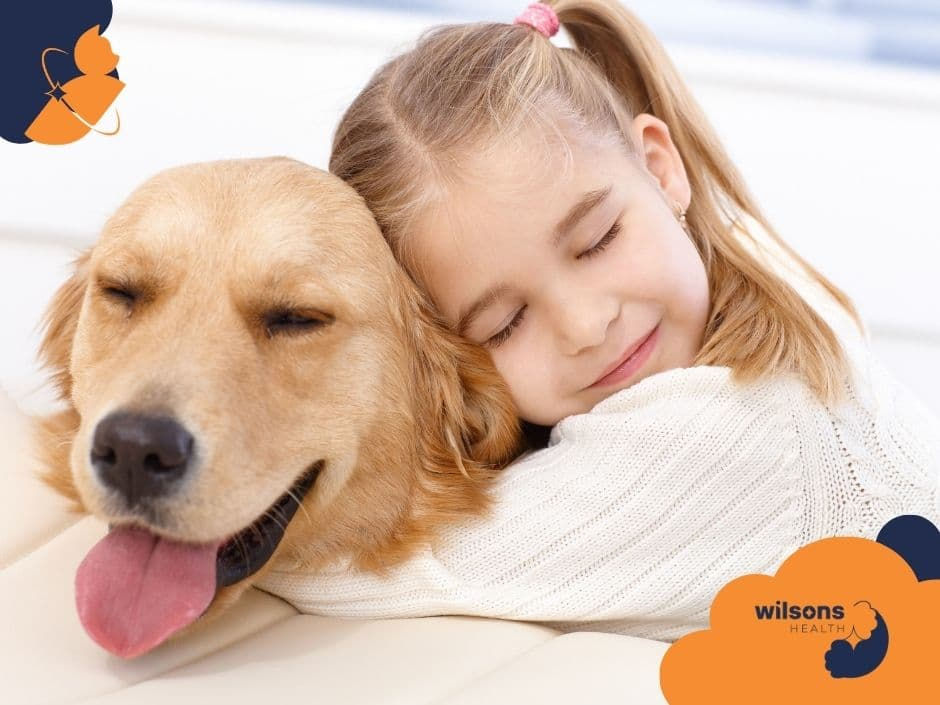
That sounds like a public‑health statistic. But inside that number are very ordinary scenes: a child brushing a dog’s fur, a slow walk around the block, a game of “teach the dog to high‑five,” a quiet moment of a small hand resting on a warm back.
Those are memory‑making activities. And they’re doing more than giving you cute photos for the fridge.

This article is about how to shape those moments on purpose—especially when time with a dog may be limited by age, illness, or life changes—without turning everything into a forced “bucket list” or a project you have to manage perfectly.
What “memory‑making” really is (for kids and for dogs)
When adults talk about “making memories,” we often imagine one big, cinematic event: the professional photo shoot, the last beach trip, the clay paw print before a dog becomes too weak to stand.
Children’s brains don’t work quite like that.
For children
In early and middle childhood, memory is built from repetition and emotion more than from single, dramatic days. The research on children and companion animals suggests that:
Daily, predictable interactions (feeding, walking, brushing) are strongly linked to a deeper child‑dog bond.²
Emotional tone matters: feeling competent (“I can clip her harness”), trusted (“I’m in charge of the water bowl”), and connected (“she comes when I call”) all make experiences more “sticky” in memory.
Social‑emotional development—things like empathy, sharing, and cooperation—seems to improve in homes where children regularly interact with a dog, especially through play and caretaking.³
So the memories that shape your child are less likely to be “that one time we went to the lake” and more likely to be “I always gave him his dinner” and “she slept next to my bed when I was scared.”
For dogs
Dogs don’t file away memories the way humans do, but they absolutely form emotional associations:
Repeated, gentle handling teaches them that children’s hands are safe.
Routines (walk, treat, nap) lower stress and help dogs predict what happens next.
Positive interactions with a specific child build a dog’s own sense of security.
Memory‑making, then, is really relationship‑building—on both sides. The photos and paw prints are just the visible parts.
Why these shared moments matter more than we think
Several strands of research come together here:
1. Social and emotional development
Children who live with dogs tend, on average, to:
Have fewer difficulties with emotions and social interactions
Show fewer antisocial behaviors
Be more considerate—more likely to share and cooperate³
In one study, simply playing with the family dog three or more times per week was associated with that 74% higher likelihood of considerate behavior.³
The mechanism isn’t fully pinned down, but likely includes:
Practice reading nonverbal cues (Is the dog relaxed? Nervous? Excited?)
Cause‑and‑effect learning (When I shout, he walks away; when I’m gentle, he stays.)
Empathy in action (Bringing the dog a blanket, waiting when she’s tired.)
Interestingly, the strength of a child’s attachment to their dog does correlate with empathy and social competence—but not in a perfectly straight line. In one study, boys around second grade who reported very strong bonds showed lower empathy scores than expected.² That doesn’t mean strong bonds are bad; it does remind us that:
The child–dog relationship is part of a bigger developmental picture, not a magic lever you can pull to get a specific outcome.
2. Physical activity and health
Dogs are very effective personal trainers for children—especially for girls.
In a longitudinal study of about 600 kids, girls who had a dog increased their daily light‑intensity physical activity by about 52 minutes. When the dog died or was lost, their activity dropped by about 62 minutes.⁴
Another study of 370 children aged 4–10 found that stronger attachment to the dog was strongly linked to more time in active play and walking, though it didn’t change BMI or screen time.²
The takeaway: kids move more when they care about the dog and feel responsible for it. Not because someone told them to “get more exercise,” but because “I have to walk Daisy, she’s waiting.”
3. Stability and time
The longer a child lives with the same dog, the stronger and more stable that bond tends to be.² That’s not surprising, but it matters:
Months and years of shared routines build a sort of emotional “background music” in a child’s life.
Memory‑making activities aren’t about squeezing everything into the last few weeks of a dog’s life; they’re about investing in the relationship the whole way through.
If you’re reading this because your dog is aging or ill, this can be quietly reassuring: much of the work of memory‑making has already been happening, in all the ordinary days you’ve lived together.

Safety, attachment, and the quiet tension in between
There’s an ethical tension that doesn’t get talked about enough:
Strong bonds pull children and dogs into closer physical contact.
Closer contact increases the risk of accidental bites or injuries, especially if children can’t yet read dog body language.
At the same time, supervised, positive interactions are exactly what deepen the bond and deliver the social‑emotional and physical benefits we’ve just talked about.
So the goal isn’t to keep your child and dog apart “just in case,” nor to assume that love alone will keep everyone safe. It’s to build memories inside a clear, safe framework.
A useful mental model:
You’re not just making memories; you’re curating them.
You choose the situations, the rules, and the pacing. You’re the one who says, “We’re going to do paw prints today, but we’ll do it on the floor with a mat so he doesn’t have to stand for long,” or “We’ll read to her on her bed instead of trying to dress her up.”
Types of memory‑making activities (and what they quietly teach)
Below are categories rather than a checklist. You don’t have to do them all. The idea is to pick what fits your dog, your child, and your season of life.
1. Caretaking rituals
Research consistently shows that being involved in care—feeding, brushing, helping with training—strengthens the child–dog bond.²
These are small, repeatable tasks that can become “the thing I always did for her” in your child’s memory.
Examples:
Measuring out the dog’s food and pouring it into the bowl
Filling the water dish at the same time every day
Helping brush the dog’s coat or teeth (with your hands guiding theirs)
Choosing the dog’s collar or bandana for the day
Helping prepare any special food or medication (under your supervision)
What this teaches:
Responsibility: “He depends on me.”
Empathy: “I notice when her bowl is empty or she’s limping.”
Competence: “I know how to help.”
If your dog is ill or frail, caretaking might shift toward:
Gently adjusting pillows or blankets
Bringing water closer
Helping you carry out vet‑approved comfort routines
These are still caretaking. They’re still memory‑making.
2. Play and training (adapted to energy level)
Play is where a lot of the social‑emotional benefits show up. Children who play with their dog at least three times a week show better considerate behaviors.³ But “play” doesn’t have to mean wild running in the yard.
Think of it as interactive engagement—moments where the child and dog are actively responding to each other.
For energetic, healthy dogs:
Simple fetch or tug (with rules you set: “We stop when he walks away.”)
“Find it” games with treats hidden around one room
Obstacle courses made from cushions and chairs
Basic trick training: sit, shake, spin, high‑five
For older or unwell dogs:
“Nose work” from bed: placing treats in easy‑to‑reach spots
Very gentle “target” games: dog touches your child’s hand with their nose
Slow, short “follow the leader” walks inside the house
Soft toy play on the floor at the dog’s pace
The research on dog–child behavior suggests dogs synchronize their behavior more with adults than with children, but they do respond to kids’ nonverbal cues.⁵ Training together helps your child learn to:
Use calm, clear body language
Notice when the dog is confused or tired
Feel proud when the dog “understands” them
3. Quiet companionship
Not every memory has to be active. Some of the most powerful are silent.
Ideas:
“Reading time” where your child reads aloud next to the dog
Listening to an audiobook together while the dog lies nearby
Drawing pictures of the dog while she naps
Simply sitting with a hand resting on the dog’s side, feeling her breathe
These moments support:
Emotional regulation: Dogs can act as a calm anchor for children.
Attachment: The sense of “she was there when I was scared” is deeply memorable.
Grief preparation: Quiet time together can gently normalize the idea that relationships include both play and rest, health and illness.
4. Creative keepsakes (when you’re ready)
This is where paw prints and photos come in. They can be especially meaningful if a dog is aging or has a chronic condition—but they can also feel overwhelming or “too final.”
You’re allowed to pace this.
Possibilities:
Paw prints in non‑toxic ink or air‑dry clay
Keep the session short.
Let your child press the clay around the paw rather than pushing the paw down.
Have a practice run on scrap paper so the dog isn’t handled repeatedly.
Photo rituals
A “same spot” photo every season or birthday.
A simple “selfie with my dog” day where your child is in charge of taking the pictures.
A photo of your child doing their usual caretaking task (pouring food, reading, brushing).
Art and stories
Drawing “a day in the life” of the dog.
Helping your child write a short “book” about their dog’s favorite things.
Recording your child telling stories about the dog on your phone.
These activities are not just about having something after the dog is gone. They’re about helping your child notice and name the relationship while it’s happening.

When your dog is ill, aging, or “getting too weak”
The research on children’s physical activity shows something stark: when a dog dies or leaves the household, children—especially girls—often become less active, losing about an hour of light activity per day.⁴ That’s a measurable health shift, but it’s also a clue to how deeply routines are woven into a child’s life.
So when a dog is declining, you’re not just managing vet visits and medications. You’re also quietly managing:
Your child’s attachment
Their sense of safety and predictability
Some orientation points:
1. Keep some routines, gently adapted
If your child always fed the dog, maybe they now:
Bring the special food to you while you help the dog eat
Fill a smaller water bowl that’s easier for the dog to reach
Help prepare soft bedding or a warm compress (if recommended by your vet)
If walks are no longer possible:
Turn “walk time” into “garden time” or “window time,” where you all sit together and watch the world for a few minutes.
Let your child push the dog in a stroller or wagon for a very short outing, if your vet says it’s safe and your dog is comfortable.
Keeping the time of day and basic structure (we do something together then) can be more important than the exact activity.
2. Shift the narrative from “doing” to “being with”
Children often want to “do something to help,” which is healthy—but can become frantic if they sense time is short.
You might anchor them with phrases like:
“The most important thing is that she knows you’re here.”
“You’re helping her feel safe when you sit with her like this.”
“She’s tired now, so your quiet company is the best gift.”
This reframes memory‑making away from a pressured checklist (“We have to make paw prints before it’s too late”) toward a gentler truth: being present is enough.
3. Use activities to open, not avoid, conversations
Many parents worry that talking about death will “ruin” the time they have left. But children often sense more than we think. Memory‑making activities can be a bridge to honest, age‑appropriate conversations:
While making a paw print:“We’re making this so we can remember how small and soft her paw was, even when she’s not with us anymore. How does that feel to you?”
While looking at photos:“Here she’s running so fast. Now her body can’t do that, but she still loves being with us. Bodies change; love doesn’t.”
Research doesn’t yet give us clear, evidence‑based “best practices” for preparing children for pet loss. It’s an acknowledged gap. But we do know that being included and having a role in care and remembrance tends to support healthier grief, rather than leaving children feeling shut out or blindsided.
When you feel torn between “enjoying the time” and “doing it right”
You are not a camp counselor running a themed week of activities. You’re a parent (or caregiver) who is already carrying a lot.
Some common inner conflicts:
“Am I doing enough special things with them?”
“If I plan too much, will it feel fake?”
“If I don’t plan, will my child regret it later?”
It may help to think in layers instead of lists.
Layer 1: Everyday threads
These are the things you’re probably already doing:
Saying goodnight to the dog
Letting your child give a treat
Having the dog nearby during homework or TV time
These are the backbone memories. They don’t need to be upgraded.
Layer 2: Gentle amplifiers
Occasional, slightly more intentional moments:
“Let’s take a picture of you feeding her—this is your special job.”
“How about you read your favorite book to him tonight?”
“Want to draw a picture of what she dreams about?”
You might add one or two of these in a week, not every day.
Layer 3: One or two “marker” moments
These are the things that feel more ceremonial:
Paw prints
A “favorite foods” day (vet‑approved, or with tiny tastes)
A small “thank you” celebration where each family member says something they love about the dog
You don’t need many of these. One or two can be enough to give your child a clear mental “peg” to hang their memories on later.
Talking with your vet about memory‑making
It may feel odd to bring this up in a medical appointment, but many veterinarians are quietly already thinking about your family’s emotional life, not just your dog’s lab results.
You might say:
“We’re trying to make some gentle memories for our child with the dog. Are there any types of activities you’d recommend or avoid, given her condition?”
“Is it okay for our child to help with brushing / bathing / short walks right now?”
“We were thinking about doing paw prints—would that be comfortable for him?”
Your vet (or a vet nurse/technician) can help you:
Match activities to your dog’s current physical capacity
Spot signs of pain or stress that mean “this is too much”
Think through safety if your dog is anxious, confused, or on medications that change behavior
Vets are also, increasingly, aware that grief support is part of their role, even if systems for this are still patchy. If you’re worried about how your child will cope, it’s okay to ask:
“Do you know of any resources for helping kids when a pet dies?”
“Is there a counselor or support group you recommend?”
What the science can’t tell you (and what it quietly affirms)
Research on children and dogs is rich in some areas and thin in others.
Well‑established:
Attachment and activity: Children who feel strongly attached to their dog are more physically active, especially in walking and play.² ⁴
Caretaking and bonding: Being involved in care strengthens the bond.²
Time together matters: Longer duration with the same dog deepens the relationship.²
Play and behavior: Regular play is associated with more considerate behavior.³
Less clear:
Does attachment directly cause higher empathy, or do more empathic kids simply bond more deeply?
How do gender and age shape the benefits? (We have hints—like that puzzling finding about second‑grade boys and empathy—but not a full map.)²
Do certain breeds or temperaments lend themselves to different kinds of memory‑making?
What are the most effective ways to prepare children for a dog’s death?
What this means for you:
You don’t have to engineer the “perfect” set of activities to secure a specific outcome.
You can rely on a simple, grounded principle: regular, safe, caring interactions are good for both your child and your dog.
It’s okay to hold some uncertainty. There isn’t one right way to do this.
A final thought: what your child is most likely to remember
When adults look back on childhood pets, the memories that surface are often oddly small:
“He used to wait at the bathroom door for me.”
“I gave her a treat every night before bed.”
“We made paw prints on the kitchen floor and she smeared hers, and we laughed.”
The science tells us those moments are doing real work: building empathy, supporting emotional regulation, nudging a child outside, giving them a sense of competence and connection. The numbers—52 extra minutes of movement, 74% more considerate behavior, 23–36% better social‑emotional scores—are just the measurable shadow of something much more ordinary and tender.
You don’t have to chase grand gestures.
If your child can say, years from now, “I knew she loved me, and I knew how to love her back,” then you’ve already been making memories all along.
References
Purewal, R., Christley, R., Kordas, K., Joinson, C., Meints, K., Gee, N., & Westgarth, C. (2023). Children’s bond with companion animals: A systematic review of measurement tools and associations with psychosocial outcomes. Frontiers in Psychology. https://www.frontiersin.org/journals/psychology/articles/10.3389/fpsyg.2023.1120000/full
Christian, H., Trapp, G., Lauritsen, C., Wright, K., & Giles‑Corti, B. (2013). Understanding the relationship between dog ownership and children’s physical activity and sedentary behaviour. Pediatric Obesity, available via NIH PMC: https://pmc.ncbi.nlm.nih.gov/articles/PMC5285500/
Human Animal Bond Research Institute (HABRI). (2020, July 6). Young children with pet dogs fare better socially and emotionally than those without, new study shows. Press release summarizing study of 1,646 children aged 2–5. https://habri.org/pressroom/20200706/
Foden‑Vandenhoff, C. (2024, February 4). Dog ownership linked with increased physical activity in kids. Oregon Public Broadcasting (OPB), reporting on longitudinal research involving ~600 children and changes in physical activity with dog acquisition and loss. https://www.opb.org/article/2024/02/04/do-your-kids-want-a-dog-science-may-be-on-their-side/
Oregon State University. (2021). Dogs synchronize their behavior with children, but not as much as with adults, OSU study finds. Summary of study on dog–child behavioral synchronization and responsiveness to children’s cues. https://synergies.oregonstate.edu/2021/dogs-synchronize-their-behavior-with-children-not-as-much-as-with-adults-osu-study-finds/


Comments