
Creating Memory Pages for Good Days

On paper, dogs are supposed to be easy to read. Yet in one study with nearly 450 people, participants frequently confused a fearful dog with a happy one – simply because of the situation they believed the dog was in.[3][4] In another, people who were primed to feel happy actually rated dogs’ faces as sadder than those who weren’t.[2]
So when you look at your chronically ill dog on a “great day” and think, This is the happiest I’ve seen her in weeks… right? — you’re not just feeling things. You’re also running a quiet, messy experiment in perception, memory, and hope.

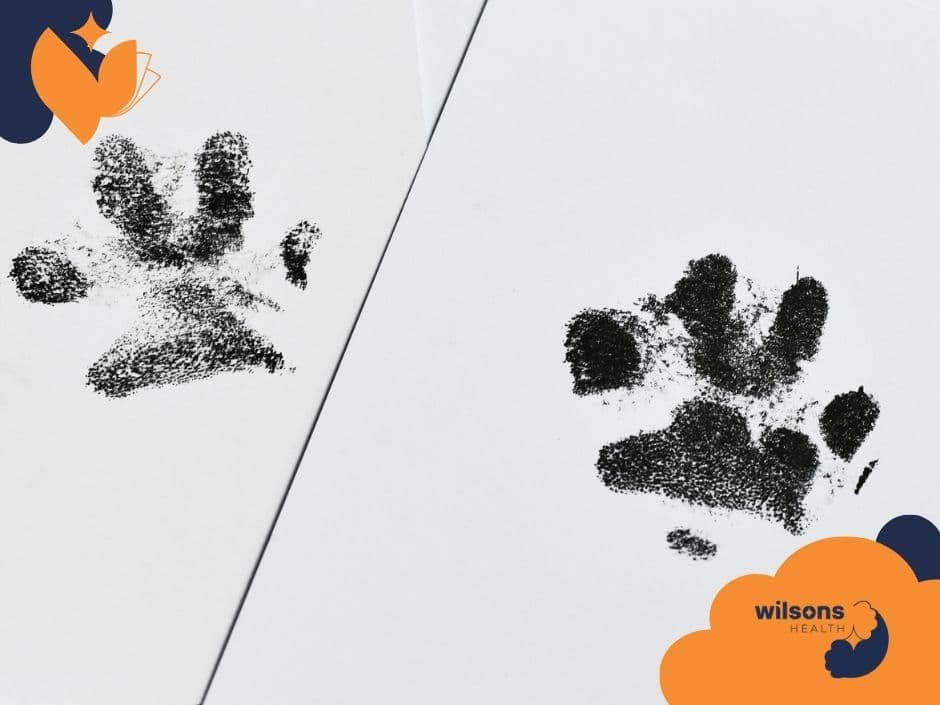
This is where “memory pages” come in. Not as scrapbooks of perfection, but as grounded records of what your dog’s good days actually look and feel like — for them and for you.
What a “great day” really is (and isn’t)
With a sick or aging dog, a “great day” can feel almost suspicious. They’re brighter, more playful, more like “themselves.” You start wondering:
Is the medication finally working?
Did I overreact about how bad things were?
Was I imagining the decline?
Underneath those questions is a quieter one: Am I reading my dog correctly?
Dogs do have emotional lives – and emotional memory
Research shows dogs don’t just react to the world; they remember how it felt.
Dogs use emotional information from humans to guide their behavior. In one study, they watched a person interact positively or negatively with their owner, then later avoided or approached that person based on the remembered emotional tone of the interaction.[1]
Their brains process positive and negative emotions differently. The right hemisphere is more engaged with negative stimuli; the left with positive ones.[1] That lateralization suggests nuanced emotional processing, not just reflex.
So yes, your dog can have a genuinely “better” or “worse” day emotionally, not just physically. They carry forward emotional experiences and adjust to them.
But that’s only half the story.
Our brains complicate things
We’re not neutral observers of our dogs. We’re grieving in advance, hoping for reprieve, scanning for signs.
Studies show:
People often misread dog emotions, especially fear and subtle discomfort. Fearful dogs are frequently labeled as “happy” or “fine” based on a quick glance.[3]
Context heavily biases interpretation. If people are told a dog is playing, they’re more likely to see the same facial expression as happy; if told the dog is being scolded, they see sadness or fear.[4]
Our own mood distorts what we see. In one study of 300 undergraduates, those primed into a positive mood rated dog faces as sadder than those in a neutral mood, and vice versa.[2]
So a “great day” can be two overlapping things:
your dog’s actual internal state
your emotional reading of that state, colored by context and your own feelings
Memory pages are a way to gently separate those two, without turning your life with your dog into a science project.
Memory pages: not a scrapbook, but a shared record
A memory page is simply a place where you:
capture specifics about a good day
note what your dog actually did, not just how you felt
create something you can revisit with your vet and with your future self
Think of it less as “preserving a perfect moment” and more as “bookmarking reality while it’s clear.”
This matters because chronic illness is foggy. Over weeks and months, it becomes hard to remember:
What did “good” used to look like?
Has she always slept this much?
When did he stop doing that little play-bow at night?
Recorded good days become reference points. They help you:
talk more clearly with your vet
track patterns in what helps or hurts
hold onto the dog you know, not the blur of worry
And perhaps most quietly important: they give you a way to honor joy without turning every good day into a referendum on prognosis.
How dogs show they’re having a good day
Before you can record a good day, it helps to know what you’re looking for — beyond “she seems happy.”
Researchers studying canine emotion emphasize whole-body cues over just facial expressions.[3] Dogs speak in posture, movement, and context.
Here are some domains to watch on a good day:
1. Engagement with the world
Signs that your dog is more emotionally present:
Comes to find you or follows you between rooms
Shows interest in familiar routines (doorway waiting, toy fetching, “walk?” head tilt)
Notices and orients to sounds, smells, or activity they usually ignore on bad days
2. Movement and posture
Not “running like a puppy,” but relative ease:
Gets up without excessive hesitation or repeated attempts
Tail carriage closer to their personal baseline (for some dogs, that’s a gentle wag; for others, a high, loose arc)
Less stiffness in transitions (lying to sitting, sitting to standing)
Walks a bit farther than on recent days, or chooses to explore rather than head straight home
3. Social behavior and synchrony
Dogs often synchronize with our emotions and actions.[6] On better days you may see:
More spontaneous eye contact
Choosing to be near you rather than isolated
Responding more quickly to their name or routine cues
Subtle mirroring of your calm or playfulness
4. Appetite and pleasure
Not just “eats” versus “doesn’t eat,” but how:
Comes to the bowl without coaxing
Shows anticipation (licking lips, shifting weight, tail movement)
Takes treats with normal enthusiasm, not flat acceptance
Enjoys gentle grooming or touch more than tolerates it
5. Stress and discomfort signals (less of them)
On a good day, you may see a reduction in:
Panting at rest (when not hot)
Repeated lip-licking in absence of food
Yawning in non-sleepy contexts
Avoidance, pacing, or restlessness
Tense facial muscles, pinned ears, tucked tail
None of these signs alone proves your dog is having a “great day.” But together, they sketch a pattern. That pattern — over time — is what memory pages are really about.

The quiet science behind a memory page
When you create a memory page, you’re working with some very real concepts from canine research, whether you name them or not.
Emotional expressions vs. emotional valence
Emotional expressions in dogs: the observable stuff — tail, ears, posture, vocalizing.
Emotional valence: whether that internal state is positive (pleasure, contentment) or negative (fear, anxiety).
We can see expressions; we infer valence. That inference is where bias creeps in.
Emotional memory
Dogs use past emotional experiences to guide what they do now.[1] That means:
Repeated positive experiences on walks can make walks feel safer and better, even on harder days.
A gentle, predictable medication routine can become less stressful over time.
Your calm, consistent responses on bad days can shape how safe they feel on future bad days.
Your memory pages can track not just “good today,” but “what might be building good tomorrow.”
Behavioral synchrony and emotional contagion
Dogs often synchronize with our rhythms and emotional tone.[6] That’s comforting — and slightly unnerving.
It means:
Your relief on a good day can lift them too.
Your anxiety about “Is this the last good day?” can subtly tense them, without you meaning to.
Memory pages can act as a small buffer: instead of clinging to the day with white-knuckled intensity, you give your brain a job — observe, note, record. That structure can soften the emotional spillover.
Building a memory page for a good day
You can do this on paper, in a notes app, in a photo book, or in a shared document with family. The format matters less than the kind of information you collect.
Think of three layers:
Facts about the day
Your dog’s behavior
Your own feelings and thoughts
Keeping them distinct helps you talk more clearly with your vet — and more gently with yourself.
1. Facts about the day
These are the neutral anchors:
Date and time
Medications given and when
Weather (heat, humidity can matter a lot)
Unusual events (visitors, grooming, vet visit the day before, travel)
Food: what, when, any changes
This is the “logbook” layer — not very sentimental, but deeply useful.
2. What your dog actually did
Here, you focus on observable behavior, not interpretation. Short, concrete lines work well:
“8:30 am – Came to the door wagging when I picked up the leash. Walked to the corner and back; chose to sniff the hedge for ~2 mins.”
“12:15 pm – Lay in the sun for 10 minutes, then moved to the shade on her own.”
“3:00 pm – Brought me the stuffed fox and did one small play-bow.”
“6:45 pm – Ate ¾ of dinner within 10 minutes, no coaxing.”
You can lightly structure this by domains:
Domain | Notes for a “great day” page |
Mobility | How far? How easily? Any stumbles? |
Social behavior | Sought contact? Avoided? Initiated play or interaction? |
Rest/sleep | Rested peacefully vs. restless or repeatedly changing spots |
Appetite/drinking | Interest level, speed, any nausea signs |
Comfort signs | Panting, pacing, hiding, vocalizing, or their absence |
Even if you only jot a few lines, you’re capturing a snapshot that’s more reliable than “She was so much better that day.”
3. Your emotional page
This part is for you — and it’s allowed to be contradictory.
You might write:
“I felt hopeful seeing him grab his ball. Also scared it means I’ve overestimated how sick he is.”
“Relief at seeing her eat. Guilt that I enjoyed today more because she was easier to care for.”
“Noticed I was checking the clock a lot, afraid it wouldn’t last.”
This isn’t self-indulgent; it’s data. Remember that study where people in a happy mood saw dogs as sadder?[2] Your internal state colors what you see. Naming it helps you interpret your observations later with more kindness and accuracy.
Using memory pages with your vet (without turning them into a spreadsheet)
Vets are used to hearing: “She has good days and bad days.” Less often do they get: “Our last really good day looked like this…”
Memory pages can help in several ways:
1. Grounding quality-of-life conversations
When the conversation inevitably turns to “How is she, overall?” you can say:
“On her good days, she still does X, Y, Z — here are a couple of examples.”
“The gaps between good days used to be 2–3 days; now it’s more like 10.”
“Even on her best days now, she doesn’t do [specific behavior she used to love].”
This turns a vague, emotionally loaded question into something you can both look at more calmly.
2. Spotting patterns in what helps
Over time, you may notice:
Good days often follow a certain medication timing or dose change
Heat or cold reliably worsens things
Certain activities (short car rides, gentle sniff walks, visits from specific people) are associated with better engagement
You’re not diagnosing or adjusting treatment yourself — but you’re giving your vet better raw material to work with.
3. Protecting yourself from hindsight cruelty
Months from now, you may look back and think:
Maybe it wasn’t that bad yet. Maybe I acted too soon.
Maybe I waited too long.
Memory pages can’t remove that ache, but they can soften the sharpness by anchoring you in what you actually knew and saw at the time.

The ethics and uncertainties hiding in a “great day”
There’s a painful paradox in chronic care:
A genuinely good day can feel like proof that things aren’t “that bad.”
That same good day can also be the last time you see certain behaviors at all.
Science doesn’t give us a clean answer. Researchers like Kujala emphasize that we still can’t directly measure a dog’s subjective emotional experience.[5] We rely on:
behavior
physiology (like cortisol levels)
context
And then we interpret, with all our human biases in tow.
The risk of over- or under-reading good days
Owner bias can cut both ways:
Over-optimism: “She had such a good day yesterday; she must be improving,” leading to prolonged treatments or delayed palliative decisions.
Over-pessimism: “That was her last good day; everything is downhill now,” leading to anticipatory grief that overshadows the time you still have.
Memory pages don’t solve this ethical tension, but they help you and your vet see the pattern together, rather than each holding a different emotional snapshot.
Common mental traps around “best days” (and how memory pages help)
Trap 1: “If she can do it today, she can always do it.”
Chronic conditions fluctuate. A dog with arthritis might manage stairs on a good pain-control day and struggle the next. That doesn’t mean you were wrong about her limitations; it means biology is variable.
A memory page lets you note:
“Climbed stairs today with only mild hesitation — first time in 3 weeks.”
This frames it as an exception worth cherishing, not a new baseline to demand.
Trap 2: “If he has good days, I’m overreacting about his illness.”
Your emotional distress doesn’t require constant visible suffering in your dog to be valid. The ups and downs are exactly what make chronic care so draining.
Seeing a series of pages that say, essentially:“Good day. Still needs help with X. Still can’t do Y.”reminds you that both things can be true: he can have joy, and you can be exhausted.
Trap 3: “I should be making every good day perfect.”
Perfection is a heavy assignment to put on a living being with a fluctuating condition.
Sometimes a good day is:
A slightly longer nap in a sunbeam
One extra lap around the block
Taking a treat without nausea
Capturing those small wins on a page can shift your internal standard from “perfect” to “present.”
How to keep memory pages from becoming another burden
You’re already caregiving. You don’t need another task that feels like homework.
A few ways to keep it light:
Use voice notes. Talk into your phone for 30 seconds: “Today was a good day because…” Transcribe later if you ever need to.
Choose frequency that fits reality. You don’t have to record every good day. Even one page a month can be meaningful.
Let photos do some of the work. A single picture with a caption like “First time she brought me a toy in weeks” is a valid memory page.
Involve others. A partner, child, or friend can add their own brief observations. Different eyes catch different things.
If on a good day you’d rather just be with your dog and forget recording entirely, that’s not a failure. It’s also data: “Today, I needed to just live it.”
When the “best day” page becomes a keepsake
One day, the page marked “best day” may be from a time that now feels impossibly close and impossibly far.
You might remember:
The exact toy they carried that afternoon
The way they walked a little farther than you expected
The treat crumbs still in the notebook margin
Knowing some of the science behind that day — that your dog’s brain was processing positive experiences, that their emotional memory was shaped by your presence, that their behavior was part of a long, complex pattern — doesn’t make the loss smaller.
But it can make the memory clearer, less haunted by second-guessing.
A good day, recorded with gentle honesty, becomes something sturdier than nostalgia. It’s a piece of shared history between you and your dog: what they could still do, what you both felt, what it was actually like to live together inside that uncertain time.
You don’t owe anyone perfect perspective. But you can offer yourself this: a few pages where science and love meet in the middle, and where your dog’s “great days” are allowed to be exactly what they were — no more, no less.
References
Albuquerque, N., Guo, K., Wilkinson, A., Savalli, C., Otta, E., & Mills, D. (2021). Dogs’ use of human emotional information in decision-making. NIH PubMed Central (PMC).
Phys.org. (2025). Study finds human mood affects perception of dog happiness and sadness.
Psychiatrist.com. (2025). Why humans struggle to accurately read dog emotions.
Arizona State University News. (2025). Context overrules body language in human assessments of dog emotion.
Kujala, M. V. (2017). Canine emotions: Research and challenges. Animal Sentience.
American Psychological Association (APA). (2025). Dogs’ behavioral synchrony and adaptation to human emotions.


Comments