
Peer Stories: Senior Dog Journeys

Forty‑two to nineteen.
In one senior dog study, that’s how far some dogs’ behavioral scores dropped after targeted support for age‑related cognitive decline: from 42 (marked problems) to 19 (milder, more manageable changes). Even more quietly hopeful: 81% of the dogs in that project didn’t keep sliding downhill. Their behavior either stabilized or improved over time.[1]
On paper, those are just numbers. In real life, they’re the difference between a dog pacing all night and a dog finally sleeping. Between a caregiver lying awake with a knot in their chest and one who can exhale and think, “We’re okay tonight.”
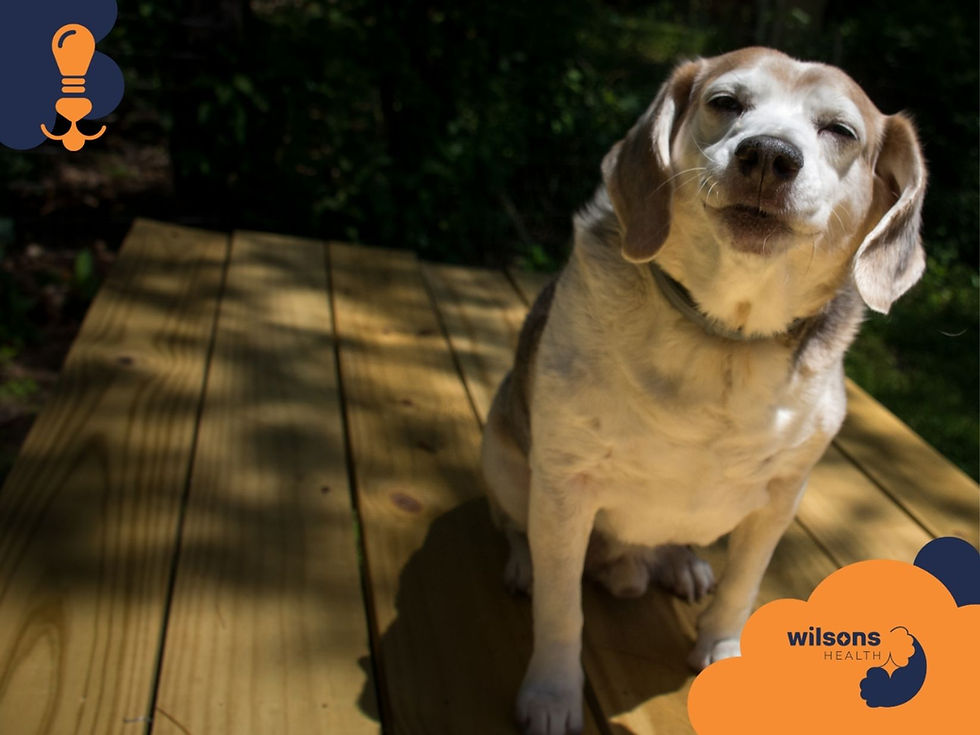
This article is about those nights. It’s about the long, uneven journeys of senior dogs—and the people who walk beside them.
Not as case reports or success stories, but as something closer to what they actually feel like: a mix of science, small wins, ethical knots, and the quiet relief of hearing, “Yes, me too.”
What “senior” actually means when you’re living with it
We often talk about “senior dogs” as if it’s a single, clear category. In practice, it’s a phase that can stretch over years and doesn’t follow a tidy script.
You might see:
Physical changes: slower walks, stiffness, vision or hearing loss, changes in appetite.
Cognitive and behavioral changes: pacing, waking at night, seeming “lost” in familiar rooms, clinginess, or—just as confusing—becoming more withdrawn.
Emotional shifts: a dog who startles less at negative things, seems calmer, or reacts differently to stress.
Research suggests older dogs, like older humans, may show an age‑related positivity effect—they react less strongly to negative emotional cues as they age.[6] To an owner, that might look like “she’s finally mellowed” or “he doesn’t get worked up about thunder anymore,” without realizing that emotional processing itself is changing.
None of this automatically means disease. But some of it can.
And that’s where many senior dog journeys start to feel like walking in fog: what’s “just old age,” and what isn’t?
“Just old age” – three words that can hide a lot
One of the most consistent findings across senior dog research is this:owners routinely underestimate or normalize signs of disease because they look like “getting old.”[5]
Common examples:
Night pacing or restlessness written off as “he’s always been a bad sleeper”
Confusion or staring into space seen as “she’s just slowing down”
House soiling dismissed as “he’s being stubborn again”
Reduced play or engagement as “she’s finally grown up”
Veterinarians interviewed in one study emphasized how often they hear:“I thought it was just old age.”[5]
The problem isn’t that owners don’t care. It’s that:
Many age‑related diseases have slow, sneaky onsets.
We’re primed to expect decline in seniors, so we mentally file changes under “normal.”
Appointments are short, and owners may not know what’s worth mentioning.
This is one place where peer stories quietly change outcomes.When you read that another owner’s “just old age” turned out to be treatable pain, or early cognitive dysfunction, it nudges your brain to think, “Maybe I should mention that thing I’ve been brushing off.”
A small mental shift that helps
Instead of asking, “Is this normal for her age?”try, “Is this new for her?”
New or worsening changes—sleep, appetite, house training, interaction, walking, alertness—are almost always worth raising with your vet. You’re not being dramatic; you’re giving them data.
Cognitive Dysfunction Syndrome: when aging brains change daily life
One of the most talked‑about senior dog issues is Cognitive Dysfunction Syndrome (CDS)—a condition somewhat analogous to dementia in humans.
It can show up as:
Disorientation (standing in corners, getting “lost” in familiar spaces)
Changes in social interaction (more clingy or more distant)
Sleep‑wake cycle reversal (awake/pacing at night, sleeping all day)
House soiling despite previously solid training
New anxiety, restlessness, or repetitive behaviors
In the Senior Dog Study, interventions (which included behavioral support and monitoring) led to:
81% of dogs showing stabilization or improvement in cognitive/behavioral signs[1]
Some dogs having dramatic score drops (e.g., 42 → 19)[1]
Owners reporting “small wins” as emotionally huge: calmer nights, more engagement, a sense of their dog being “more present” again
These improvements didn’t always look spectacular on paper—but they felt spectacular at 3 a.m. when the pacing finally eased.
This is a recurring theme in senior dog journeys:the science talks in scores and percentages; owners talk in “He slept,” “She wagged at me again,” “We had a normal walk.”
Both are true. Both matter.
The emotional labor of loving an old dog
“Emotional labor” sounds clinical. In practice, it’s the invisible work you do every day:
Worrying about leaving them alone
Counting how many “good days” you’ve had this week
Second‑guessing every decision
Bracing for bad news while hoping for good
Owners of senior dogs often describe a swirl of:
Stress – from the practical demands: medications, accidents, nighttime disruptions, vet visits.
Hope – when routines or treatments help, when a new study offers options, when a dog rallies after a rough patch.[1][5]
Grief and anticipatory loss – mourning future moments that may never happen, or the dog your dog used to be.
Guilt – about past choices, money you can or can’t spend, time you do or don’t have, and especially around euthanasia decisions.[1][5]
Research into pet ownership in older adults shows that dogs also protect their people emotionally:
Older adults with pets report less loneliness and isolation and improved mental health.[4][9]
In a large sample (25,138 older adults), dog ownership was linked with fewer anxiety symptoms, though depression findings were mixed.[2]
So you get this paradox:your dog is both your comfort and your biggest source of worry.
If that feels familiar, it isn’t a personal failing. It’s a documented pattern of what it means to care deeply for a being whose life is moving into its later chapters.

How your dog’s aging affects your health—and vice versa
One quiet, hopeful thread in the research: seniors and senior dogs often age together in a way that benefits both.
Across studies:
Older adults who own and walk dogs:
Walk about 22 minutes more per day and take around 2,760 more steps than non‑owners.[7]
Maintain better physical function and mobility over time.[7]
Show better short‑term recall and executive function on cognitive tests than non‑dog‑walkers.[3]
In plain language:walking the dog isn’t just “for the dog.” It helps keep you physically and mentally able to keep caring for them.
For many older owners, the dog also:
Structures the day (feeding, walks, medications)
Creates casual social contact (“park friends,” neighbors)
Provides a sense of purpose and being needed[4][9]
That purpose can be especially powerful when other roles—work, parenting, caregiving for human family—have shifted or ended.
Of course, there’s a flip side: if your own health or mobility declines, the practical side of senior dog care can feel overwhelming. Peer stories often include this tension: wanting to be everything your dog needs, while quietly wondering how long you can physically keep doing it.
This is not selfishness. It’s logistics. And it’s exactly the kind of thing worth discussing openly—with your vet, your family, and, if available, support groups.
Owner–vet communication: why it feels hard, and how stories help
Research into senior dog care repeatedly highlights a gap between what owners experience and what vets hear.[5]
Common patterns:
Owners underreport changes because they assume they’re normal aging.
Time‑pressed appointments focus on acute issues, leaving little room for “soft” concerns like pacing or personality shifts.
Owners feel guilty bringing up “minor” worries or fear being told there’s nothing to be done.
Vets may underestimate how emotionally loaded these conversations are.
Veterinary professionals in one qualitative study stressed the value of:
Structured questionnaires about behavior, sleep, mobility, and mood.[5]
Owner education materials that clearly distinguish “expected aging” from red flags.
Trust‑building over time, so owners feel safe asking hard questions and voicing fears.
Peer stories play a quiet but powerful role here. When you read another owner describing:
“I finally told my vet about the night pacing, and it turned out there were options.”
…it can lower the barrier for you to say, “My dog’s doing something similar. Could we talk about that?”
You don’t need to arrive with a diagnosis. You just need to arrive with observations.
Quality of life vs. length of life: the hardest balancing act
Ask any group of senior dog owners what keeps them up at night, and you’ll hear variations of the same theme:
“I don’t want her to suffer.”
“I don’t want to let go too soon.”
“I’m scared I’ll regret whatever I choose.”
Ethically, senior dog care often revolves around quality of life (QoL)—how meaningful, comfortable, and engaged a dog’s daily experience is.
The tensions are real:
Prolonging life vs. prolonging suffering – Treatments can extend time together, but not always in a way that feels like “living” for the dog.
Attachment vs. objectivity – Deep love can nudge us toward both overtreatment (because we can’t let go) and undertreatment (because we can’t face bad news).[5]
Uncertainty – There is no blood test for “the right time.” Vets can guide, but they can’t feel what you feel when your dog looks at you.
Research doesn’t offer clean answers here. It does offer a few grounding points:
Owners almost universally want to act in their dog’s best interest.
Emotional attachment can cloud clinical judgment—this is human, not shameful.[5]
Collaborative, honest vet–owner conversations lead to more ethically comfortable decisions.
Recognizing treatable issues early (instead of writing them off as “just old age”) can improve QoL and sometimes delay or soften the hardest choices.[5]
Peer stories often describe euthanasia decisions as both devastating and, in retrospect, an act of love. They rarely feel perfect. They sometimes feel “good enough, given what we knew then.”
That’s an important phrase to hold onto: given what we knew then. You are always deciding from inside the story, not from the calm distance of hindsight.
The surprising “positives” of senior years
If you only read medical lists, senior dog life sounds like a slow narrowing. But many owners describe unexpected, even tender, upsides:
Dogs becoming more emotionally present or affectionate as routines stabilize[1]
A sense of deepened bond—less about activities, more about quiet companionship
Appreciation of small, ordinary moments: the way they settle into their bed, the exact shape of their muzzle, the sound of their breathing when they finally sleep
Relief when behavioral changes are understood and managed, transforming “problem behavior” into “understandable symptom”
There’s also emerging evidence that older dogs’ emotional processing shifts in a way that can feel like softening.[6] They may react less intensely to negative stimuli, which some owners experience as “she’s finally zen” or “he’s easier to live with now.”
Owner reflections in research often highlight positive surprises:
Discovering that new therapies or routines can actually help, not just “manage decline”[1][12]
Realizing they’re more resilient than they thought
Finding community—online or in person—through shared senior dog experiences
None of this cancels out the hard parts. But it rounds out the story. Aging isn’t only loss; it’s also a shift in what counts as joy.

Practical ways to navigate a senior dog journey (without turning this into a checklist)
Every dog–human pair is different, but certain patterns from research and lived experience show up again and again. Think of these less as instructions and more as conversation starters—with your vet, your family, and yourself.
1. Pay attention to change over time
Instead of asking “Is this normal?”, track:
When did this start?
How often is it happening?
Is it getting worse, better, or staying the same?
Simple tools can help:
A notebook or phone notes for sleep, appetite, accidents, confusion, or mobility
Photos or videos of new behaviors (pacing, circling, getting stuck)
Wearable tech (e.g., activity or sleep‑tracking collars) if that feels manageable—studies suggest these can provide objective data that supports your observations.[1]
This kind of record‑keeping isn’t overkill. It’s exactly the kind of information vets say helps them distinguish “expected aging” from disease.[5]
2. Use vet visits to talk about life, not just symptoms
It can help to go in with a short list:
One or two specific behaviors you’re concerned about (“night pacing,” “getting stuck in corners”)
A sense of what matters most to your dog’s QoL (walks? food? social contact? comfort?)
Any “lines in the sand” you’re starting to think about (e.g., “If she can’t get up without distress,” “If he stops eating entirely”)
Some clinics use structured senior questionnaires; if yours doesn’t, you can still bring your own notes. Research shows that structured tools improve recognition of treatable problems and support better decision‑making.[5]
3. Protect your own health as part of your dog’s care plan
The data is blunt: older adults who walk their dogs regularly have better physical function, more daily movement, and better performance on some cognitive tests than those who don’t.[3][7]
In real life, that means:
Short, frequent walks may be more realistic than long ones.
If you can’t walk safely, enlisting help isn’t “failing your dog”—it’s preserving your ability to keep caring in other ways.
Your sleep and mental health matter. Chronic sleep disruption from night‑time pacing, for example, can grind you down. Mentioning this to your vet isn’t self‑centered; it’s part of the caregiving picture.
4. Find—or create—your peer circle
Formal research increasingly recognizes owner emotional needs as part of holistic senior dog care.[1][5]
Possible supports:
Local senior‑pet or grief support groups (often run by veterinary schools, counseling centers, or senior organizations)
Online communities focused on senior dogs, cognitive dysfunction, or chronic illness
Talking with friends or family who’ve been through this, even if their circumstances were different
Many owners say that hearing “We went through this too” didn’t make their decisions easier, exactly—but it made them feel less alone when making them.
What science still doesn’t know (and why that matters)
It’s tempting to look for definitive answers:Will my dog develop cognitive decline? Does owning a dog protect me from depression? When will I know it’s time?
Research gives us patterns, not prophecies.
Well‑established:
Many senior dogs will experience cognitive and behavioral changes; some can be stabilized or improved with thoughtful interventions.[1]
Dog walking is associated with better physical function and some cognitive benefits in older adults.[3][7]
Pet ownership can reduce loneliness and anxiety and provide meaningful routine and purpose.[2][4][9]
Owner–vet communication gaps are real and can delay helpful interventions.[5]
Less certain or still emerging:
The exact impact of dog ownership on depression in older adults is inconclusive—some studies show anxiety benefits but not clear depression reduction.[2]
How the age‑related positivity effect in dogs plays out in everyday life is still being explored.[6]
The long‑term effects of sustained emotional labor in caregiving for senior pets are not fully understood.[10]
Living with uncertainty is part of the senior dog journey. Knowing that science, too, is still learning can shift the internal voice from “Why don’t I know what to do?” to “No one has all the answers; I’m doing the best I can with what we do know.”
If you’re somewhere in the middle of the story
Maybe your dog has just started slowing down.Maybe you’re deep in the weeds of medications, night wakings, and hard conversations.Maybe you’re on the other side, looking back and trying to make sense of what happened.
Wherever you are, your experience is part of a larger pattern:
The science that measures steps, scores, and sleep.
The quiet decisions made in kitchens and exam rooms.
The way a single night of good rest can feel like a miracle.
The way another owner’s story can loosen something in your chest: “Oh. It’s not just us.”
Senior dog journeys are rarely neat. They are, however, shared—even when you can’t see the others walking beside you.
You are not expected to navigate this like a clinician. You are navigating it as someone who loves a particular dog in a particular body, at a particular point in time.
From a research perspective, that love is “emotional attachment.”From a lived perspective, it’s the reason you’re reading this at all.
And that, in itself, is a kind of data: your dog is not going through this alone.
References
The Senior Dog Study – MycoDog.
Gee NR, Mueller MK. Dog ownership and mental health among community‐dwelling older adults. Aging & Mental Health. Available via PubMed Central (PMC).
Appleton RT et al. Pet ownership and maintenance of cognitive function in community older adults. Scientific Reports (Nature).
Friendship Centers. The Impact of Pet Ownership on Senior Happiness and Health.
Belshaw Z et al. “‘Just old age’ – a qualitative investigation of owner and veterinary attitudes to ageing in dogs.” Veterinary Record (Wiley Online Library).
Riemer S et al. Age-related positivity effect on behavioural responses of dogs. Scientific Reports (Nature).
Curl AL et al. Pet Ownership and Maintenance of Physical Function in Older Adults. National Institutes of Health (NIH).
Serpell J. “Does Emotional Attachment to an Owner Change in Older Dogs?” Psychology Today.
Texas A&M University. How Pets Enrich the Lives of the Elderly – Texas A&M Stories.
Dog Aging Project. “Understanding Behavioral Changes in Senior Dogs.”
Dog Aging Project – Official Website.
Rohlf VI et al. Owner expectations and surprises of dog ownership experiences. Frontiers in Veterinary Science.
Lloyd JKF. First-Time Experience in Owning a Dog Guide by Older Adults. Sage Journals.


Comments