
Using Journaling for End-of-Life Decisions

About half of Americans over 65 have written down their own medical wishes for the end of life. Almost none have done the same kind of structured planning for their dog — even though the emotional weight of deciding when to let a beloved animal go can feel just as heavy, and sometimes heavier [8].
That gap between how seriously we treat human end‑of‑life planning and how improvised pet decisions often feel is where journaling can quietly change everything. Not because a notebook tells you what to do, but because it gives shape to something that otherwise stays formless: your values, your dog’s changing quality of life, and the story you want their final chapter to tell.

This article is about using journaling as a practical, steadying tool when you’re moving toward end‑of‑life decisions for your dog — especially euthanasia. Not as homework, not as a way to “do grief right,” but as a way to think more clearly, feel less alone inside your own head, and walk into veterinary conversations with a little more ground under your feet.
Why journaling belongs in the room when you’re thinking about goodbye
There isn’t yet a big study that says, “Dog owners who journal make better end‑of‑life decisions.” That research simply doesn’t exist.
But in human medicine and hospice, we do know some things very clearly:
Expressive or reflective writing improves psychological well‑being in roughly 30–40% of adults facing serious or terminal illness and reduces anxiety and depressive symptoms [1].
Reflective journaling helps people process complex decisions over time, rather than in one crisis moment [3,5].
Written reflection improves communication with professionals, reduces decisional conflict, and clarifies goals of care [1,5–7].
Memory books and legacy projects help families cope with grief and maintain a meaningful connection after death [1].
When we translate those findings into the veterinary world, journaling becomes less of a sentimental idea and more of a practical support:
It gives you somewhere to put the swirl of fear, guilt, love, and “what if.”
It helps you track your dog’s ups and downs and your own shifting thresholds for “enough.”
It prepares you for the reality that end‑of‑life decisions are not a single yes/no moment, but an evolving process [2,5].
Is journaling mandatory? No. Is it a cure for grief? Also no. But it can be a quiet, low‑tech companion that makes a very hard stretch of time slightly more bearable and more coherent.
Key terms, in plain language
A few words you’ll see in this article, translated into dog‑family reality:
Journaling / Reflective writing: Any form of writing (not pretty, not polished) where you explore what you’re feeling, noticing, or deciding. This could be a notebook, an app, voice‑to‑text notes, or even emails to yourself.
End‑of‑life (EoL) decision‑making: The ongoing process of choosing how to care for a being approaching the end of life: which treatments to try, when to shift to comfort‑only care, and when euthanasia might be the kindest option.
Advance care planning (ACP): In humans, ACP is writing down care preferences before a crisis. For dogs, this might look like: “If she can’t enjoy walks, food, or cuddles anymore, I don’t want aggressive treatments; I prefer comfort and a peaceful euthanasia when suffering outweighs joy.”
Legacy work: Creating something that preserves your dog’s story: a journal, photo book, letters, or shared memories. It helps many people find meaning and stay connected after their dog dies [1].
What journaling can actually do for you (and what it can’t)
1. Emotional processing: making room for the hard feelings
End‑of‑life decisions for a dog are rarely just medical. They’re tangled up with:
Anticipatory grief (already missing them while they’re still here)
Guilt (“Am I giving up too soon?” / “Am I waiting too long?”)
Fear of regret
Old losses that get stirred up
In human hospice, journaling has been shown to:
Reduce anxiety and depressive symptoms for a significant portion of people [1]
Help caregivers feel less overwhelmed and more emotionally organized
Provide a safe outlet for emotions that feel “too much” to say out loud
For dog owners, this can translate into:
A place to say the unsayable (“I’m so tired,” “I’m angry this is happening,” “I’m scared to come home to an empty house”) without judgment
A way to see that your feelings change day to day — which can be oddly reassuring. Today’s certainty or despair is not necessarily permanent.
A record that reminds you: you have been thinking deeply and lovingly about this all along, even when you later doubt yourself.
What journaling cannot do: remove the sadness, or guarantee that you’ll never feel regret. Grief is not a problem to solve; it’s an experience to move through. Writing just gives it a safer container.
2. Decision‑making: tracking how your mind (and your dog) change over time
Research on end‑of‑life decisions in human chronic illness shows that preferences and choices are iterative — they evolve with new information, new symptoms, and emotional shifts [2,5]. People rarely make one big decision and then never revisit it.
The same is true when you’re caring for a chronically ill dog.
Journaling can help you:
Notice patterns
Are the “good days” getting rarer?
Are the bad days getting more intense?
Are you moving your internal line of what counts as “suffering” without realizing it?
Document your thinking
Why did you choose this treatment three months ago?
What were you hoping for then?
How do those hopes compare with reality now?
Prepare for crossroads
“If this medication stops helping”
“If she can’t get up without help”
“If he stops eating entirely”
Instead of feeling like you “suddenly” decided on euthanasia, you can look back and see the small steps that led there. That doesn’t make the goodbye easy, but it can soften the sense of having acted impulsively or under pressure.

3. Communication: walking into vet visits with more clarity
Veterinarians regularly report that the hardest part of end‑of‑life care is not the medicine — it’s the communication: trying to understand what the family values, what they fear, and how ready they are to talk about dying [5,9].
From the human side, journaling has been shown to:
Help people articulate their worries and wishes more clearly [1,5]
Reduce “decisional conflict” — that stuck feeling where every option feels wrong [6]
Make shared decision‑making with professionals smoother and more aligned [5]
For you and your vet, that might look like:
Bringing notes on:
Your dog’s recent good days and bad days
Specific questions you want answered
What you most want to protect for your dog (comfort? time at home? avoiding hospitalization?)
Being able to say:
“I’ve noticed in my journal that most days he doesn’t get up to greet me anymore, and that used to be his favorite thing. That scares me.”
“Looking back over the last month, her appetite has dropped a lot. Can we talk about what that means?”
“I’m realizing that I don’t want to put her through ICU care. If we reach that point, I’d rather focus on comfort and a peaceful euthanasia.”
Journaling doesn’t replace veterinary advice. It just helps you show up as the expert on your dog’s life and your own limits — which you are.
4. Legacy and memory: writing the story you’ll carry forward
In hospice, “legacy work” — memory books, letters, recorded stories — is used to support families during and after a death [1]. It helps them:
Hold onto specific, vivid memories, not just the illness phase
Create a sense of meaning around the life that was lived
Stay connected to the person (or animal) who died in a way that feels comforting
With a dog, legacy journaling might include:
Writing down:
The ridiculous things they did as a puppy
The nicknames only you use
The ways they’ve changed you or your family
Collecting:
Photos and little stories from family and friends
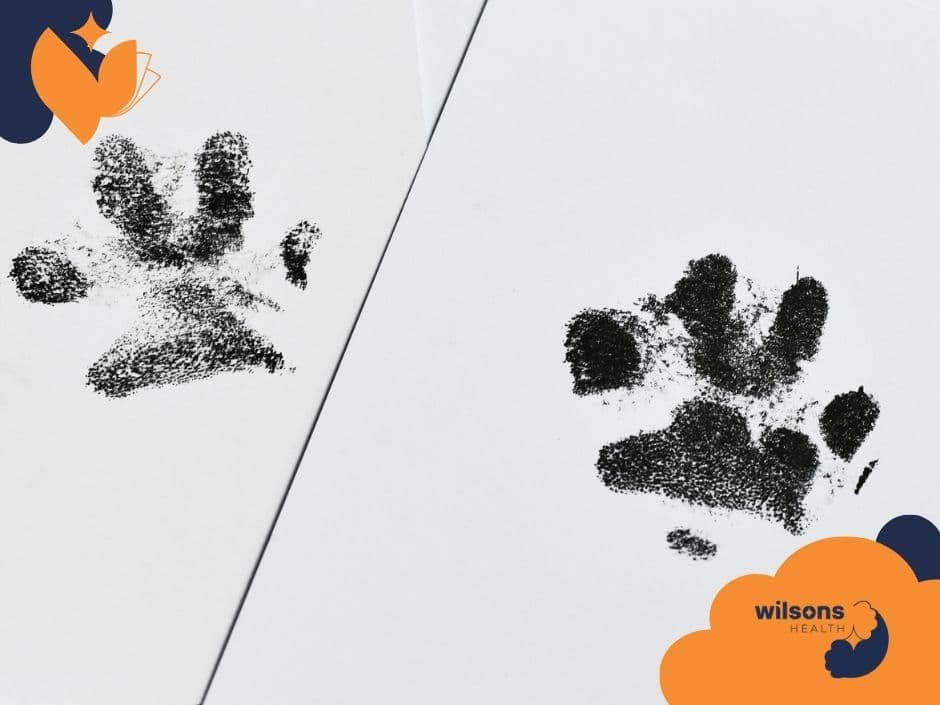
Paw prints, fur clippings, or favorite toys with notes about them
Creating:
A “Top 20 Memories” list
A letter to your dog, or from your dog “to you,” if that helps you express what you’re both going through
This isn’t about pretending you’re okay. It’s about giving equal space to the life you’ve shared, not only the illness you’re now navigating.
How journaling fits into the bigger picture of support
Journaling is one tool. It works best when it’s part of a multi‑method support system, much like what’s being developed in human palliative care:
Decision aids and digital tools: Studies in human medicine show that structured decision aids — booklets, websites, or apps that explain options and outcomes — can reduce decisional conflict and improve satisfaction for patients and families [6,7].Some veterinary practices are beginning to adapt similar tools for pet hospice and euthanasia decisions. Your journal can be the place where you react to those tools: what resonates, what scares you, what feels right for your dog.
Advance care planning for pets: In human healthcare, advance care planning is linked to clearer goals of care and fewer crises [5,8]. For dogs, that might mean journaling about:
“If she develops severe breathing difficulty, I don’t want emergency CPR; I want a calm, planned goodbye.”
“If he can no longer stand or enjoy food, I’d rather choose euthanasia than prolonged hospitalization.”
You can then share these reflections with your vet to create a written care plan together.
Professional and social support: Journaling is private by default, which is both its power and its limitation. It can’t notice when you’re slipping into deep depression, or when you’re stuck in loops of self‑blame.If your writing keeps circling themes like “I can’t go on” or “I’m a terrible person,” that’s a sign to bring another human into the process: a therapist, a grief counselor, a trusted friend, or your vet.
The emotional tensions journaling can surface (and why that’s not a failure)
Writing honestly about your dog’s decline and your own limits can bring up some uncomfortable truths:
Timing gaps: You may realize you’re emotionally preparing for death long before your vet is talking openly about it — or the opposite. Research in human chronic illness shows that timing and readiness for end‑of‑life discussions often don’t line up between families and clinicians [5].Your journal might be the first place you admit, “I think we’re getting close,” or, “I’m not ready to talk about euthanasia yet, even though the vet has mentioned it.”
Shifting boundaries: You might see yourself moving the line of what you consider acceptable suffering:
“I used to think not being able to walk would be my limit, but here we are, and I’m still holding on.”
“I said I’d never put him through chemo, and yet I’m seriously considering it.”
This is normal. Real life is messier than hypothetical scenarios.
Guilt and self‑judgment: Writing can make you aware of the ways you’re judging yourself:
For feeling relief at the idea of the caregiving burden ending
For resenting the cost and time involved in treatment
For moments of impatience with a dog who needs constant help
None of these make you a bad guardian. They make you a human in a very demanding situation.
If journaling sometimes makes you cry harder, that doesn’t mean it’s harming you. In many hospice settings, increased emotional expression is part of healthy processing [1]. The key is whether you feel, over time, a bit more clarity or self‑understanding — not less.
What we know for sure vs. what we don’t (yet)
It’s important to be honest about the limits of the science.
Well‑established from human research:
Reflective writing can:
Reduce anxiety and depressive symptoms in a significant portion of people dealing with serious illness [1]
Help people process emotions and make sense of their experience [1,3]
Improve communication and shared decision‑making with professionals [1,5–7]
End‑of‑life decisions unfold over time and benefit from ongoing reflection rather than one‑off choices [2,5].
Legacy projects and memory books support coping and meaning‑making in grief [1].
Still uncertain in veterinary contexts:
No large, direct studies exist on journaling specifically for dog owners facing euthanasia or end‑of‑life care.
We don’t yet know:
Which journaling formats or prompts are most helpful for pet owners
How often people “should” write
Whether journaling changes concrete outcomes like timing of euthanasia, use of hospice, or satisfaction with care
How cultural background, literacy, or socioeconomic status change the experience of journaling around pet loss
So when we recommend journaling here, it’s not as a proven veterinary intervention, but as a low‑risk, low‑cost practice with strong parallels to what already helps humans in very similar emotional territory.

If you want to try journaling: gentle, realistic ways to begin
This is not a prescription. Think of it as a menu. Take what fits; ignore what doesn’t.
1. Lower the bar
Your journal is not:
A place for perfect sentences
A daily obligation
A test of how much you love your dog
It is:
A private container
Allowed to be messy, short, or sporadic
Something you can put down and pick up again
Writing once a week, or only before vet appointments, can be enough to make a difference.
2. Mix “head” and “heart” entries
Many people find it helpful to alternate between:
Observation‑based notes (head)
Energy level today:
Eating/drinking:
Pain signs I noticed:
Things they still enjoy:
Over time, this becomes a gentle quality‑of‑life log.
Emotion‑based reflections (heart)Prompts you might use:
“Today I’m most worried about…”
“The hardest part of caregiving right now is…”
“One moment that still feels like my dog — illness aside — is…”
“If my dog could tell me what they want, I imagine they’d say…”
You don’t need to use these every time. They’re there for days when you can’t quite find your own starting point.
3. Use your journal before and after vet visits
Before an appointment, you might write:
Three questions I want to ask:
What I’m most afraid the vet will say:
What I’m hoping, realistically, to learn:
Afterward:
What I heard (in my own words), about:
Prognosis
Treatment options
Signs that we’re approaching end of life
What feels clearer now:
What still feels confusing or heavy:
This can be especially helpful if multiple family members are involved and hear different things in the same conversation.
4. Invite your future self into the room
Some people find it grounding to write to their future self — the one who will be living in a post‑goodbye world:
“Dear future me, I want you to remember that today, I saw him struggle to stand, and I saw how scared he looked. I don’t want him to live in that feeling for weeks.”
“If you are wondering whether you waited too long, remember: you needed time to catch up emotionally. You were doing the best you could with the information and heart you had.”
These letters can become anchors if, after euthanasia, you start to re‑write history with harsher judgment.
5. Make space for legacy, even before the end
Interleaving “hard” entries with “legacy” entries can keep the journal from becoming only a record of decline.
Legacy prompts might include:
“My favorite thing about our mornings together is…”
“The three funniest things she’s ever done:”
“If I had to describe him to someone who never met him, I’d say…”
You can return to these pages later when you’re ready to create a memory book, a photo album, or simply to sit with who your dog was in fullness, not just in illness.
Sharing (or not sharing) what you write
Because journaling is private, you get to choose what, if anything, you share:
With your vet: You might:
Read a short excerpt that captures how you’re feeling
Bring a summary (e.g., “These are the patterns I’ve noticed over the last month”)
Email a page in advance if that feels easier than saying it face‑to‑face
Many vets appreciate this; it gives them a clearer window into your emotional landscape and your dog’s day‑to‑day reality [3,5].
With family or friends: Sometimes family members differ on when “it’s time.” Your journal can:
Show them what you’ve been noticing
Explain your reasoning in a calmer moment, not in the heat of a crisis
Help children or partners feel included in the story, not just the ending
With no one: It’s also completely valid to keep your journal entirely to yourself. Its value doesn’t depend on anyone else reading it.
When journaling feels like too much
There are times when writing isn’t the right tool — at least not right now.
It may be worth pausing or adjusting if:
Writing leaves you feeling consistently worse, with no sense of relief or clarity
You find yourself stuck in repetitive self‑blame with no new insight
You dread opening the notebook to the point that it adds a layer of stress
Alternatives that draw on similar principles of reflection and legacy:
Audio notes on your phone
Short bullet lists instead of full paragraphs
Drawing, collage, or photo‑based memory projects
Talking aloud to your dog, or recording those conversations
The goal is not “I must journal.” The goal is “I deserve some way to process this.”
Living with the decisions you make
One of the quiet fears many people carry is: “Will I be able to live with myself after I decide?”
Journaling cannot promise that you’ll never have pangs of doubt. Those are almost universal. What it can offer is:
Evidence that you thought carefully and lovingly over time
A record of your dog’s real condition, not the softened version memory sometimes offers later
A trail of your values: the things you were trying to protect for your dog, and for yourself
In human medicine, families who feel involved, informed, and heard in end‑of‑life decisions tend to experience less decisional regret and complicated grief [5,6,10]. Journaling can’t guarantee that kind of outcome, but it can move you closer to it: more involved, more informed, more able to hear yourself.
A final thought
There is no version of this where you don’t love your dog enough. There is only a version where you are trying, with the tools you have, to give them a life — and an ending — that honors who they are to you.
A journal is not a solution. It’s a witness: to your dog’s last chapter, and to the care you are taking with it. On the days when you doubt yourself, that quiet record of your thinking, your noticing, your hurting, and your hoping may be the thing that reminds you: you did not choose lightly. You chose, again and again, with love.
References
Breeze Hospice Services. The Role of Journaling and Memory Books in Hospice.https://www.breezehospiceservices.com/resources/the-role-of-journaling-and-memory-books-in-hospice
Koffman J, et al. End-of-life decision-making across cancer types. British Journal of Cancer. 2018;118(11):1399–1407.https://www.nature.com/articles/s41416-018-0070-5
Miller WR, et al. Use of reflective journaling to understand decision making. Patient Education and Counseling. 2019;102(4):650–658.https://pmc.ncbi.nlm.nih.gov/articles/PMC6426332/
Tilden VP, et al. Choices and challenges in end-of-life care and decision-making. Journal of the American Geriatrics Society. 2004;52(6):861–870.https://pmc.ncbi.nlm.nih.gov/articles/PMC12595839/
Sudore RL, et al. End-of-life decision making in the context of chronic life-limiting illness. Journal of General Internal Medicine. 2020;35(2):413–421.https://pmc.ncbi.nlm.nih.gov/articles/PMC7704858/
Oczkowski SJW, et al. Effect of end-of-life decision-making tools on patient and family outcomes: A systematic review. PLOS ONE. 2022;17(8):e0272436.https://journals.plos.org/plosone/article?id=10.1371/journal.pone.0272436
Brinkman-Stoppelenburg A, et al. Digital decision aids to support decision-making in palliative and end-of-life care: A scoping review. Journal of Medical Internet Research. 2025;27:e71479.https://www.jmir.org/2025/1/e71479
Pew Research Center. End-of-Life Decisions: How Americans Cope. 2009.https://www.pewresearch.org/social-trends/2009/08/20/end-of-life-decisions-how-americans-cope/
You JJ, et al. Facilitating end-of-life decision-making strategies. Canadian Family Physician. 2014;60(4):351–356.https://pmc.ncbi.nlm.nih.gov/articles/PMC3732104/
Chan HY, et al. Identification and synthesis of end-of-life decision-making measures. Frontiers in Medicine. 2025;10:1540486.https://www.frontiersin.org/journals/medicine/articles/10.3389/fmed.2025.1540486/full


Comments