
Why Emotional Conversations With Your Vet Matter

In the latest Veterinary Wellbeing Study, fewer than half of veterinarians said they felt confident they could stay in this career for the long term. At the same time, more and more dog owners say their vet’s empathy and emotional support are “one of the most important parts” of care, not an optional extra.[2][5]
That gap — between what vets are quietly carrying and what owners desperately need — is exactly where emotional conversations live.
If you’ve ever found yourself crying in a vet’s office, apologizing for it, or trying not to “take up too much time,” this isn’t just a personal quirk. It’s part of a much bigger pattern in modern veterinary medicine: pets as family, high-stakes decisions, complex money questions, and professionals asked to be both medical experts and emotional anchors.
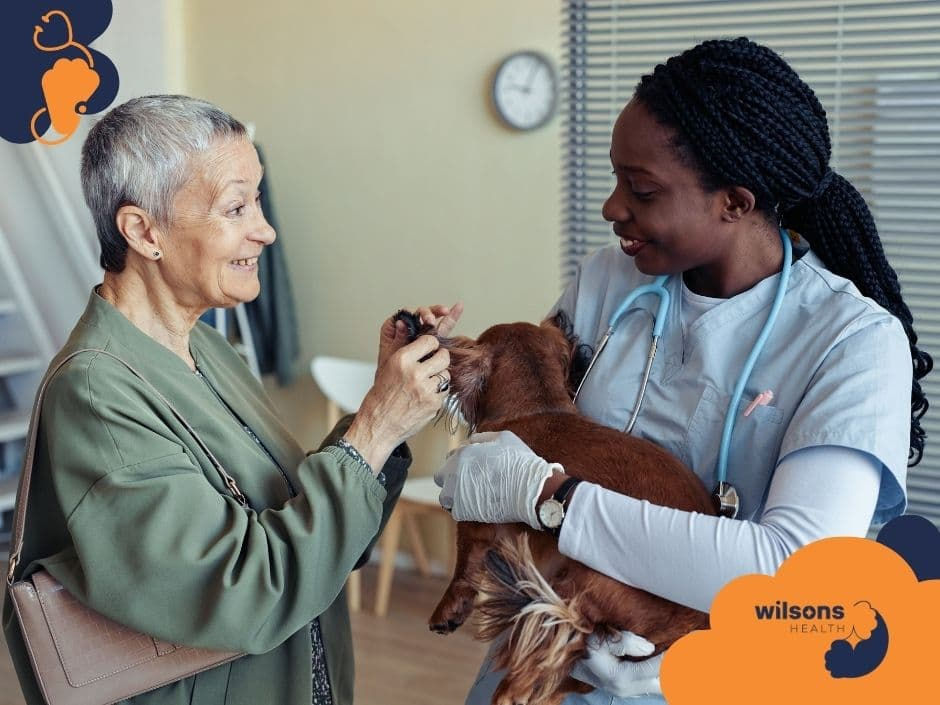
This article is about why those emotional conversations with your vet are not a distraction from “real” care, but one of the most important tools you and your vet have — for your dog, and for both of your mental health.
What actually counts as an “emotional conversation”?
In veterinary research, emotional conversations are not just moments when someone cries.
They include any discussion where feelings are tightly woven into the medical decisions:
Worry about a scary diagnosis or uncertain prognosis
Guilt about “not catching it sooner”
Fear of making the wrong choice about treatment
Stress or shame around finances and what you can realistically afford
Questions about quality of life and “how will I know when it’s time?”
Grief before, during, or after euthanasia
These conversations tend to happen around chronic illness, end-of-life care, and money — all the places where there is no perfect answer and where every option has a cost, emotional or otherwise.[1][2]
They are hard. They are draining. And they are also where the most meaningful, humane veterinary care happens.
The hidden job your vet is doing in the room
You see your vet listening, explaining, maybe staying calm while you’re in pieces.
Behind that, there is a concept researchers call emotional labor: the effort it takes to manage their own emotions and yours at the same time, while still making good clinical decisions.[1][4]
Key pieces of that emotional labor:
Double-faced emotion management: Outwardly: calm, steady, kind.Inwardly: sometimes anxious, sad, conflicted, or grieving with you.[1]
Holding the space for your feelings: Your vet is expected to be empathetic, but not overwhelmed; honest, but not blunt; realistic, but not hopeless.
Translating medicine into something you can live with: Not just “here’s the diagnosis,” but “here’s what this might mean for your dog’s comfort, your schedule, and your family.”
This is not a side note in their job. It is structurally built in: when researchers interviewed vets, they found that institutions and clients both expect veterinarians to carry this emotional load while maintaining a “neutral, strong demeanor.”[1]
That constant balancing act has consequences.
The emotional toll on veterinarians (and why it matters to you)
Veterinarians are at significantly higher risk of burnout and suicide compared with the general population.[4][5] Emotional labor is one of the major contributors.
Some of what research has found:
Vets often feel they must suppress their own emotions in front of clients, especially when delivering bad news or performing euthanasia.[1][4]
This suppression doesn’t make the feelings disappear; it just pushes them “backstage” — into staff rooms, car rides home, or sleepless nights.[1]
Many vets struggle to decompress because their professional identity is built around always coping, always being strong, and often not having the language or support to talk about their own distress.[1][6]
Less than half of vets feel positive about their ability to stay in the profession long term, despite gradual improvements in wellbeing support.[5]
About 38% of clinics now offer Employee Assistance Programs (EAPs), up from 27% in 2019 — progress, but still leaving many teams without structured emotional support.[5]
You might be wondering: why should an owner need to think about this? Isn’t it the profession’s problem to fix?
Yes, system-level change is essential. But this context matters for you because:
It explains why your vet sometimes looks tired or guarded during hard conversations.
It shows that when they make space for your emotions, they’re doing something effortful and skilled, not just “being nice.”
It highlights why honest, two-way emotional conversations can actually protect both of you — by reducing misunderstandings, guilt, and regret.
You are not responsible for your vet’s wellbeing. But you are part of a relationship where both sides are human (even if one of them wears a white coat and the other eats socks).
How your emotions shape medical decisions
When something is wrong with your dog, you’re not just processing facts. You’re processing fear, guilt, grief, anger, hope — sometimes all in the same 20‑minute appointment.
Research is clear: strong emotions change how we hear information and how we decide.[2][3]
Common patterns vets report:
Guilt: “I should have noticed sooner.”Guilt can push owners toward aggressive treatments they can’t sustain, or delay euthanasia because letting go feels like admitting failure.
Fear and uncertainty: Fear of losing your dog, fear of making the wrong choice, fear of judgment.This can make it hard to ask questions, or lead to saying “do everything” without really understanding what “everything” looks like day to day.
Anger or frustration: Sometimes directed at the situation, sometimes at previous vets, sometimes at the clinic’s prices.Anger can shut down collaboration if it isn’t acknowledged and unpacked.
Grief (including anticipatory grief): When your dog is still alive, but you already feel the loss.This can make it hard to talk about practicalities like money, logistics, or long-term care.
Vets who are trained in emotional communication use tools like:
Reflective listening – repeating back what they hear:“It sounds like you’re worried he’s suffering and you don’t want him to be in pain, but you’re also scared of making that final decision too soon.”[2][3]
Open questions – to understand what matters most to you:“What is your goal for today’s appointment?”“What worries you most about the options we’ve discussed?”[2][3]
Pacing information – not dumping everything at once, but checking in:“Is this making sense so far? Do you want more detail or is this enough for today?”[2]
These skills aren’t about “talking you into” anything. They’re about helping you think clearly in the middle of a storm.
When vets use them, owners tend to feel less isolated, less guilty, and more satisfied with their decisions — even when the outcome is heartbreaking.[2][3]

The money conversation: where emotion and ethics collide
If there is one topic almost every vet dreads and every owner feels vulnerable about, it’s this: “How much will it cost?”
Research consistently lists financial discussions as one of the top stressors in veterinary practice.[2] Why?
Because money is rarely just money.
For owners, it’s tangled up with shame (“I should be able to afford this”), fear of judgment, and the painful reality that love doesn’t always match the bank account.
For vets, it’s an ethical tightrope: they know what the ideal care plan looks like, and they also know not everyone can pay for it. They’re trying to advocate for your dog without pressuring you into debt or making you feel like a bad guardian.
This is one reason emotional conversations matter so much around finances:
When owners feel safe saying, “This is my budget,” vets can often tailor plans, prioritize treatments, or discuss realistic alternatives.
When vets can explain costs transparently and kindly, owners are less likely to leave feeling blindsided or ashamed.
A calm, honest money conversation early — especially in chronic conditions where costs add up — can reduce stress for months or years to come.
It’s not selfish to bring your financial reality into the room. It’s responsible. It gives your vet the information they need to help you make the best possible plan for your dog within your actual life.
Why crying in the exam room can be the most useful thing you do
Many owners apologize the moment they tear up:“Sorry, I’m being silly.”“I know you’re busy.”“I told myself I wouldn’t cry.”
From a communication standpoint, though, your visible emotions are data. They tell your vet:
How overwhelmed you are
How attached you are to a particular hope or fear
Whether you’re actually ready to hear more information or need to slow down
What kind of support you might need after the appointment
When you let your feelings into the room — even briefly — you give your vet something to respond to.
Instead of a purely clinical back-and-forth:
“Here are three treatment options. Any questions?”
You open the door to:
“It sounds like you’re really scared of him being in pain and also worried about keeping him comfortable at home. Let’s talk through what each option would mean day-to-day, so you can picture it more clearly.”
That shift can change everything: the plan you choose, how you feel about it, and how you remember this period years later.
What “good” emotional communication looks like in practice
You don’t need to be a communication expert to recognize when an emotional conversation is going well.
You might notice that your vet:
Invites your perspective early: “What brought you in today?”“What are you most hoping we can help with?”
Names the emotional weight without dramatizing it: “This is a lot to take in.”“These decisions are really hard for many families.”
Checks your understanding: “Does that explanation fit with what you’ve been seeing at home?”“What questions are coming up for you right now?”
Respects your pace: Offering to break decisions into steps, or to follow up by phone or email.
Acknowledges limits without abandoning you: “Medically, we’re reaching the end of what we can change. What we can still do is focus on his comfort and on making the time you have left together as good as possible.”
Sometimes, they might also:
Suggest a follow-up visit just to talk, separate from procedures.
Offer written information so you don’t have to remember everything through tears.
Refer you to grief counseling or a pet loss support group, especially around euthanasia decisions.[2]
None of this makes the situation less serious. It makes it more bearable.
Behind the scenes: how clinics manage their own emotions
You’re not there for the “backstage” moments, but they matter.
Studies describe how veterinary teams often decompress after difficult appointments — sharing feelings, debriefing hard cases, or just sitting quietly together.[1][4]
When clinics intentionally build in this kind of support, they tend to see:
Lower burnout
Better teamwork
More consistent, compassionate communication with clients[4][5]
Some clinics now:
Hold regular team meetings to discuss tough cases (confidentially) and how they felt.
Provide access to Employee Assistance Programs or mental health professionals.[5]
Offer training in emotional labor management and communication skills.[1][3][6]
These are still emerging practices. We don’t yet know which models are most effective long-term, or how best to measure the quality of emotional dialogue in vet clinics.[1]
But the direction is clear: emotional conversations are being recognized as clinical work, not just interpersonal “extras.”

What you can do as an owner: participating without self-blame
You don’t have to manage the vet’s emotions. You don’t have to be perfectly composed. You definitely don’t have to make every appointment efficient and tidy.
What you can do is engage in ways that make emotional conversations more useful for everyone — including you.
Before the appointment
Write down your top 1–3 concerns. Not just symptoms, but worries:“I’m scared she’s in pain.”“I’m afraid I’m missing something serious.”“I’m worried I can’t keep up with the care she needs.”
Think about your limits. Time, money, physical ability, other caregiving responsibilities. These are real medical constraints, not personal failures.
Decide what you most need from this visit. A plan? A prognosis? Just clarity on what’s happening? Naming this can help your vet focus.
During the appointment
Say the emotional thing out loud at least once. “I feel really guilty that I didn’t bring him in sooner.”“I’m overwhelmed and I’m not sure I can take in a lot of information today.”“I’m scared of making the wrong decision.”
This gives your vet a chance to respond with empathy and adjust how they communicate.
Ask reality-check questions.
“What would you do if this were your dog?”
“What are we realistically hoping this treatment will change?”
“What signs should I watch for that tell us his quality of life is slipping?”
Be honest about finances. “This is the range I can afford. Are there ways to prioritize or stage things?”Sensitive, yes. But vets consistently report that clear money conversations help them help you.[2]
After the appointment
Expect an emotional hangover. It’s normal to go home and suddenly think of five questions, or to feel worse before you feel better.
Reach out if you’re stuck. Many clinics are open to follow-up emails or calls for clarification. Some can point you toward grief counseling or support groups if you’re facing end-of-life decisions.[2]
Allow yourself to be a grieving or worried human, not a “perfect” client. Tears, second-guessing, and needing repetition are not signs of failure. They’re part of how our brains and hearts process loss and uncertainty.
When the conversation feels off
Despite everyone’s best intentions, sometimes an appointment leaves you feeling dismissed, rushed, or misunderstood.
That doesn’t always mean your vet doesn’t care. It might mean:
They’re at the end of a very heavy day.
They’re carrying their own unprocessed grief or stress.
They haven’t had much training in emotional communication.
The clinic is under time pressure that makes deep conversations hard.
If you have the bandwidth, you can try:
Naming what you need, gently and concretely. “I know time is tight, but I’m feeling really overwhelmed. Could we spend a couple of minutes just going over what matters most for her comfort right now?”
Asking for a follow-up just to talk. Some vets communicate much better when they’re not juggling procedures at the same time.
Seeking a second opinion if the pattern continues. A good emotional fit with your vet is not a luxury in chronic or end-of-life care. It’s part of what keeps you able to show up for your dog.
What we know — and what we don’t — about emotional conversations in vet care
Research is still catching up to what many owners and vets already feel in their bones.
Well-established findings include:[1][2][3][4][5]
Emotional conversations are central to good veterinary care, especially with chronic illness and end-of-life decisions.
Emotional labor — the work vets do to manage emotions in the room — contributes to stress, burnout, and mental health risk.
Client emotions strongly influence decisions and satisfaction with care.
Communication skills training (empathy, reflective listening, open questions) improves owner–vet relationships and reduces distress.
Less clear, ongoing questions include:[1]
What are the best institutional models (clinic policies, schedules, support systems) to protect vets’ emotional health while maintaining genuine empathy?
How much long-term difference does communication training make, and what kind works best?
How do cultural and individual differences shape what “good” emotional communication looks like across different communities?
How should we measure the quality of emotional dialogue in a way that respects both science and lived experience?
You are living in the middle of this evolving landscape every time you walk into a vet clinic with a dog you love.
A different way to think about “the day I cried in the vet’s office”
If you replay that moment in your head — the one where your voice cracked, or you couldn’t stop apologizing, or you saw your vet’s eyes get suspiciously shiny — it might be tempting to wish you’d been more “together.”
From the perspective of what we know now, that day wasn’t you failing at composure.
It was you doing one of the bravest, most useful things a caregiver can do: letting the emotional truth of the situation into the room, so that the decisions you made with your vet could be grounded in reality — medical, practical, and human.
Emotional conversations don’t fix everything. They don’t cure cancer or reverse kidney disease or erase the fact that money is finite.
What they can do is:
Help you understand what’s happening in a way your heart can live with
Reduce the quiet, corrosive “what if I’d asked more?” that can haunt people for years
Allow your vet to be not just a technician, but a partner in one of the hardest relationships you’ll ever navigate — loving a creature whose life is shorter than yours
In that sense, the day you cried in the vet’s office didn’t derail the appointment.
It may have been the moment real care finally started.
References
Pilnick A, Dingwall R, Parry R. An examination of veterinarians' negotiation of emotional labor. Sociology of Health & Illness. Available at: https://pmc.ncbi.nlm.nih.gov/articles/PMC12146643/
Mixed Emotions – Navigating the Emotional Side of Veterinary Practice. Today’s Veterinary Practice. Available at: https://todaysveterinarypractice.com/personal-professional-development/mixed-emotions/
Navigating Emotional Conversations: How to Guide Clients Through Tough Decisions. Veterinary Hospital Association. Available at: https://veterinaryha.org/navigating-emotional-conversations-how-to-guide-clients-through-tough-decisions/
Charles N, et al. Ecologies of care: qualitative insights from a psychosocial study on veterinarians' emotional labor. Frontiers in Veterinary Science. 2025;10:1650809. Available at: https://www.frontiersin.org/journals/veterinary-science/articles/10.3389/fvets.2025.1650809/full
Merck Animal Health. Fourth Veterinary Wellbeing Study. 2024. Available at: https://www.merck-animal-health.com/blog/2024/01/15/4th-veterinary-wellbeing-study/
Kogan LR, et al. A qualitative exploration of the emotional experiences of early-career veterinarians in clinical practice in Canada. Veterinary Record. Available at: https://bvajournals.onlinelibrary.wiley.com/doi/full/10.1002/vetr.5599



Comments