
Supporting Sibling Relationships During Pet Illness

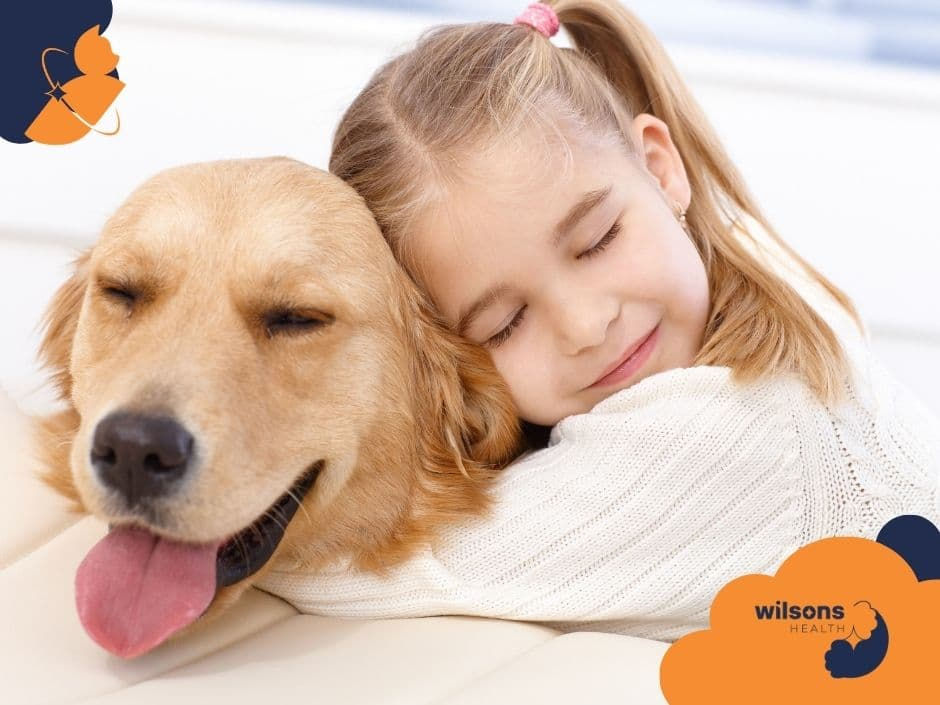
"By early adolescence, many children say they feel closer to their pets than to their brothers or sisters. In one study of 91 pre-teens, kids rated their relationships with pets more positively than with siblings – and were more likely to share secrets with the dog than with the child in the next bedroom.[4][2]
So when that pet becomes seriously ill, the emotional ground under the whole family shifts. Not just for you, but between your children.
One child may want to help with every medication and vet visit. Another can’t bear to be in the same room when the dog limps.Both love the same animal. Both are trying to cope. And suddenly, the sibling relationship becomes part of the story of the illness.

This article is about that space: how a sick dog can quietly reshape the relationship between your children – and how you can support both the dog and the siblings without feeling like you’re failing someone.
What we know (and what we don’t) about siblings, pets, and stress
There’s surprisingly little research that looks directly at what happens between siblings when a pet is ill.
But we do have three strong threads of evidence:
Sibling relationships matter a lot in times of stress. A large body of research shows:
High sibling conflict is linked with more anxiety, depression, and behavior problems in children.[1]
Warm, supportive sibling relationships are associated with more prosocial behavior (kindness, helping, cooperation).[1]
Positive sibling bonds can buffer children against the impact of stressful events – they don’t remove the stress, but they soften its effect.[1]
Pets can play a similar buffering role. Studies in pre-adolescents find:
Children with strong, positive relationships with pets show fewer internalizing symptoms (like anxiety and sadness) when facing adversity.[1]
Interacting with pets can reduce physiological stress responses in both children and adults.[1]
Many children report greater satisfaction and emotional openness with pets than with siblings.[2][4][5]
Caregiving within families changes sibling dynamics. Most of the research here comes from siblings of children with chronic illnesses or autism:
Siblings often take on caregiving roles, which can be meaningful but emotionally heavy.[3]
Boundaries can blur: a child who’s also a “helper” may feel pressure, guilt, or resentment alongside love.[3]
These role shifts can increase stress and conflict, or foster closeness – often both, at different moments.[3]
When you put these threads together, a picture emerges:
A sick dog is a form of family adversity.
Siblings and pets are both potential buffers – but also potential sources of tension.
The way you handle roles, communication, and expectations can either protect sibling bonds or strain them.
And importantly: if your kids are reacting very differently to the illness, that doesn’t mean something is wrong with them or with your parenting. It means they’re human, and the system they live in (your family) is under unusual load.
Key terms, in plain language
You’ll see a few concepts that are helpful for understanding what’s going on beneath the surface.
Term | What it means in your family |
Sibling positivity | Warmth, support, kindness between your children – the moments they comfort each other, share, or team up. |
Sibling conflict | Fights, teasing, shutting each other out, or tension that keeps flaring up. |
Pet positivity | The emotional quality of your child’s relationship with the dog – affection, trust, feeling understood and safe. |
Adversity | Any significant stressor – here, your dog’s chronic or serious illness, and the changes it brings. |
Buffering effect | When a strong relationship (with a sibling or pet) helps reduce the emotional impact of stress. |
Emotional labor | The mental and emotional work of managing feelings – worrying about the dog, trying not to cry, comforting others, pretending to be “okay.” |
Attachment & caregiving roles | The bond your child feels with the dog, and the responsibilities they take on (feeding, giving meds, watching for symptoms). |
Once you start seeing these patterns, your children’s reactions can feel less random – and less personal.
Why the dog’s illness hits siblings so differently
On the outside, it might look like:
One child hovering, asking questions, wanting to help with every treatment.
Another avoiding the dog, snapping at you, or retreating to their room.
Or siblings suddenly fighting more over small things that “shouldn’t” matter.
Underneath, several processes are happening at once.
1. The dog is not “just” a pet – it’s an emotional anchor
Research repeatedly finds that for many children, pets are:
Easier to talk to than siblings or parents.
Less judgmental and more “accepting.”[4][5]
A safe place to put feelings that feel too big or complicated to share with humans.
In one study, children around 12 years old reported higher satisfaction with their pet relationships than with their sibling relationships, and especially girls disclosed more personal feelings to pets than to siblings.[4]
So when that anchor is at risk:
A child who leans heavily on the dog for comfort may feel emotionally displaced – suddenly their main outlet is the very source of their fear.
They may pull away from the dog to protect themselves from anticipated loss.
Or they may cling tighter, becoming almost hyper-involved in the dog’s care.
Both responses can confuse siblings:
“Why won’t you help? Don’t you care?”
“Why are you obsessed with him? It’s making it worse.”
2. The illness rearranges attention – and kids notice
A chronically ill dog pulls focus. Vet visits, medications, financial decisions, disrupted sleep, worry – it all adds up.
Children may quietly register:
“Mum is always with the dog.”
“Dad gets more upset when the dog whimpers than when I cry.”
“My sister gets praised for helping, but no one sees how scared I am.”
Common feelings that can surface:
Jealousy – of the dog, or of a sibling who seems closer to the dog or to you.
Guilt – for feeling jealous of a sick animal, or for not wanting to help more.
Neglect – “everyone cares more about the dog than about me.”
Resentment – “I didn’t choose this, but my life is different now.”
These feelings don’t always show up as “I feel sad.”They often show up as bickering, withdrawal, or “attitude.”

3. Caregiving roles can feel both empowering and heavy
From chronic illness research in human families, we know that when a child becomes a caregiver:
They may also feel burdened, anxious, or trapped.[3]
The line between “helping” and “being responsible” can blur.
With a sick dog, caregiving might look like:
Measuring medication.
Helping with mobility or toileting.
Watching for signs of pain.
Staying home from activities to keep the dog company.
One sibling might lean into this, feeling useful and connected. Another might:
Find it too distressing to see the dog in pain.
Feel like they’re “bad” at caregiving.
Prefer to remember the dog as they were.
If the caregiving child is praised more, or the avoidant child is criticized, the sibling relationship can harden into roles:“the good helper” and “the selfish one.”
Those labels can stick long after the illness ends.
How sibling relationships can protect children in this season
Despite the strain, siblings can be one of the strongest protective factors in this kind of adversity.
Research suggests that:
Warmth and support between siblings are linked to fewer behavior problems over time, even when life is stressful.[1]
Conflict, especially when it’s frequent and hostile, is associated with more anxiety, depression, and acting-out behaviors.[1]
This doesn’t mean siblings need to be endlessly kind and patient. It means that:
Occasional conflict is normal.
What matters is the overall climate: do they ever comfort each other, share, or feel like they’re on the same team?
When a dog is ill, that “team” feeling can come from small, deliberate choices.
Supporting siblings without becoming a full-time referee
You cannot remove the sadness of a beloved dog’s illness. You can shape how your children move through it together.
Think of your role in three layers:
Making space for different coping styles
Creating shared touchpoints around the dog
Protecting basic emotional safety between siblings
1. Making space for different coping styles
Children often occupy different “positions” around a sick pet:
The Helper: wants to be involved in care, asks questions, seeks information.
The Avoider: keeps distance, changes subject, may seem indifferent.
The Protector: tries to shield others from distress, downplays symptoms.
The Truth-seeker: wants clear details about prognosis, procedures, and death.
All of these can be normal ways of managing fear.
You can normalize this difference without ranking it:
“People cope with big feelings in different ways. You like to help with the practical things; your brother copes by taking breaks when it feels too hard to see her limping. Both are okay.”
What helps:
Name, don’t judge. Use descriptive language instead of moral language:
“You’re taking a lot of breaks from being around Max,” rather than “You’re avoiding him.”
“You really like helping with his medicine,” rather than “You’re the only one who cares.”
Offer choices instead of assignments.
For example:
“I’m giving her meds now. You can help hold the treats, or you can sit nearby and talk to her, or you can stay in your room if that feels better.”
Allow opt-outs with dignity.
A child who can’t watch injections might:
Draw a picture for the dog.
Choose the blanket for the recovery bed.
Help track medications on a chart, away from the actual procedure.
The goal isn’t equal participation; it’s respected participation.
2. Creating shared touchpoints around the dog
You don’t need your children to feel the same way. You just need a few places where their paths cross kindly.
A few possibilities:
A joint “comfort routine”
For example:
Every evening, both siblings join for a 5-minute “goodnight” ritual: one reads a short story while the other offers a gentle massage or gives a final treat.
A shared role that doesn’t require equal exposure
One child chooses the week’s “gentle games” (like snuffle mats or simple nose work).
The other helps set them up or times them.
A visible, shared project
A “Max Board” or “Luna Wall”: siblings can add photos, drawings, or notes about favorite memories and current small joys.
This lets both engage, even if one avoids medical tasks.
Why this matters: Shared, low-pressure involvement helps build sibling positivity – those small moments of cooperation and joint attention that buffer against conflict.
3. Protecting emotional safety between siblings
You can’t stop every sharp comment. You can influence the rules of engagement.
Consider drawing a few clear lines, such as:
“We don’t judge how much someone else loves Max based on what they can or can’t do.”
“We don’t call each other names about the dog – no ‘you’re heartless’ or ‘you’re a baby.’”
“It’s okay to be sad, but it’s not okay to take that sadness out by hurting each other.”
When things flare:
Address the pattern, not just the incident:
“I’m noticing that when we talk about the vet, you two end up fighting. I think there’s a lot of fear underneath. Let’s slow down.”
Translate accusations into feelings:
“When you say, ‘You don’t even care,’ I wonder if what you mean is, ‘I feel alone in this and I wish you were going through it with me.’”
“When you say, ‘Stop talking about it,’ it sounds like, ‘This is too scary for me right now.’”
You’re not neutral – you’re modelling how to be honest and kind in the middle of fear.
Talking to children about the illness – together and separately
The way you share information shapes how siblings relate to each other around the illness.
What research and clinical practice suggest
From pediatric and family studies (including those on chronic illness and autism):
Children do better when they have age-appropriate, honest information rather than vague reassurances.
Siblings often fill in the gaps with their own explanations, which can be more frightening than reality.
Uneven information can breed resentment: “You told her more because you trust her more.”
Practical ways to handle this
Have some conversations together.
For example, after a vet visit:
“The vet says Ruby’s heart is weaker now. That means she’ll get tired faster and need more rest. The medicine helps her feel more comfortable, but it won’t make her fully better.”
Then check in one-on-one.
Each child can ask questions they might not ask in front of a sibling:
“What are you most worried about?”
“Is there anything you’re wondering that feels too weird or scary to ask out loud?”
Use the vet as a resource.
You can ask your veterinarian:
“Can you help me find a simple way to explain this to my kids?”
“Is there anything they should expect to see or not see in the next few weeks?”
Veterinary teams increasingly recognize their role in family support; bringing them into the conversation is not “bothering” them – it’s part of holistic care.

When one child is “too involved” and the other “not enough”
It’s common for one sibling to become almost fused with the dog’s illness:
Monitoring every breath.
Wanting to be present at every procedure.
Feeling personally responsible for the dog’s comfort.
And for another to:
Avoid eye contact with the dog.
Change the subject whenever illness comes up.
Immerse themselves in friends, games, or school.
Both patterns can be protective – and both can become overwhelming if they’re rigid.
Supporting the over-involved child
What they might be carrying:
A belief that if they do enough, the dog won’t suffer or die.
A sense of identity as “the one who really loves him.”
Fear that if they step away, something bad will happen.
You can gently:
Reinforce shared responsibility.
“You are doing such kind things for Coco. It’s not your job to fix her illness – that’s something the grown-ups and the vet are handling. Your job is just to love her and help in ways that feel okay to you.”
Offer breaks as care, not abandonment.
“Even nurses take breaks on their shifts. Taking 20 minutes to read in your room doesn’t mean you’re letting her down.”
Watch for signs of emotional overload.
Trouble sleeping, constant checking, intense guilt – these may be signals to bring in professional support (a child therapist, school counselor, or pediatrician).
Supporting the avoidant child
What they might be carrying:
Fear of being overwhelmed by grief if they get too close.
A belief that they’re “bad” for not wanting to be near the dog.
Anger that this illness has invaded their life.
You can gently:
Normalize distance as a coping strategy.
“Sometimes our brains try to protect us by making us want to look away from hard things. That doesn’t mean you don’t love Milo.”
Offer tiny, low-intensity ways to connect.
Sitting in the same room while someone else tends to the dog.
Tossing a soft toy once.
Saying goodnight from the doorway.
Protect them from shaming.
If others (including siblings or relatives) say, “You don’t even care,” you can counter:
“Caring looks different for different people. Right now, this is how he can cope.”
Over time, many avoidant children circle closer once they trust that no one is going to force them or judge them.
Including siblings in decisions – without putting the weight on them
End-of-life decisions for a dog are among the hardest choices families face. Children often remember how these decisions were handled for years.
From a sibling-relationship perspective, two risks stand out:
One child feels complicit, the other excluded.
“You let her decide when to put him down, but not me.”
A child feels they “killed” the dog.
Especially if an adult says, “We did this because you said you couldn’t watch him suffer.”
A more protective approach can look like:
Adults hold the final responsibility.
You might say:
“The vet and we, as the grown-ups, will make the final decision about when to let Buddy go, based on what’s kindest for him.”
Children are invited to share their perspective, not their vote.
“What have you noticed about his good days and bad days?”
“What feels most important to you for his comfort?”
Siblings hear that their views can differ.
“It’s okay that you want more time and your brother feels like Buddy is very tired. Both of those feelings come from love.”
This reduces the chance of one sibling later resenting another for “ending it” or “dragging it out.”
When the dog dies: protecting the sibling bond in grief
Grief doesn’t tidy itself up just because everyone loved the same dog.
After a pet’s death, you might see:
One child talking constantly about memories.
Another refusing to mention the dog at all.
Intensified conflict or, sometimes, almost eerie politeness.
From what we know about grief and sibling dynamics:
Different timelines are normal.
There’s no “right” speed for sadness.
Continuing bonds (keeping photos up, talking to the dog, revisiting favorite places) can be comforting for some and painful for others.
Shared rituals can be protective, even if they’re small.
You might consider:
A simple family ritual:
Planting something in the garden.
Making a small photo book together.
Choosing a charity to donate to in the dog’s name.
Allowing siblings to participate in different ways:
One writes a letter to the dog.
Another chooses the music or helps with layout.
Naming the differences without pressure:
“You like to look at pictures of Daisy a lot; your sister prefers to remember her in her head. Both ways are okay.”
If sibling conflict spikes significantly, or a child’s behavior changes dramatically (persistent withdrawal, aggression, sleep problems, or school decline), it can be helpful to consult a pediatrician or mental health professional. That’s not a sign you’ve failed; it’s a sign you’re taking their inner world seriously.
How your conversations with the vet can help your kids
Veterinary teams are not just treating your dog; in a quiet way, they’re also supporting your family system.
You might bring sibling dynamics into the exam room by asking:
“I have two kids who are coping very differently with this. Is there anything they should be prepared to see as the illness progresses?”
“Could you help me explain what ‘palliative care’ means in kid-friendly terms?”
“We’re trying to involve them in caring for Luna without overwhelming them. Are there any safe, simple tasks you’d recommend for children?”
Some practices may also:
Provide written resources for talking to children.
Recommend local pet-loss support groups that welcome families.
Be willing t
o speak briefly with children at an appointment, answering a few direct questions.
You don’t have to carry the explanatory load alone.
Letting go of the idea of “getting it right”
There is no perfect way to shepherd siblings through the illness and loss of a beloved dog.
You will:
Say things you wish you’d phrased differently.
Overestimate one child’s capacity and underestimate another’s.
Have days when you snap, or when the dog’s needs swallow your patience.
The research offers both reassurance and a kind of gentle challenge:
Reassurance, because it shows that no single moment defines your children’s adjustment. It’s the overall climate of warmth, honesty, and repair that matters most.
Challenge, because it reminds us that sibling relationships are not background noise. They are active ingredients in how children weather adversity – including the illness of the animal they may love most.
If all you do is this:
Allow your children to cope differently.
Protect them from being cruel to each other about those differences.
Create a few small, shared ways to love the dog together.
Tell them, more than once, “This is hard, and it’s not your fault.”
…then you are already supporting their sibling relationship in a way that many adults never experienced themselves.
The dog you’re caring for now has shaped their childhood. How you walk through this illness – imperfectly, honestly, together – will shape their sense of each other.
And that is a quiet, powerful legacy of love.
References
McDonald, K., & others. Sibling and pet relationships: Links with adversity and adjustment in pre-adolescence. Edinburgh Research Explorer. Available at: https://www.pure.ed.ac.uk/ws/files/417017751/Sibling_and_pet_relationships_links_with_adversity_and_adjustment_in_pre-adolescence.pdf
University of Cambridge. Child's relationship with pets often closer than with siblings. Available at: https://www.cam.ac.uk/research/news/childs-best-friend
Moyson, T., & Roeyers, H. (2011). The overall quality of life of siblings of children with autism. Research in Developmental Disabilities, 32(5), 2023–2037. NIH/PMC summary: https://pmc.ncbi.nlm.nih.gov/articles/PMC12367821/
Dayton Children’s Hospital. Are pets better than siblings? Available at: https://www.childrensdayton.org/the-hub/are-pets-better-siblings
Kennedy-Moore, E. Pets Versus Siblings as Sources of Support for Children. Psychology Today, 2017. Available at: https://www.psychologytoday.com/us/blog/growing-friendships/201703/pets-versus-siblings-sources-support-children"


Comments