
Helping Your Child Say Goodbye

By the time they start kindergarten, most children have already said thousands of goodbyes: at daycare doors, with babysitters, after playdates, in hospital rooms, at gravesides. Research suggests that how those goodbyes happen—whether they are predictable rituals or rushed disappearances—shapes not just the moment, but a child’s sense of safety and trust over time.[1][2][4]
For a child, goodbye is never “just” a transition. It’s a test of a quiet question: Will you come back? And, in the case of death: How do I love someone who can’t come back at all?

This article is about the small, repeatable rituals that help children live with those questions—at the school gate, in the vet’s office, and, sometimes, on the last day with a beloved dog.
What a Goodbye Ritual Really Does (Inside a Child’s Mind)
Attachment theory — the backbone of modern child psychology — has a simple premise: children learn whether the world is safe through repeated, predictable interactions with their caregivers.[2]
Goodbye rituals sit right at the heart of that process.
When you say the same words each morning, or touch your child’s hand in the same way before you leave, you are doing three things at once:
Signaling predictability “First we hang your coat. Then we do our handshake. Then I go. Then I come back.”The brain loves patterns. Rituals turn a scary, fuzzy event (“you disappear”) into a sequence with a beginning, middle, and end.
Confirming attachment Tears, clinging, or protests at goodbye are not signs of failure; they are signs that the bond matters.[2][3] A ritual says: Our connection is strong enough to notice this separation—and strong enough to survive it.
Practicing emotional regulation Early studies in preschools show that children with consistent goodbye routines show less separation anxiety and better emotional regulation over time.[1][2]The ritual becomes a kind of emotional “training ground”: I feel scared, but I know what happens next.
When the goodbye is final—after a death—rituals do something slightly different but equally important: they help a child build meaning, express grief, and stay connected to the person (or animal) who has died.[4][6]
Why Sneaking Out Feels Easier (and Usually Backfires)
Slipping away while your child is distracted can feel like a kindness. No tears, no scene, no guilt.
But research and clinical experience are clear: sneaky departures tend to increase anxiety in the long run.[1][2]
Here’s why:
The child suddenly notices you’re gone with no warning.
Their brain files “parent disappears without signal” as a possibility.
Next time, they watch you more closely, cling harder, or melt down sooner—because you might vanish at any moment.
Over time, this can foster:
Distrust (“If I look away, you might leave”)
Heightened vigilance (harder to settle in new environments)
More intense separation protests
Honest goodbyes—even when they involve crying—build a different internal story: You tell me when you’re leaving. You always say goodbye. You always come back.
That story is worth the tears.
The Building Blocks of a Helpful Goodbye Ritual
There is no single “correct” ritual. But the research and practice literature point to a few reliable ingredients.[1][2][5]
1. A Clear, Honest Statement
Children need simple, concrete words:
“I love you. I’m going to work now.”
“I will be back after snack time.”
“The vet is helping Bella die today. Her body can’t work anymore. We will not see her again, but we will remember her.”
Key features:
Truthful but age-appropriate – no euphemisms that confuse (“put to sleep” can be terrifying for young children).
Time anchors – link your return to routines they know (“after lunch,” “when you wake up from nap”).
Honesty is not cruelty. It is the foundation of trust.
2. Something Repeated and Predictable
A goodbye ritual works because it’s the same (or close) each time.
Examples:
The same phrase: “See you at pick-up o’clock.”
The same sequence: coat on → cubby → hug → special handshake → wave at the window.
The same farewell object: a small stone, a ribbon, a photo, passed from your hand to theirs.
Consistency matters more than creativity. A boring ritual that always happens is better than a brilliant one you can’t sustain.
3. A Physical Anchor
Children live in their bodies as much as in their thoughts. Physical actions help their nervous system settle.[1]
Useful anchors:
Hanging their coat or backpack in the same place.
Walking them to the same spot in the classroom.
Tucking a small drawing into their pocket.
For a dying pet: brushing the dog’s fur together, placing a blanket, offering a final treat.
These are not just tasks; they are cues that say: “We are in the goodbye part now.”
4. A Reunion Ritual
Goodbye and reunion are a pair. Many families focus on the first and forget the second.
Reunion rituals can be simple:[5]
A standard greeting: “There you are! I missed you. What’s one good thing that happened today?”
A small, predictable routine: five minutes of sitting together with a snack before screens or homework.
For bereavement: visiting a memory box, lighting a candle, or saying goodnight to a photo.
Reunion rituals:
Close the loop on the separation.
Let the child tell the story of “what happened while you were gone.”
Reinforce the message: You left. You came back. I managed.

Everyday Goodbyes: School, Babysitters, Sleepovers
Let’s ground this in the daily life that most families know too well: the doorway drama.
Preschool or School Drop-Off
Research in early childhood settings shows that structured drop-off routines are linked to smoother separations and less anxiety.[1][5]
A practical, science-aligned pattern might look like:
Arrive with a few minutes to spare Rushed adults make for rushed, shaky rituals. Systemic pressures are real, but even two extra minutes can help.
Help with one or two settling tasks[1]
Hang coat together.
Put lunchbox in the cubby.
Walk to a specific spot (the reading rug, a favorite toy).
Do your goodbye ritual
Hug.
Special handshake or “three kisses on your nose.”
Clear words: “I’m going now. I’ll see you after afternoon snack.”
Leave, even if there are tears Staying to “fix” the crying often prolongs it. Staff in early childhood programs consistently report that most children settle shortly after the parent leaves—especially when the goodbye is predictable and brief.[1][5]
Reunion check-in [5]Ask your child later:
“What helped you feel better after I left?”
“Who did you play with today?”
This helps them notice their own coping skills, not just their distress.
Babysitters and Short Separations
The same principles apply, scaled down:
Introduce the sitter while you’re still home.
Show your child what you’ll be doing (“I’m going to the store; I’ll be back before bedtime stories”).
Do your mini-ritual at the door or in a familiar spot.
Say goodbye; don’t slip out.
You are teaching a lifelong skill: People can go away and still be reliable.
When Goodbye Means Death: Children, Grief, and Final Farewells
In the U.S. alone, an estimated 6.3 million children experience the death of a parent or sibling before age 18.[4] That doesn’t include the many who lose grandparents, close relatives, friends—or beloved animals.
For these children, goodbye is not about waiting for reunion at 3:15. It’s about living with a permanent absence.
Here, rituals do slightly different work:
They honor the reality of the loss.
They give shape to overwhelming feelings.
They preserve connection in a new, symbolic way.[4][6]
Should Children Be Involved in Final Goodbyes?
Most bereavement specialists now agree: when it’s done sensitively, involving children in goodbye rituals is usually helpful, not harmful.[4][6]
That might mean:
Visiting a dying relative in hospital.
Being present (or nearby) when a pet is euthanized, if the child wants to be.
Attending the funeral or memorial.
Saying goodbye at home in their own way—drawing, talking, touching.
The key is choice and preparation, not forcing participation.
Legacy and Memory-Making Rituals
Research and clinical reports show that legacy-building and expressive arts help bereaved children adjust and feel less helpless.[4][6]
Some possibilities:
Memory boxes: A small box with photos, collar tags, favorite toys, letters, or drawings. Children can add to it over time.
“Thank you” rituals:
Writing or dictating a letter to the person or pet who died.
Saying out loud: “Thank you for…” and listing memories:
“Thank you for sleeping at the foot of my bed.”
“Thank you for teaching me how to throw a ball.”
Shared storytelling: Regular times—Sunday breakfast, bedtime—where family members share stories: “Remember when Grandma…” “Remember when Max stole the sandwich…”
Creative expression:[6]
Drawing or painting memories.
Making a small photo book.
Writing a poem or song, regardless of quality.
These rituals don’t “fix” grief. They make it speakable and shared, which is often what protects children from long-term problems like depression, anxiety, or behavior issues after a major loss.[4][6]
When the Loss Is a Pet
The research on children and pet loss is smaller, but the emotional reality is not. For many children, the death of a dog is their first encounter with mortality—and often their most intimate one.
Helpful elements of a goodbye ritual with a dying dog might include:
Explaining plainly “Bella is very, very sick. Her body can’t get better. The vet is going to help her die so she doesn’t hurt anymore. That means her body will stop working and we won’t see her again.”
Brushing the dog gently.
Choosing a favorite toy or blanket for her.
Reading her a favorite story.
Whispering “thank you” or “I love you” into her ear.
Creating ongoing rituals
A framed photo at the child’s eye level.
Saying goodnight to the photo.
Visiting a burial spot or special walking path.
These are not “little” goodbyes. They are practice in loving someone fully, even when we cannot keep them.
When Your Child’s Reaction Surprises You
Children do not follow adult grief scripts.
Some common, unsettling patterns:
Big feelings at goodbye, fine five minutes later This is actually a good sign of flexible regulation. The protest is about the moment of separation, not a permanent state.
Seeming indifferent at a funeral, then melting down weeks later over something small.Children tend to grieve in puddles, not oceans—short bursts, then play.[4][6]
Focusing on concrete details “What happens to her body?” “Is she cold?” “Can the dog see us from the sky?”This is how children make sense of death. Clear, simple answers help.
Regressions
Clinginess.
Bedwetting.
Trouble sleeping.
Increased tantrums.
These are common after major separations or deaths; they are signs of stress, not misbehavior.
Your job is not to choreograph the “right” reaction. It’s to keep offering a steady ritual of your own: I will listen. I will tell you the truth. I will be here when your feelings show up.

Common Tensions: What Helps to Name Out Loud
You are not doing this in a vacuum. There are real pressures:
Time – You have to be at work. The teacher is waiting. The vet appointment is at 9:00.
Your own emotions – You may be more distressed than your child, especially around death or euthanasia.
Cultural and religious traditions – These shape what is “allowed” or familiar in goodbye rituals.[4]
Limited support – Many schools, clinics, and communities are under-resourced for children’s grief.[4][6]
Naming these tensions can be oddly relieving. You are not failing; you are navigating competing needs.
Within those constraints, even very small, repeatable gestures matter.
A 20-second handshake at the classroom door is still a ritual.
A whispered “thank you” to a dog on a vet’s table is still a ritual.
Matching Rituals to Your Child (and Yourself)
The research is clear on that rituals help; it is less clear on the perfect formula for which ritual for which child.[3]
Some questions that can guide you:
Temperament
Does your child like silliness, or do they find it overwhelming?
Are they comforted by touch, or more by words?
Age and understanding
Toddlers: very concrete, very here-and-now. Short, physical rituals work best.
School-age: can understand sequences and simple explanations about time and death.
Teens: may want more privacy or symbolic rituals they co-create.
Your own capacity
Can you realistically do this every day?
Does the ritual feel authentic to you, or like a performance?
Rituals are not theatre; they are habits of connection. If something isn’t working, you can say: “This doesn’t feel like us. What else could we try?”
A Quick Look: Types of Rituals and What They Support
From the research, here’s a consolidated view of common ritual types and their main emotional roles:[1][2][4][5][6][7]
Type of Ritual | Description | Main Benefits |
Special handshake / song | Personalized, often playful send-off | Joy, predictability, strengthens bond |
Honest acknowledgment | Clear words: “I love you. I’ll be back after…” | Builds trust, reduces abandonment fears |
Physical anchor routines | Coat hooks, cubbies, walking to same spot | Stability, concrete cue for transition |
Reunion rituals | Regular check-in and welcome after separation | Closes the loop, reinforces coping, reassurance |
Bereavement rituals | Funerals, memory boxes, thank-you letters | Grief processing, meaning-making, ongoing connection |
Expressive arts | Drawing, writing, music about the loss | Safe emotional expression, sense of agency |
Closure rituals (general) | Symbolic acts at endings (ceremonies, letters) | Reduced regret, smoother transitions, positive affect[7] |
If You’re Worried You’ve “Done It Wrong”
Many parents look back on rushed drop-offs, sneaky exits, or chaotic last days with a dying pet and feel a heavy ache of regret.
It may help to know:
The research on long-term impact of specific goodbye rituals is still limited.[3]
What matters most over time is the pattern of honesty and responsiveness, not any single moment.
You can start a new ritual at any point. Children are remarkably open to, “From now on, let’s try…”
If there was no chance for a proper goodbye—sudden death, emergency euthanasia, pandemic restrictions—you can still create belated rituals:
Writing letters to the person or pet who died.
Holding a small family ceremony later.
Making space for the story: “We didn’t get to say goodbye at the time. That was very hard. Let’s say some of the things now that we would have said then.”
Ritual is not about perfect timing. It’s about giving shape to love and loss, whenever you are able.
A Last Thought
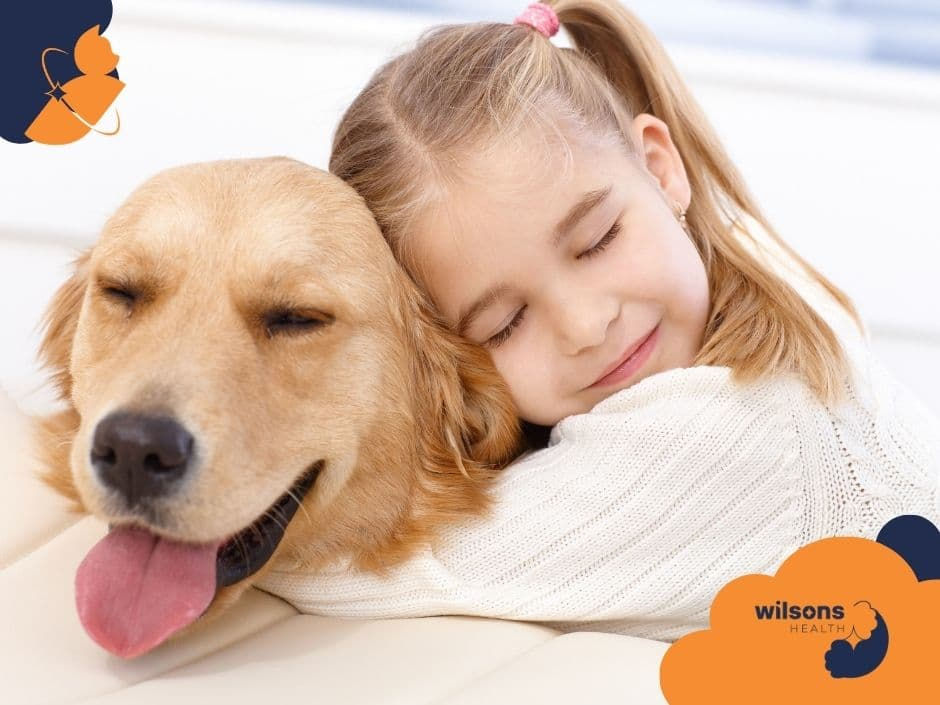
Children learn what goodbye means not from one grand moment, but from hundreds of small ones: the wave at the school gate, the sitter at the door, the hand resting on an old dog’s back.
The science tells us that predictable, honest rituals help their nervous systems settle, their trust deepen, and their grief find a path.[1][2][4][6][7]
The rest is something quieter and harder to measure: the knowledge, stitched slowly into their bodies, that love can survive both the everyday partings and the ones that change everything.
You don’t have to choreograph that perfectly. You only have to keep showing up, saying goodbye when you leave, and—where you can—finding a way to say “thank you” when it’s time to let go.
References
Playful Goodbyes: Making Preschool Drop-Off a Joyful Ritual, Schooldays.ie.
The Importance of Goodbye Rituals for Building Trust and Security with Your Child, JGordonPsychology.com.
Phenomenology of the Parent-Child Goodbye on the First Day of School, University of Alberta thesis (PDF).
The Power of Goodbye Rituals – National Alliance for Children’s Grief.
11 Ways to Help Children Say Goodbye, National Association for the Education of Young Children (NAEYC).
Using Ritual and Expressive Arts with Parentally Bereaved Children, Lesley University Digital Commons (PDF).
Saying Goodbye and Saying It Well, American Psychological Association (APA).


Comments